


Trump Administration’s Shift on Agricultural Labor Programs
The Trump administration’s recent focus on reforming guest worker programs for farmers highlights an urgent issue affecting the agricultural sector.
Long-standing Labor Shortages for Farmers
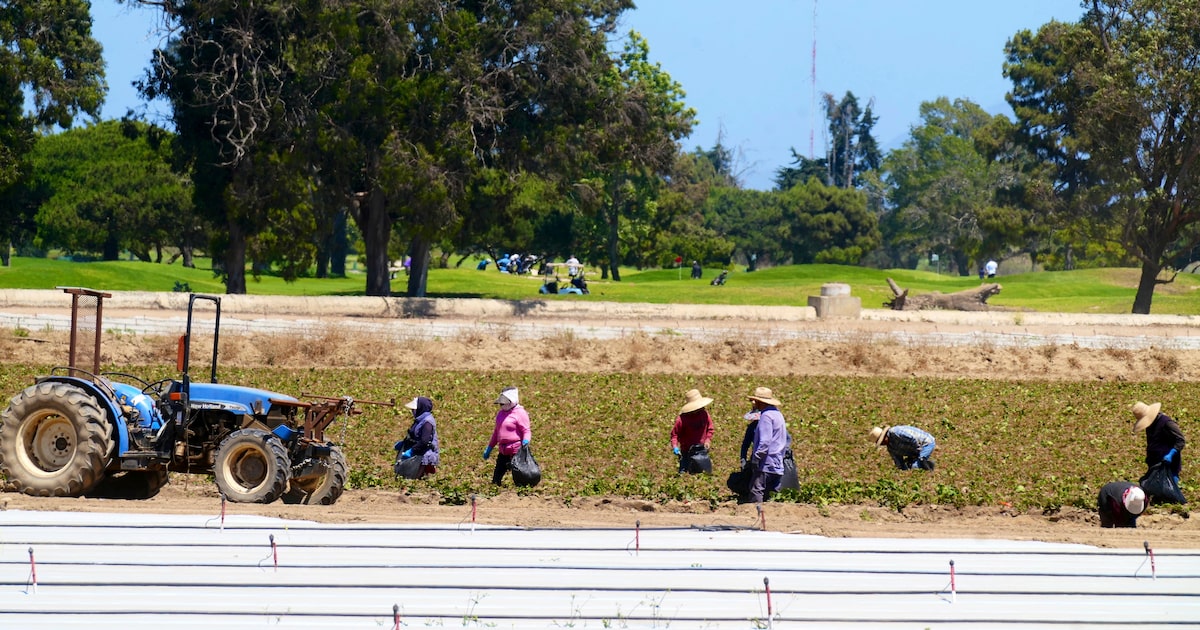
For years, U.S. farmers have voiced concerns about a diminishing labor pool for essential seasonal work. The aggressive immigration enforcement actions under President Donald Trump have caught many foreign workers off guard, leading to a growing reliance on undocumented labor to harvest crops that feed American families.
Dependence on Undocumented Workers Raises Concerns
This reliance on undocumented workers raises significant concerns, particularly given that they account for approximately 40% of agricultural workers in the U.S., according to government statistics. Such dependency puts an essential industry at risk, ultimately jeopardizing food security.
Challenges with the H-2A Visa Program
The H-2A visa program offers a pathway for farms to secure legal labor but is often bogged down by bureaucratic complexities that hinder farmers from efficiently obtaining these visas. Organizations like the Texas Farm Bureau have emphasized the need for streamlined processes to remove unnecessary hurdles.
Impact of Immigration Raids on Labor Supply
While the Trump White House introduced some adjustments to the program, these changes came only after significant pressure on farmers. A recent survey highlighted by The New York Times revealed that while only a minority of farmers directly experienced immigration raids, approximately 14% reported that fear of such actions contributed to ongoing labor shortages.
Increasing Demand for Farm Workers
California, Florida, and Georgia are the leading states in terms of H-2A applications, with Texas also ranking among the top ten. Despite facing substantial bureaucratic requirements, the demand for seasonal farm workers has skyrocketed. Nationwide, requests for positions have surged from about 60,000 two decades ago to over 400,000 today. Farmers cite an inability to find domestic workers as a key issue, prompting them to alert the federal government.
Wage Adjustments to Address Labor Shortages
As of 2025, data from the American Farm Bureau Federation indicated only 182 domestic applicants for a staggering 415,000 open farm jobs. The expectation that Trump’s immigration policies would compel American workers to take these positions has not materialized. In response, the administration’s recent modifications to the H-2A program aim to lower the mandated wages for immigrant workers. Reports suggest that hourly wages may decrease by as much as $1 to $7, depending on the state, allowing farmers to increase their workforce.
Balancing Worker Concerns and Agricultural Needs
While reduced wages are not ideal for workers, it is crucial to find a balance that ensures more individuals can legally participate in the workforce. An industry that heavily relies on undocumented workers can create situations of vulnerability and exploitation. The need for a sustainable labor solution must remain a priority to protect both workers and the agricultural sector.
