


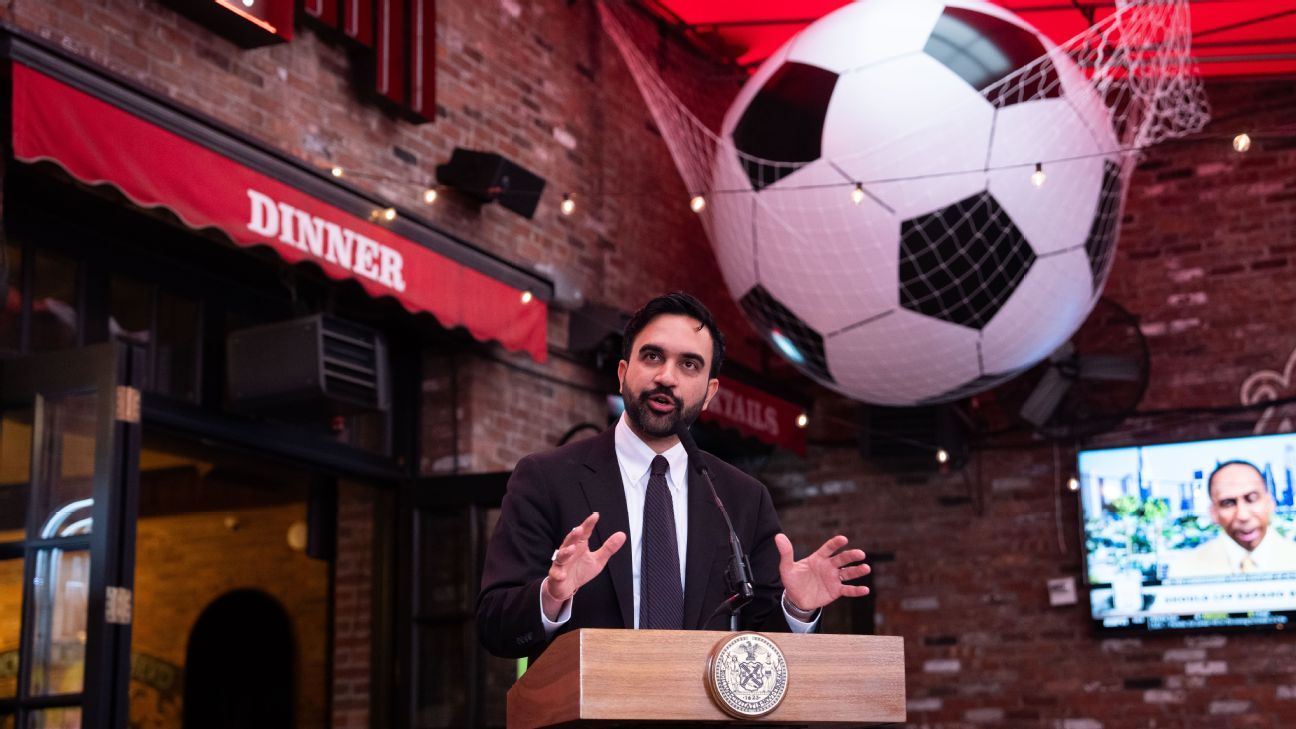
New York City Mayor Zoran Mamdani announced on Thursday that residents of New York City will have the opportunity to acquire 1,000 World Cup tickets at a price of $50 each. However, this announcement quickly drew ire from New Jersey officials, who expressed discontent over their exclusion from the deal.
New Jersey Governor Mikie Sherrill’s spokesman, Steven Sigmund, criticized the arrangement, stating, “FIFA’s failure to consider costs to New Jersey residents is not new. This is yet another reason why Governor Sherrill is striving to reduce expenses on behalf of New Jersey residents.”
Concerns Over Equity in Ticket Distribution
Officials from both New York and New Jersey perceive the ticket deal as a political victory for Mamdani, who successfully lobbied FIFA and the New York-New Jersey host committee. In contrast, some view Governor Sherrill’s criticisms as a punitive measure that has sidelined New Jersey in the negotiations since he took office in January.
A representative from New Jersey indicated that the state plans to establish its own discount ticket initiative, which will rely on corporate sponsors rather than the host committee or FIFA to fund the program.
A spokesperson for Mamdani did not provide comments on the New Jersey initiative. Under the agreement announced on Thursday, tickets will be obtained directly from FIFA at face value, derived from the organizing committee’s allocation.
This deal is contingent upon FIFA’s approval, and Mamdani has been in discussions with FIFA President Gianni Infantino since March to finalize the arrangement, according to sources familiar with the negotiations.
Legislative Pushback from New Jersey
In response to the ticket arrangement, two state legislators from New Jersey—Democrats Nellie Pauw and Frank Pallone Jr.—expressed their dissatisfaction. They recently reached out to FIFA seeking clarification regarding the organization’s ticket policy, which they labeled as “opaque” and “potentially deceptive.” Their joint statement criticized the deal, stating, “This publicity stunt does nothing to resolve ticket costs. With only 1,000 tickets available across seven games, that amounts to just 0.17% of the total tickets for those events.”
FIFA officials clarified that the agreement involves collaboration between the organizing committee and Mamdani’s office, emphasizing that their role was to ensure the discounted tickets are allocated to genuine fans planning to attend the matches.
A source with insight into the World Cup planning discussions indicated that despite differing opinions and priorities between New Jersey and New York, the relationship between the two state governance teams remains constructive. Mamdani’s successful negotiation signifies the fulfillment of a campaign promise centered around affordability.
New Jersey’s Ongoing Efforts
The agreement represents a notable achievement for Mamdani, allowing him to engage effectively with FIFA and mirror his diplomatic efforts, reminiscent of negotiations with President Donald Trump earlier this year. Conversely, Sherrill views the deal as a reflection of the perceived disrespect New Jersey faces due to its leader’s opposition to negotiations he deems unfavorable for the state.
Sherrill has been vocal about his dissatisfaction with the pre-existing arrangement forged by former Governor Phil Murphy, a fellow Democrat. He argued that the former agreement disproportionately burdened New Jersey with transportation and security costs related to the games.
Sigmund highlighted Sherrill’s proactive measures in securing $3.6 million in discounted tickets for NJ Transit customers impacted by transportation disruptions related to the World Cup, as well as emphasizing efforts to optimize the economic benefits of the event across New Jersey.
Following his assumption of office, Sherrill canceled a planned Fan Fest at Liberty State Park, believing that the event would favor New Yorkers over New Jerseyans who face heavy traffic gridlock. Instead, he allocated $5 million from the Fan Fest budget to local community events statewide.
The administration raised round-trip fares from Manhattan on game days to $98, a decision met with backlash from both New Yorkers and international fans. Sherrill justified the price hikes, arguing that the estimated $48 million in additional transportation costs should be covered by visitors rather than local residents.
Under the newly announced ticket program, New Yorkers can register for a drawing set for Monday morning. The allocation of 1,000 tickets will be spread over seven games leading up to the championship, with the city also offering free bus transportation for fans to the matches.
As of Thursday morning, the lowest ticket price available on FIFA’s last-minute site for an upcoming game between Norway and Senegal was $1,550. More competitively priced tickets were found on FIFA Marketplace, where seats for the same match could be accessed for under $400.
