


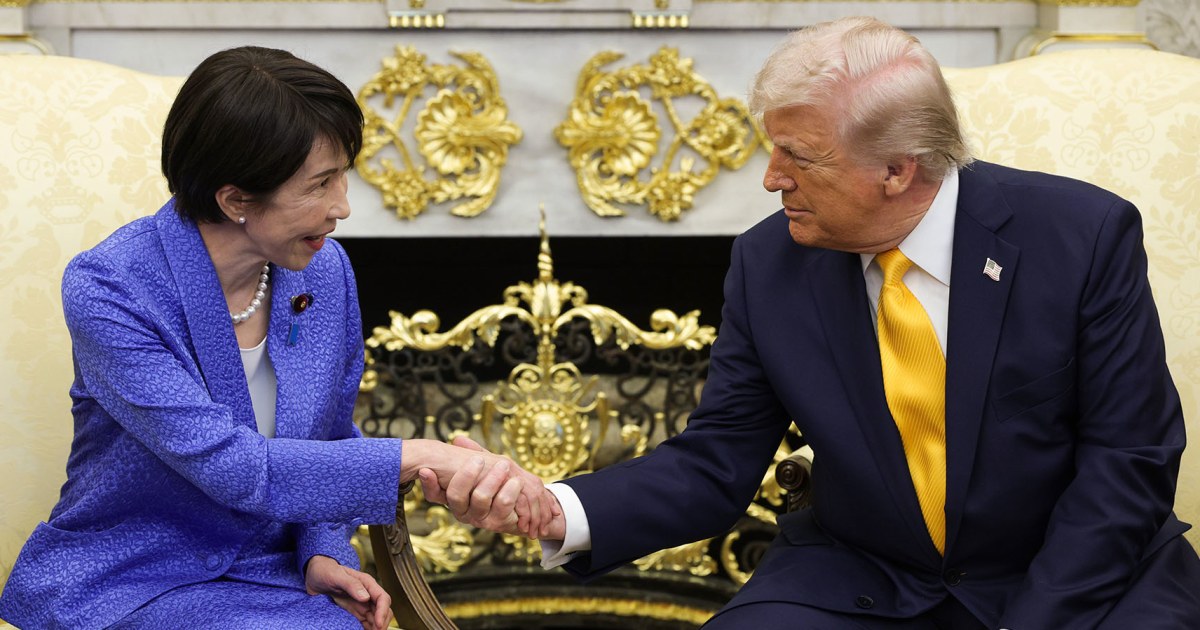
Challenges Ahead for Takaichi During White House Meeting
Few world leaders share as cordial a relationship with President Donald Trump as Japan’s Sanae Takaichi. However, during her visit to the White House on Thursday, Takaichi may encounter challenges as Trump expresses growing frustration over the ongoing conflict with Iran.
Significance of the Meeting
Takaichi, at 65 years old, will be the first leader of a major U.S. ally to meet with Trump since the president urged countries, including Japan, to help safeguard the Strait of Hormuz. This critical shipping lane has faced increased tensions and disruptions from Iran, significantly impacting global trade and driving energy prices higher.
Anticipations Ahead of Talks
Prior to her departure for Washington, Takaichi indicated to lawmakers that she anticipated a “very difficult” meeting with the president. This comes at a time when Japan joined Britain, France, Germany, Italy, and the Netherlands to issue a statement urging Iran to cease its aggressive actions, while also advocating for measures to stabilize energy markets and ensure safe passage through the Straits.
Balancing National Interests and Public Opinion
According to Jeff Kingston, a professor of Asian studies at Temple University, the stakes for Takaichi are particularly high. He noted that Japanese public sentiment is firmly against U.S. military actions in the Middle East, placing Takaichi in a delicate position. Japan maintains a robust reliance on the U.S. for exports and security, particularly in a region characterized by escalating militarization.
The Context of Takaichi’s Leadership
Sanae Takaichi, Japan’s first female prime minister, made a favorable impression shortly after taking office in October, even sharing a platform with Trump during a visit to U.S. soldiers in Japan. Her political maneuvers have been informed by the legacy of former Prime Minister Shinzo Abe, who fostered a close relationship with Trump. Recently, Takaichi led the Liberal Democratic Party to a historic supermajority in the House of Representatives, showcasing her popularity in Japan.
Geopolitical Ramifications
Kingston highlighted the timing of Takaichi’s three-day visit, which initially coincided with Trump’s planned trip to China. However, as Trump refocused his efforts on Iran, the conversation may predominantly revolve around this issue rather than trade. Japan’s stance has been one of cautious neutrality, calling for détente rather than direct criticism of U.S. actions against Iran, which has not been well-received by the Japanese public.
Potential Policy Directions and Concerns
Takaichi, known for her conservative views, has intentions to ramp up Japan’s defense spending and consider revisions to the pacifist constitution. Still, Kingston observed that she has “no intention of sending Japanese warships into firing ranges in the Strait of Hormuz” due to the potential risks to national security. Instead, she aims to find a middle ground that satisfies Trump, perhaps by offering support in minesweeping operations, as Japan is notably concerned about disruptions in energy supplies caused by the blockade of the Strait.
Trade Dynamics and Diplomatic Tensions
As Takaichi navigates these discussions, Japan’s concerns extend to the broader geopolitical landscape. The intensifying conflicts in the Middle East could divert U.S. attention from the Indo-Pacific region, where Japan and other U.S. allies regard China as a rising threat. Additionally, Takaichi is embroiled in a diplomatic row with China, having firmly stated that any aggressive actions against Taiwan could provoke a military response from Japan.
Final Thoughts on Takaichi’s Upcoming Meeting
Despite the multitude of challenges, Kingston noted that the upcoming meeting between Takaichi and Trump holds significant potential for both leaders. The dynamics of the discussion may hinge on Trump’s temperament at the time; however, if anyone is poised to effectively engage with him, it is Takaichi. Her experience in navigating Japan’s traditional political landscape equips her with the necessary skills to secure favorable outcomes for her country.
