


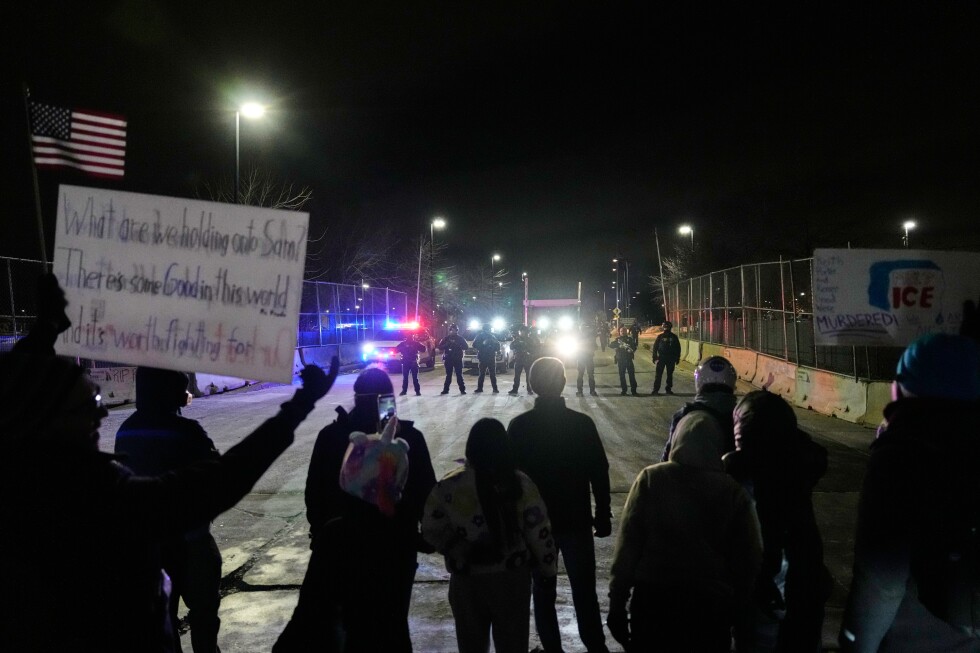
Clergy Seek Access to Immigrants at Federal Detention Facility in Minnesota
MINNEAPOLIS (AP) – Protestant and Catholic leaders are urging a federal judge to permit them to provide spiritual support to immigrants detained at a facility central to federal enforcement operations in Minnesota.
U.S. District Judge Jerry Blackwell is set to hear arguments this Friday from attorneys representing the Minnesota branch of the Evangelical Lutheran Church in America, the United Church of Christ, and various Catholic priests. The group is seeking a court injunction to allow immediate pastoral visits to all detainees at the Bishop Henry Whipple Federal Building in Minneapolis. This request comes amid heightened tensions as approximately 3,000 federal agents swarmed into the state during a recent enforcement surge.
The lawsuit claims that the Whipple building, named after Minnesota’s first Episcopal bishop and a prominent advocate for human rights in the 19th century, has come to symbolize a disturbing erosion of fundamental constitutional and legal rights. The plaintiffs argue that the facility now stands in stark contrast to the legacy of its namesake.
Government attorneys plan to counter that the request is largely unfounded due to a decrease in detainee numbers following the conclusion of Operation Metrosurge. They assert that temporary restrictions on visitation have already been relaxed, allowing clergy access for more than two weeks. In court filings, officials have explained that the Whipple building was previously a focal point for intensified ICE operations and a center of local unrest, complicating visitation efforts.
Support for the clergy’s appeal extends beyond Minnesota’s Catholic and Episcopal bishops; several religious leaders from different faiths and the Minnesota Council of Churches have also voiced their backing. Clergy nationwide are advocating for increased access to detention facilities, especially during significant periods such as Lent and Ramadan, when the need for spiritual support is particularly pronounced.
The Minnesota lawsuit highlights a pattern where ICE has, according to the claims, unconstitutionally obstructed religious leaders from offering essential spiritual care to those in detention. Instances have been documented where clergy sought to provide comfort and guidance to detainees at the Whipple facility but were denied entry.
The legal argument emphasizes that the restrictions imposed at Whipple infringe upon both the religious freedoms of clergy and the Religious Freedom Restoration Act of 1993. Current ICE policy mandates that facilities housing detainees for more than 72 hours must have a dedicated chaplain and space for religious services. Furthermore, prior notification and background checks for clergy are required.
However, government officials maintain that the Whipple building serves primarily as a short-term detention center, with most detainees transferred to other locations within 24 hours. Local ICE official Taulia Ricci recently stated that clergy visits are infrequent and will continue to be evaluated on a case-by-case basis. Ricci noted a recent instance where a clergy member attempted to visit but left due to the absence of detainees.
Access challenges extend beyond spiritual leaders: three Minnesota senators reported being turned away during their attempts to inspect the facility, subsequently disclosing inadequate conditions within. Legal access is also a significant concern; a separate federal ruling recently mandated that the Department of Homeland Security expedite the release of new detainees at the Whipple facility and ensure access to legal counsel without delay.
