


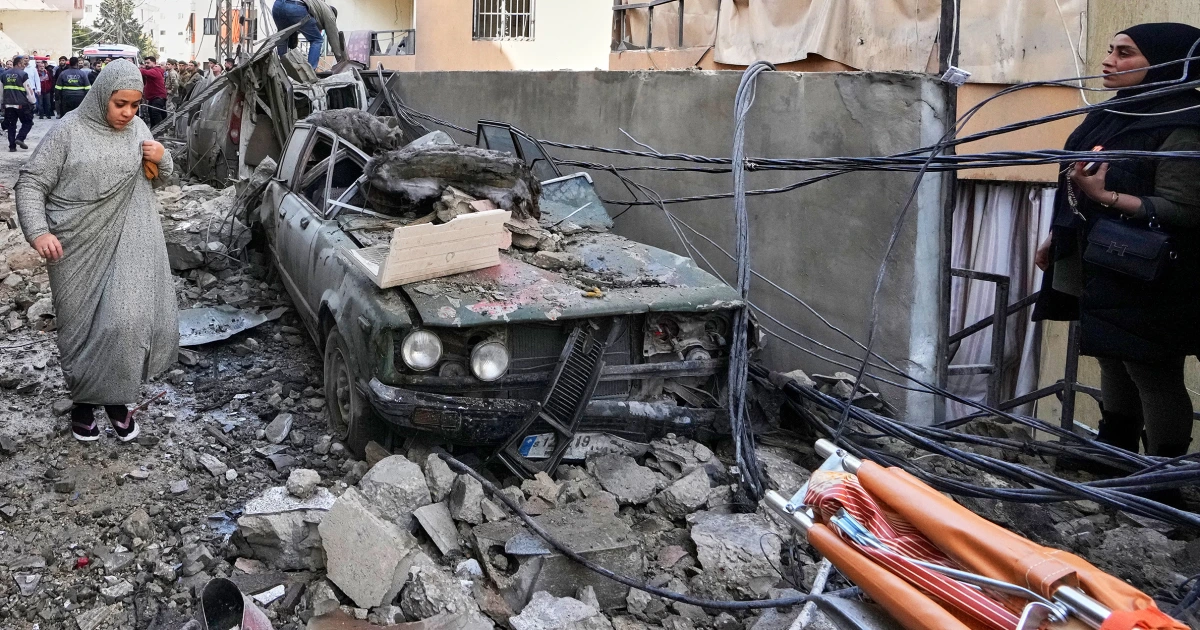
Evacuation From Litani River Area Leaves Thousands Displaced
On Monday, Katz emphasized that the security of residents in northern Israel must be assured before hundreds of thousands of evacuees from the region south of the Litani River can return to their homes. This statement has raised pressing questions regarding the duration of a potential ground offensive or long-term occupation of the area.
Experts Anticipate Escalation of Military Operations
Kobi Michael, a senior fellow at the Tel Aviv-based Institute for National Security Studies, underscored that military actions are likely to expand. He remarked that Israel’s need to secure the area extending from the border to the Litani River necessitates a broader operation. Michael has previously held key positions in the Israeli Ministry of Strategic Affairs, including director for Palestinian affairs.
Fear of Long-term Occupation Intensifies
Concerns over a protracted occupation have surfaced, fueled by calls from some sectors advocating for Israel to maintain enduring control over southern regions. Proponents cite security benefits for Israel, referencing the views of David Ben-Gurion, Israel’s first Prime Minister, who identified the Litani River as the state’s natural northern border in a recent editorial in the Jerusalem Post.
Discontent in Lebanon Amid Military Operations
As Israeli forces carry out operations moving from village to village, many Lebanese citizens are expressing discontent with Hezbollah. The Lebanese government has pledged to disarm the militant group in 2024 as part of a United Nations-mediated initiative aimed at ending hostilities with Israel. However, progress in disarming Hezbollah has been limited, with recent government actions indicating a desire to prevent further conflict.
International Leaders Call for Political Solutions
In a joint statement issued on Monday, leaders from Canada, France, Germany, Italy, and the United Kingdom expressed serious concerns over escalating violence in the region. They urged for substantial dialogue between Israel and Lebanon as a pathway to achieve a political resolution.
Pressure on Lebanon to Negotiate
Bilal Y. Saab, the executive director of TRENDS US and a former senior advisor to the Pentagon, argued that Israel aims to exert maximum pressure on the Lebanese government and Hezbollah to negotiate and disarm Iranian proxies. Saab noted that if negotiations fail, a large-scale ground invasion could be considered.
Scenes of Despair Amid Ongoing Conflict
As tensions rise, Lebanon is witnessing harrowing scenes of despair and displacement exacerbated by regional dynamics. Cyril Bashir, communications coordinator for the humanitarian agency CARE, highlighted the dire living conditions, reporting that pregnant women are forced to sleep on sidewalks while others seek shelter on beaches or in parking lots. The humanitarian crisis continues to unfold as families, like one from Dahieh, express a deep attachment to their homes despite significant destruction.
