


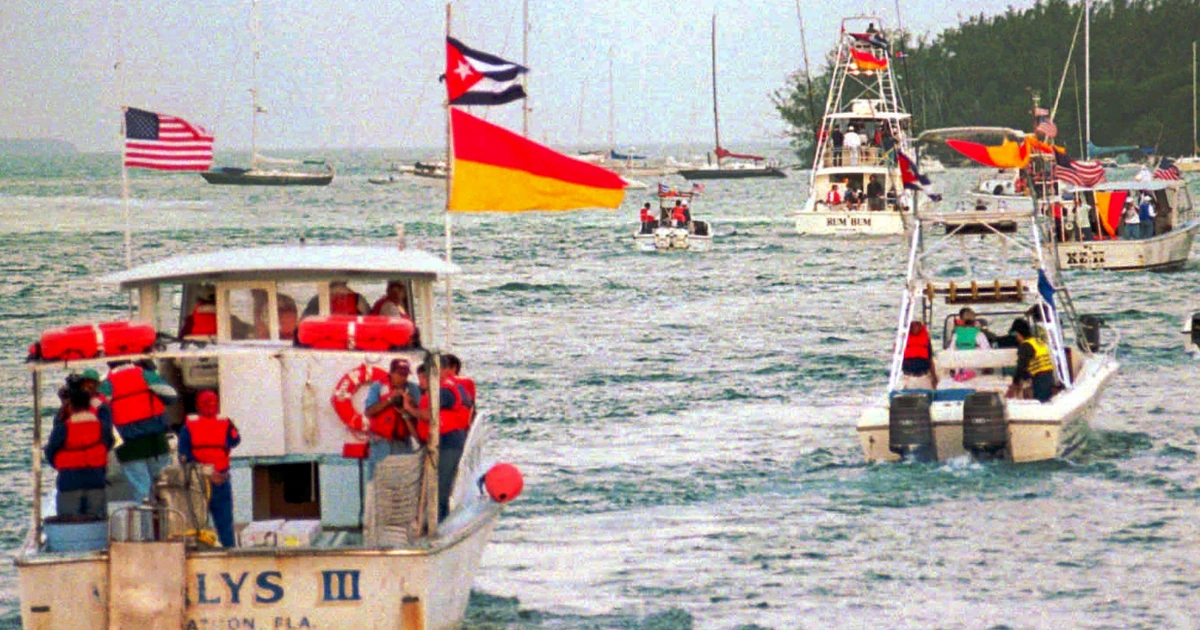
Cuban Exiles Welcome Indictment of Raul Castro
MIAMI — Families of four Cuban exiles who were killed when the Cuban military shot down a civilian plane in 1996 have expressed their belief that the recent indictment of former Cuban President Raul Castro is long overdue.
“I hope there is justice for my father and the other three. We have been waiting for this day for 30 years,” stated Marlene Alejandre, who was just 18 years old when her father, Armando Alejandre, was murdered.
The indictment of Castro, who will turn 95 next month, alongside five other Cuban nationals, brings renewed attention to a tragic event that has reverberated through the international community and continues to affect U.S.-Cuba relations.
The civilian plane that was shot down belonged to Brothers to the Rescue, an organization founded in 1991 by Cuban-American pilot Jose Basulto and other Cuban exiles who opposed the Cuban government. Basulto, who previously participated in the failed Bay of Pigs invasion orchestrated by the CIA in 1961, led missions aimed at saving Cuban asylum seekers at sea.
During the early 1990s, Cuba was facing severe economic distress following the collapse of the Soviet Union, which had previously provided substantial support. With basic necessities running low, thousands of Cubans embarked on perilous journeys to the United States using makeshift boats and rafts. In response, Brothers to the Rescue initiated search and rescue flights over the Florida Strait to assist those fleeing.
Despite a 1994 immigration agreement between the U.S. and Cuba and the introduction of the “wet foot, dry foot” policy in 1995, which sought to regulate the flow of Cuban migrants, many still attempted dangerous crossings. However, official warnings from the Federal Aviation Administration indicated that the group occasionally made incursions into Cuban airspace, resulting in significant tensions between the two countries.
Tragic Events of February 1996
On February 24, 1996, three Cessnas departed from Miami for a routine mission. Cuban MiG-29 fighters intercepted and shot down two of the planes in international airspace. Cuba justified its actions by claiming that the aircraft had violated its airspace. However, investigations by the United Nations’ International Civil Aviation Organization indicated that the planes were attacked in international airspace, leading to the deaths of Alejandre, Carlos Alberto Costa, Mario Manuel de la Peña, and Pablo Morales.
The United Nations report criticized Cuba’s military tactics, suggesting that they acted outside of standard procedures during the interception, resulting in the deaths of the four men. This event incited outrage in the U.S., where President Bill Clinton condemned Cuba’s actions and chose to respond through legislative measures rather than military intervention.
The Cuban Freedom and Democratic Solidarity (LIBERTAD) Act, also known as the Helms-Burton Act, was swiftly passed by Congress and signed into law by Clinton. This legislation imposed strict sanctions and remains in effect today, allowing Congress to lift the trade embargo only if specific conditions are met.
In the years that followed, while the top Cuban leadership was not charged in connection to the shootdown, five Cuban intelligence agents were arrested later in 1998. Gerardo Hernandez was convicted of conspiracy to commit murder and is currently serving a life sentence. Recent developments in U.S.-Cuba relations included the exchange of spies during President Barack Obama’s administration in 2014, leading to the release of individuals on both sides.
Emotions Surrounding the Indictment
Recently, Pablo Morales’ sister, Nancy Morales, recounted the trauma she faced in Cuba after the incident, detailing harassment by pro-government mobs following the tragedy. She eventually relocated to the United States, seeking refuge for herself and her daughter.
On Wednesday, Morales and her companion traveled two hours from their Florida homes to attend the announcement of the indictment at Miami’s Freedom Tower, a symbolic site for Cuban Americans. “I’ve been waiting for this moment for a long time. I’m really looking forward to it,” she remarked, expressing hope for a future where the Cuban people can enjoy freedom.
Mirta Costa Mendez, sister of Carlos Costa, voiced similar sentiments, stating, “I’ve been waiting for this for 30 years.” She expressed ambivalence about the possibility of Castro’s extradition, acknowledging that “nothing can bring my brother back.”
