


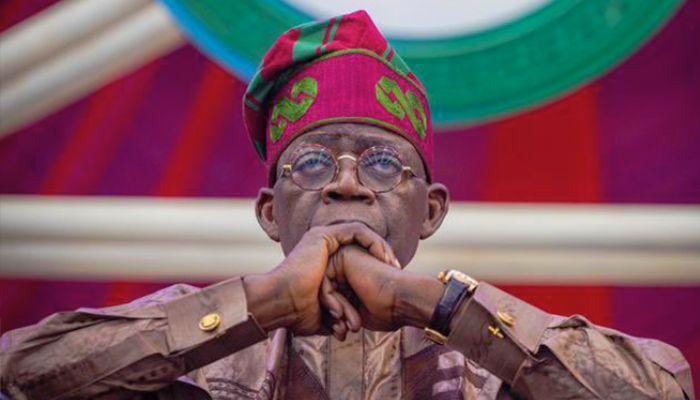
Political Landscape Shifts as Ministers Eye 2031 Presidential Election
Recent political developments in Nigeria suggest that several ministers and close allies of President Bola Ahmed Tinubu are positioning themselves for the 2031 presidential election. Analysts are increasingly speculating about a potential return of power to the North, highlighting a growing interest in political maneuvering within Tinubu’s cabinet.
Ambitious Economic Reforms Under Tinubu’s Leadership
President Tinubu’s administration is marked by a high-stakes approach to economic reform, driven by a large and politically diverse cabinet. While the President advocates for aggressive, market-oriented policies, the ambitions of his team have yielded mixed results, leading to an uneven implementation of reforms.
Critique of the Oversized Cabinet
The cabinet’s sheer size, with more than 45 members, has raised concerns about political patronage overshadowing merit-based appointments. Critics argue that this situation could stifle effective policy implementation, as the influence of ambitious ministers often leads to disagreements about reform pace and direction, particularly regarding fuel subsidies and exchange rate unification.
Ministers Focus on Personal Ambitions
Tinubu has urged his ministers to set aside personal aspirations in favor of an agenda of hope, reflecting a tension between individual ambitions and the collective goals of the administration. This conflict has resulted in significant policy disagreements, undermining the cabinet’s effectiveness in advancing the government’s objectives.
Unpredictable Policy Approaches Affect Investor Confidence
Observers note that the administration’s policymaking can be erratic or poorly conceived, leading to abrupt policy shifts or suspensions that have eroded investor confidence. The inherent unpredictability of policy moves creates an environment of uncertainty that may hinder economic progress.
Key Figures in the 2031 Presidential Landscape
Several prominent politicians are emerging as potential candidates for the 2031 presidency. Secretary to the Government of the Federation, George Akume, is seen by many as a frontrunner, particularly given the ongoing discussions around religious representation within the ruling party, the APC. Historically, the APC has not fielded a Christian candidate since its 2013 merger, making Akume’s candidacy a significant consideration in the wake of international scrutiny on Nigeria’s treatment of minority groups.
Notable Ambitions and Political Alliances
Nuhu Ribadu, the National Security Adviser, has faced speculation regarding his presidential ambitions despite denying any intent to run. Similarly, Nyesom Wike, the FCT Minister, has pledged loyalty to Tinubu through 2031 while keeping future options open. Kasim Shettima, Nigeria’s Vice President, is also viewed as a strong contender, given his substantial influence in policy making since taking office. His emphasis on service aligns with a pragmatic approach to political aspirations as he navigates Nigeria’s complex leadership landscape.
Focus on Future Political Strategies
Despite their individual ambitions, several key figures have publicly committed to supporting President Tinubu’s government, especially as the 2027 election approaches. However, analysts predict that the political landscape will shift towards long-term strategies, especially as the southern quota is anticipated to expire by 2031. This potential change could significantly impact the strategies of the ministers and allies as they position themselves for the future of Nigerian politics.
