


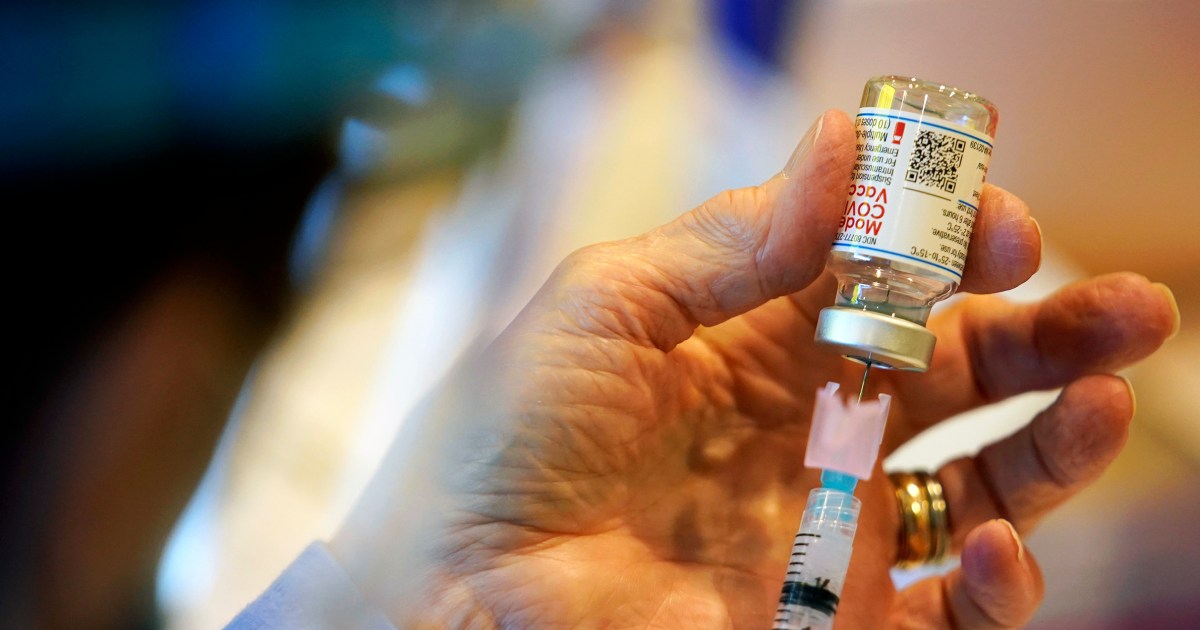
Federal Judge Blocks HHS Review of Vaccination Schedule
More than a week has passed since a federal judge halted Health and Human Services Secretary Robert F. Kennedy Jr.’s review of the national childhood vaccination schedule and a key vaccine advisory committee. As of now, the Justice Department has yet to file an appeal against this ruling, and it may ultimately choose not to pursue the matter.
The Justice Department has a 60-day window to lodge an appeal, which closes on May 15. An official from HHS, familiar with the situation, noted that no definitive decision has yet been reached regarding the agency’s next steps in the case.
This judicial ruling exemplifies the ongoing uncertainty under President Kennedy’s administration. The Centers for Disease Control and Prevention (CDC) has been without a director for months, with no indications of a candidate emerging. Additionally, the nomination of Casey Means for Surgeon General appears to be stalled in the Senate.
In the meantime, the crucial work performed by independent vaccine experts who advise the federal government has ground to a halt. Planned meetings this fall to discuss flu and coronavirus vaccinations have been indefinitely postponed.
Dr. Jason Goldman, president of the American College of Physicians, expressed concern over the current situation: “As far as I know, all work has been stopped and there is a significant lack of recommendations. It’s just horrifying to think about the kind of damage that was caused.”
Over the past year, Kennedy has made two pivotal decisions impacting how vaccines are evaluated and recommended in the United States. Last June, he abruptly dismissed several members of the Advisory Committee on Immunization Practices (ACIP), traditionally composed of independent vaccine experts advising the CDC. He bypassed the standard vetting process and formed a new group primarily consisting of vaccine skeptics, leading to a series of controversial recommendations, including the reversal of long-standing guidance on vaccinating all newborns against hepatitis B.
In January, President Kennedy made significant alterations to the childhood vaccination schedule, lowering the number of diseases recommended for vaccination from 18 to 11—again without formal input from ACIP. This revision eliminated recommendations for protecting all infants against hepatitis A, hepatitis B, RSV, dengue fever, and two types of bacterial meningitis.
The Implications of the Judicial Ruling
The American Academy of Pediatrics, along with other medical organizations, has responded by suing the Department of Health and Human Services, arguing that the recent changes to the vaccination schedule and the overhaul of ACIP contravene federal law.
On March 16, a federal judge upheld the American Academy of Pediatrics’ stance, ruling that the secretary of health had “unlawfully” replaced ACIP. The appointments of 13 out of 19 ACIP members were annulled as part of this decision.
Among those affected was Dr. Robert Malone, a Kennedy ally and vocal critic of coronavirus vaccines, who labeled the ruling as unjust on social media. He later clarified his earlier comments, admitting that he had resigned from his position due to a “miscommunication” with HHS.
Uncertain Future for Vaccine Oversight
If the Justice Department opts to appeal the ruling, it may seek emergency relief, prompting the 1st Circuit Court of Appeals to make a swift decision on whether to suspend the March 16 ruling. However, legal experts warn that navigating this situation will present considerable challenges for the administration.
Lawrence Gostin, director of Georgetown University’s O’Neill Institute for Global Health Law, highlighted the complexity of the forthcoming decisions: “The administration’s next move will be difficult from a legal perspective.” Similarly, Dorit Rees, a law professor at the University of California, San Francisco, noted that the choice to appeal carries political implications.
Currently, with no CDC director or advisory committee in place, Kennedy retains significant authority over vaccination recommendations. Rees commented that this situation gives Kennedy a “get-out-of-jail-free card” by allowing him to bypass consultation with ACIP.
The urgency of the situation cannot be overstated. A meeting initially set for this month to review coronavirus vaccinations has been postponed, and the committee’s next gathering is scheduled for late June, with no agenda announced. Typically, summer meetings include crucial recommendations for fall vaccinations, including influenza and COVID-19.
If the vaccine committee fails to convene, recommendations for these vaccines may come directly from President Kennedy. While these vaccinations are available to the public, the associated recommendations have implications for insurance coverage.
Goldman, who serves as the liaison between the American College of Physicians and ACIP, warned of a forthcoming backlog in vaccine research. He stated that the group will need extensive time—often over a year—to gather and analyze vaccine data for presentation to the full committee. “There’s going to be a significant backlog,” he noted. “It’s going to take an inordinate amount of time to resolve the issue.”
