


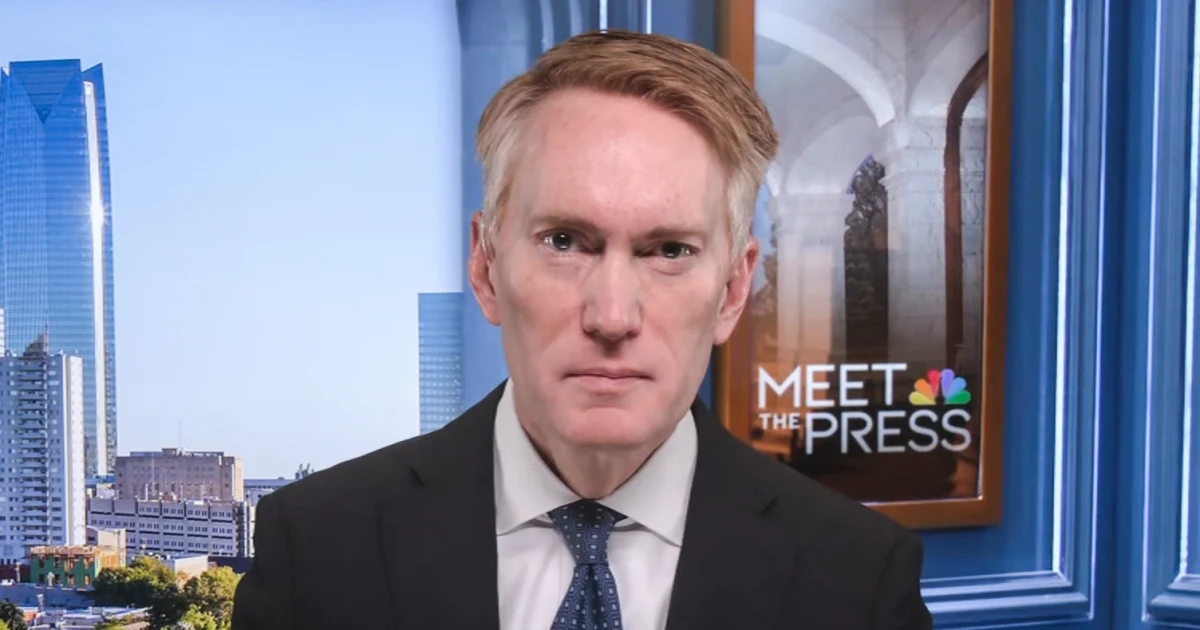
Senator Lankford Open to Ground Troops in Iran, Emphasizes Clear Objectives
Senator James Lankford (R-Okla.) has not dismissed the possibility of deploying U.S. ground troops to Iran. During an appearance on NBC News’ “Meet the Press,” he stressed the importance of understanding the mission’s objectives and Iran’s actual activities. Lankford asserted that a clear strategy is necessary before any troops are sent into action.
Lankford Advocates for Completing Military Objectives
When questioned by host Kristen Welker about President Donald Trump’s decision to send troops to Iran, Lankford underscored the need to “finish” the mission at hand. He cautioned against allowing conflicts to linger unresolved, referencing Iran’s history of orchestrating attacks against Americans. “The worst thing that can happen is that this kind of conflict starts and never ends,” he remarked, emphasizing the urgency for a resolution.
Conditions for Ground Troop Deployment Discussed
After being pressed to confirm whether he ruled out supporting U.S. troops in Iran, Lankford noted that the situation would depend on the type of forces deployed. “If this is a special forces unit that can execute specific operations—get in, get out—that’s very different from years of occupation,” he said, indicating his nuanced view on military engagement.
Troop Build-Up as Tensions Escalate
Recent social media updates from U.S. Central Command reveal that thousands more American troops are being deployed to the region. Reports indicate that President Trump has approved the mobilization of over 1,000 soldiers from the 82nd Airborne Division to the Middle East amid rising tensions.
Discussion on Military Funding and Objectives
In alignment with these developments, NBC News has reported that President Trump is evaluating various strategies for troop deployment. Potential strategies include securing the Strait of Hormuz and recovering Iran’s highly enriched uranium or seizing Iranian oil facilities to impact the nation’s finances. Earlier in the month, Trump claimed he would refrain from sending troops abroad without prior public disclosure.
Congressional Approval Uncertainty Remains
When asked whether President Trump would need Congressional approval for sending troops to Iran, Lankford provided a conditional response, asserting that it would depend on how the forces are utilized. “If you’re in a long-term conflict, it raises different legal questions,” he stated, contrasting long-term military engagements with temporary protective operations. He emphasized that the circumstances would dictate the need for Congressional discourse.
Funding Request Looms as Military Operations Expand
Senate Republicans have consistently rebuffed several war powers resolutions aiming to limit President Trump’s ability to take military action against Iran without seeking Congressional consent. Meanwhile, the Pentagon is reportedly seeking an extensive funding package of $200 billion for military operations, with Trump asserting the request is justified for various reasons that extend beyond the situation in Iran. Lankford highlighted that Congressional involvement would be crucial in reviewing this funding proposal and the associated military plans as they develop.
Criticism from Democratic Leaders amidst Escalating Tensions
Senator Cory Booker (D-N.J.) has been vocal in his criticism of the Trump administration, describing the current state of affairs as potentially one of the greatest presidential failures. He urged for Congressional involvement before further military actions are taken, arguing that the administration is deepening U.S. entanglement in conflict without a clear exit strategy. Booker lamented the lack of consultation with Congress, characterizing this oversight as a critical failure that endangers American interests both at home and abroad.
Iran’s Readiness for Potential Conflict
In a related development, Iran’s parliament speaker declared the nation’s preparedness to respond to any U.S. ground attacks. He stated that Iranian forces are poised for action should American troops enter the country, indicating the high stakes involved in the current geopolitical landscape.
