


Taiwan’s Commitment to Self-Determination Amid U.S.-China Tensions
Taiwan’s President expressed on Sunday that the future of Taiwan lies solely in the hands of its people, following President Donald Trump’s remarks that hinted at a shift in long-standing U.S. policy during his recent visit to China.
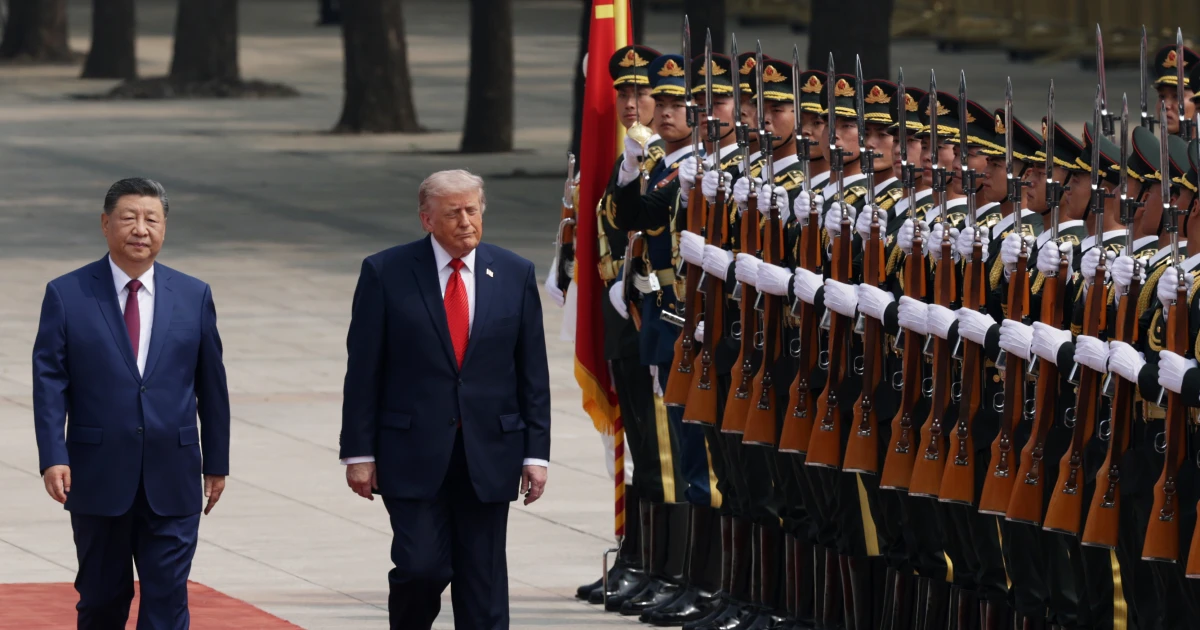
In discussions with Chinese President Xi Jinping in Beijing, Trump stated he had not yet made a decision regarding potential arms sales to Taiwan, an autonomous democracy that faces a stark promise from Beijing to assert control, possibly by force.
When asked about the U.S. response to a potential Chinese invasion of Taiwan, Trump remarked, “We’re not going to make anyone independent,” and voiced his preference against engaging in a distant conflict, urging both nations to “calm down.”
Clarifying Taiwan’s Position
Taiwan’s President Lai Ching-de reiterated on Sunday that the notion of “Taiwan independence” signifies that Taiwan does not belong to China and emphasized that only the Taiwanese populace can determine their path forward.
Speaking at a gathering commemorating the 40th anniversary of his party, Lai refrained from directly addressing Trump’s comments and opted not to respond to an array of journalist inquiries.
Meanwhile, Taiwan’s Ministry of Foreign Affairs issued a statement asserting that Taiwan is a “sovereign, independent, and democratic nation” that is not subordinate to the People’s Republic of China.
U.S.-China Relations in Focus
During Trump’s Beijing visit, Xi identified Taiwan as “the most important issue in China-U.S. relations,” cautioning that failing to address it properly could lead to conflicts. Xi’s concerns reflect a broader apprehension over the stability of U.S.-China relations.”
While the U.S. does not maintain formal diplomatic relations with Taiwan, it remains Taiwan’s most significant international ally and arms supplier, a position that has invited pressure from Beijing.
Historically, the U.S. has practiced “strategic ambiguity” regarding its potential military response to a Chinese assault on Taiwan, lacking a mutual defense treaty with the island.
Trump’s Deliberation on Arms Sales
Trump mentioned on Friday that he has not decided on a proposed $14 billion arms package for Taiwan and indicated that he would consult with President Lai before reaching a final conclusion.
As he traveled to Alaska, Trump indicated he would soon make a decision, asserting he had spoken positively about Taiwan during his talks with Xi and perceived no immediate risk of conflict regarding the island.
Political Support for Taiwan
Despite recent contentious remarks, officials within the Trump administration have asserted that U.S. policy toward Taiwan is unlikely to be altered. Senator Lindsey Graham advocated for continuing arms sales to Taiwan, warning against making concessions to China that might encourage aggression.
He stressed the importance of maintaining the status quo and suggested that the U.S. should consider implementing a package of tariffs and sanctions to respond to any aggressive actions from China.
Taiwan’s Relationship with the U.S.
Following the press conference, Taiwan’s Ministry of Foreign Affairs stated that Taiwan’s officials had received multiple affirmations from U.S. leaders, including Trump and Secretary of State Marco Rubio, reinforcing that U.S. policy toward Taiwan remains steadfast.
The backdrop to these developments includes the historical context of Taiwan’s separation from China, which dates back to 1949, when the Kuomintang retreated to form a government on the island after losing the civil war.
Geopolitical Dynamics
The Chinese government views retaking Taiwan as a long-term objective, further complicating Taiwan’s international relations. The broader implications of U.S. foreign policy shift under Trump reflect a focus on America’s immediate hemisphere, possibly ceding regional advantages to nations like China.
Recent actions by the Trump administration, including withdrawing U.S. troops from Germany, have added to concerns regarding the stability of America’s alliances globally. As tensions rise in the Taiwan Strait, the need for clarity in U.S. foreign policy continues to grow.
