


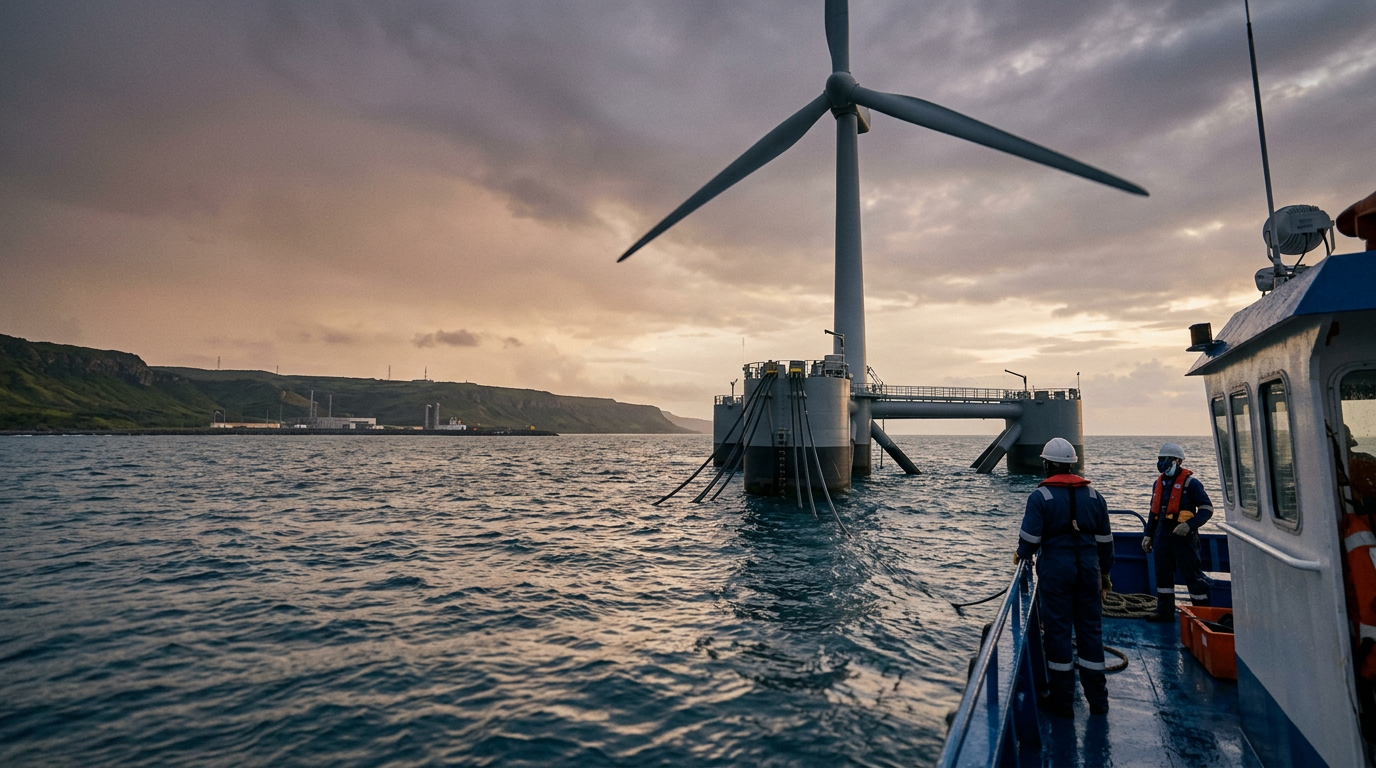
The surge in global interest in artificial intelligence is placing unprecedented pressure on terrestrial power grids. In response, offshore floating data centers connected to wind turbines emerge as a promising infrastructure model, capable of addressing the technological disparities in Africa.
Aikido Technologies is at the forefront of this innovation, developing a system that integrates high-performance computing with floating wind farms. This approach significantly lowers both environmental and economic costs associated with data storage.
The urgency of this solution is underscored by Kenya’s aspirations to become a leader in technology, often hindered by an unreliable national electricity grid. By establishing self-sustaining data centers offshore in the Indian Ocean, Kenya could bypass these limitations and transition to a more sustainable energy model.
The Growing Demands of Artificial Intelligence
The rapid expansion of artificial intelligence (AI) and machine learning is creating a worldwide infrastructure dilemma. The substantial computational power required for training large language models and producing intricate graphics comes with a hefty energy price tag. Traditional data centers are reaching physical and regulatory breaking points, requiring vast amounts of land and consuming millions of gallons of freshwater for cooling, all while straining local power supplies. Enter Aikido Technologies and its AO60DC platform, which offers an innovative solution: deploying prefabricated data center modules directly on floating offshore wind turbines. Each unit, equipped with 10-12 megawatts (MW) of computing power, utilizes energy from a 15-18 MW wind turbine along with robust battery storage. This setup sidesteps terrestrial power grid limitations and optimally leverages the world’s most stable and powerful wind resources.
Although initial deployments are focused on Western markets, the implications for East Africa are significant. Kenya is rapidly positioning itself as the continent’s leading technology hub, attracting major hyperscalers like Amazon Web Services (AWS) and Microsoft. However, the reliability of the Kenya Power and Lighting Company (KPLC) grid poses risks for mission-critical operations. Yet, the stretch of coastline from Lamu to Mombasa harbors vast untapped offshore wind power potential.
Floating data centers employ a technique known as “passive cooling,” utilizing cold seawater through a steel hull, which nearly eliminates cooling costs. The resulting Power Usage Effectiveness (PUE) metric is below 1.08—an ultra-efficient standard unattainable in the hotter regions of Kenya. This method also circumvents the complex land acquisition issues that can delay large infrastructure developments in the country.
Picture a series of these floating units anchored about 20 kilometers off Mombasa’s coast. They generate clean energy, cool passively, and transmit data to the mainland through high-speed, low-latency undersea fiber-optic cables linked to networks such as the recently launched PEACE and SEACOM. This creates a highly efficient, closed-loop ecosystem.
Balancing Economic Growth with Environmental Responsibility
The economic rationale for the AO60DC model is compelling. By co-locating energy generation and consumption, Aikido effectively eliminates massive capital expenditures (CAPEX) tied to the construction of extensive undersea transmission lines. Energy is used precisely where it is produced. Since these units are prefabricated, they can be swiftly assembled and towed to locations like the expanding Mombasa Port. Moreover, the environmental impact is minimal, as the thermal footprint dissipates within mere meters of the facility. For Kenya, which already sources over 90% of its electricity from renewable sources—including geothermal, hydropower, and onshore wind—embracing offshore data centers positions the country as a leader in green technology infrastructure. This path allows for the expansion of AI capabilities while still prioritizing climate action.
Addressing the Regulatory Landscape for the Blue Economy
An adaptive regulatory framework is essential for enabling this technology in Kenyan waters. While the blue economy has been a focal point of the government’s development agenda, it has historically been confined to sectors like fishing and maritime transport. New policies must adapt to accommodate complex offshore technological facilities and address maritime security, environmental impact assessments on marine ecosystems, and data sovereignty. When these floating centers are situated in international waters, just outside the exclusive economic zone (EEZ), the issue of data jurisdiction becomes a legally intricate frontier. Nevertheless, the direction is clear: the limitations of land-based infrastructure are driving the movement towards offshore solutions.
The future of hyperscale computing is not confined to deserts or outer space; it lies in harnessing the ocean’s untapped potential and converting it into innovative technological infrastructure.
