


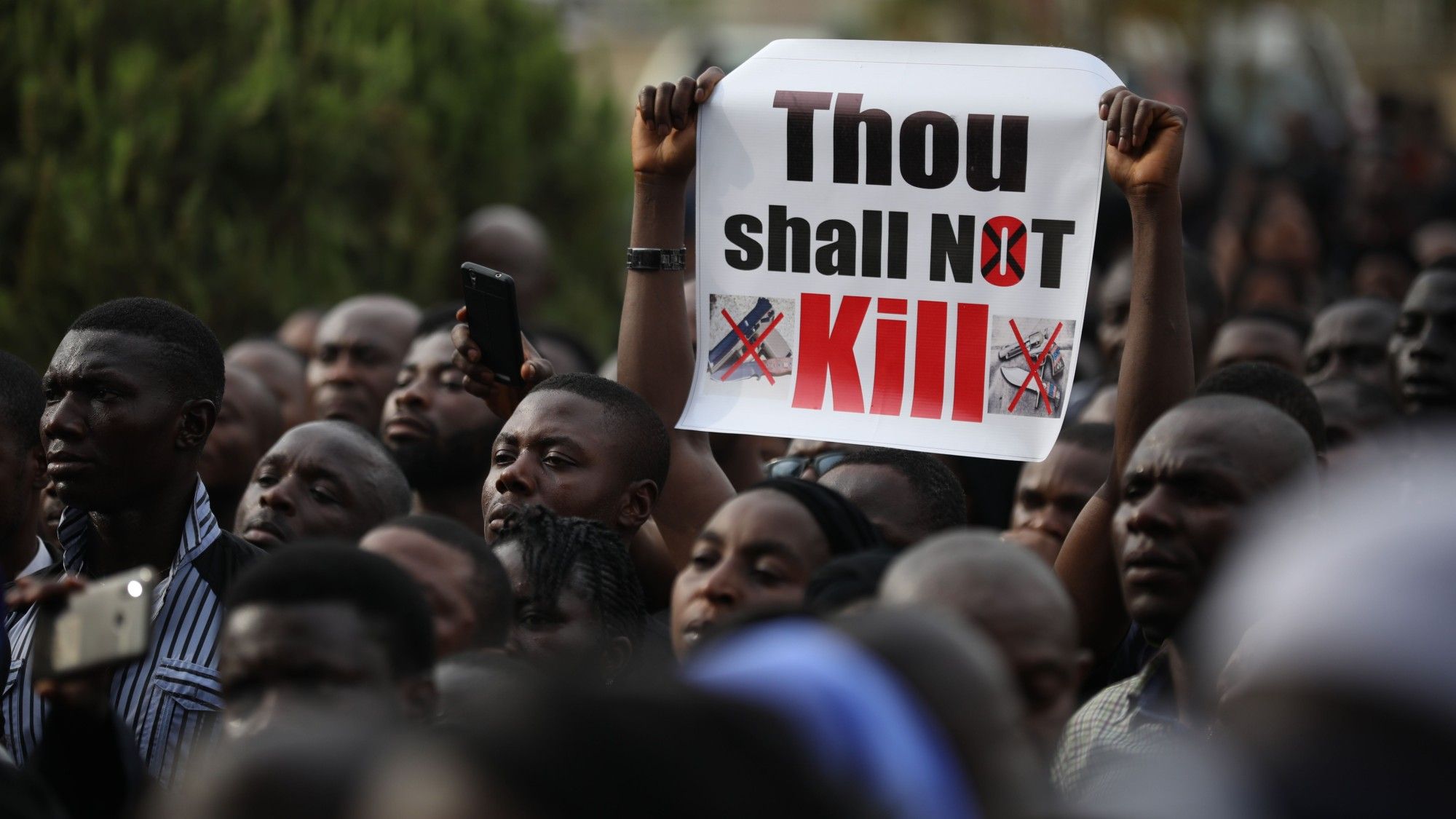
The Nigerian government has rejected allegations made by U.S. Senator Ted Cruz regarding the occurrence of “genocide” against Christians in the country. Cruz asserted on social media that since 2009, armed groups he characterizes as “Islamists” have killed 50,000 Christians and destroyed 2,000 schools and 18,000 churches.
Senator Cruz’s Statements on Nigeria
Cruz, a Republican senator and member of the Senate Foreign Relations Committee, described the situation as a “mass murder of Christians” occurring within Nigeria. He has called for Nigeria to be designated as a country of particular concern, highlighting serious violations of religious freedom within its borders.
These claims have gained traction, with various celebrities and commentators amplifying them, some labeling the situation as a “genocide of Christians” in Nigeria. For example, comedian and TV host Bill Maher claimed that the terrorist group Boko Haram has “killed more than 100,000 Christians since 2009” and “burned 18,000 churches,” suggesting a systematic effort to eradicate Christianity in the region. However, Al Jazeera noted that Maher’s figures lacked credible sources.
Examining the Veracity of the Claims
With a population of approximately 220 million, Nigeria is nearly evenly split between Christians and Muslims. Data from the Armed Conflict Area and Event Data (ACLED) indicates that between January 2020 and September 2025, there were 11,862 attacks on civilians that resulted in 20,409 fatalities. Out of these, about 385 incidents specifically targeted Christians, accounting for 317 deaths. In contrast, 196 attacks resulted in 417 Muslim deaths during the same period.
Lad Serwat, ACLED’s senior Africa analyst, acknowledged that while religious elements contribute to Nigeria’s security crisis, the country’s vast population and diverse geographical landscape complicate any attempt to frame religious violence as the sole motivator for all conflicts. Additionally, Olajumoke Ayandele, an assistant professor at New York University’s Center for Global Affairs, emphasized that Nigeria is witnessing mass killings that are not aimed at any singular demographic group.
The Associated Press further reported that the motivations behind violence in Nigeria are complex, encompassing “religiously motivated” attacks against both Christians and Muslims, alongside conflicts stemming from resource scarcity between farmers and herders, communal disputes, separatist movements, and ethnic clashes.
Nigerian Government’s Response
The Nigerian government acknowledges the existence of significant security challenges but firmly denies Cruz’s assertions. “Characterizing Nigeria’s security issues as a focused attack against a single religious faction misrepresents the reality on the ground,” stated Mohamed Idris Malagi, Nigeria’s Minister of Information. He cautioned that such narratives oversimplify a complex security environment, potentially aiding terrorists and criminals who aim to exploit religious and ethnic divisions.
Sunday Dare, a special assistant to President Bola Tinubu, urged Cruz and Maher to consider the facts before spreading narratives that could empower extremists and perpetuate falsehoods about Nigeria. The Christian Association of Nigeria reaffirmed that the violence in the nation does not exclusively target Christians and attributed part of the issue to foreign entities attempting to “exploit the domestic crisis,” as reported by Al Jazeera.
