


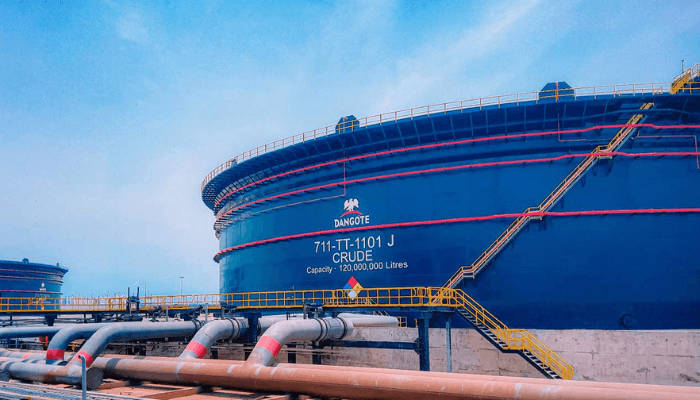
Nigeria’s National Oil Company Increases Crude Oil Supply to Dangote Refinery
Nigeria’s National Oil Company (NNPC) has announced plans to supply seven cargoes of crude oil to the Dangote refinery in May, an increase from the five allocated in previous months. This move comes in response to escalating fuel prices driven by ongoing conflicts in Iran, which have intensified competition among refineries globally for available crude oil, according to sources familiar with the matter.
The NNPC’s decision to boost shipments to Dangote’s refinery, which has a capacity of 650,000 barrels per day on the outskirts of Lagos, is particularly timely for both the local facility and global energy markets. The geopolitical tensions in the Middle East have significantly disrupted oil production, prompting buyers to transition from European supplies to those sourced from Asia, thereby driving up demand for Nigerian crude on the international market.
For Dangote, owned by Africa’s wealthiest individual, Aliko Dangote, this increase in supply provides much-needed relief. The refinery has recently faced challenges in securing crude from the spot market, often incurring substantial premiums of up to $18 per barrel over the benchmark Brent crude price, which was approximately $137 per barrel as of Tuesday. Additionally, a refinery official confirmed to Reuters that while the NNPC’s allocation boosts supply, it still falls short of their full demands, and negotiations for additional quantities are ongoing.
Transporting NNPC’s cargoes presents clear advantages for local refineries. Given that the Dangote facility is located within Nigeria, domestic crude oil shipments are considerably more cost-effective than sourcing from offshore traders in West Africa or international suppliers. Each additional allocation from the NNPC is thus particularly valuable amidst rising global prices.
However, this strategy does come with trade-offs for Nigeria’s oil export revenues. Every additional cargo designated for the Dangote refinery translates to one less available for international markets. As global buyers, in pursuit of alternatives to Middle Eastern oil, increasingly seek Nigerian crude, the country must navigate the delicate balance of meeting domestic needs while maintaining lucrative export opportunities.
The domestic diversion of crude could pose significant risks to the government’s foreign exchange earnings, especially as the naira faces ongoing pressures. Although Nigeria is the largest oil producer in Africa, with a daily output of approximately 1.5 million barrels, its actual production has often fallen short of OPEC quotas due to persistent challenges such as pipeline theft and maintenance issues.
Nigeria’s lighter sweet crude grades, including Bonnie Light and Escravos, are highly valued by refiners due to their low sulfur content and present a favorable alternative to Iranian crude. As European and Asian buyers search for viable substitutes, the significance of these domestic resources increases.
The situation underscores the complex balancing act the Nigerian government must perform. The Federal Government has long viewed the Dangote refinery as a pivotal project that could transform Nigeria’s reliance on imported refined petroleum products, despite its status as a major crude oil exporter. Operating the refinery at optimal capacity aligns with strategic objectives while potentially stabilizing domestic fuel prices—an issue that has sparked public protests in the past due to its political sensitivity.
Nonetheless, given Nigeria’s heavy reliance on oil export revenues for budget funding, prioritizing domestic supply risks forfeiting the premium pricing created by current global supply constraints. Although Dangote refinery executives have not disclosed the facility’s current utilization rate, the plant has faced intermittent supply challenges since its inception, with NNPC deliveries occasionally falling short of expectations.
