


Africa’s Growing Connectivity Fails to Boost Global Computing Capacity
Guy Zibi, managing partner at Xalam Analytics, has pointed out a stark reality: despite a decade of substantial investment in undersea cables and fiber optics, Africa still represents less than 1 percent of the world’s computing capacity.
Addressing attendees at the Africa Hyperscalar Conversations, Zibi emphasized a surprising paradox. While the continent is more connected than ever, it continues to lag behind in the global AI and hyperscale competition. Although Africa’s digital footprint is expanding in absolute terms, it pales in comparison to the rapid advancements seen in the US, Europe, and Asia.
The next wave of growth, Zibi noted, hinges not just on connectivity but also on the physical location of workloads. Cables alone are of little consequence if data processing occurs elsewhere.
He highlighted a crucial distinction between absolute infrastructure development and relative global positioning. Despite significant advancements in connectivity, Africa’s share of global public cloud usage hovers around 0.3 percent, and only about 0.2 percent of the world’s AI computing resources are available locally. According to research from the Guardian, by early 2026, Nigeria is set to connect to eight major undersea communications cables, establishing itself as a key hub for international connectivity in West Africa. These cables, which enable over 95 percent of Nigeria’s internet traffic, have improved bandwidth significantly, yet challenges remain in effectively distributing this capacity inland.
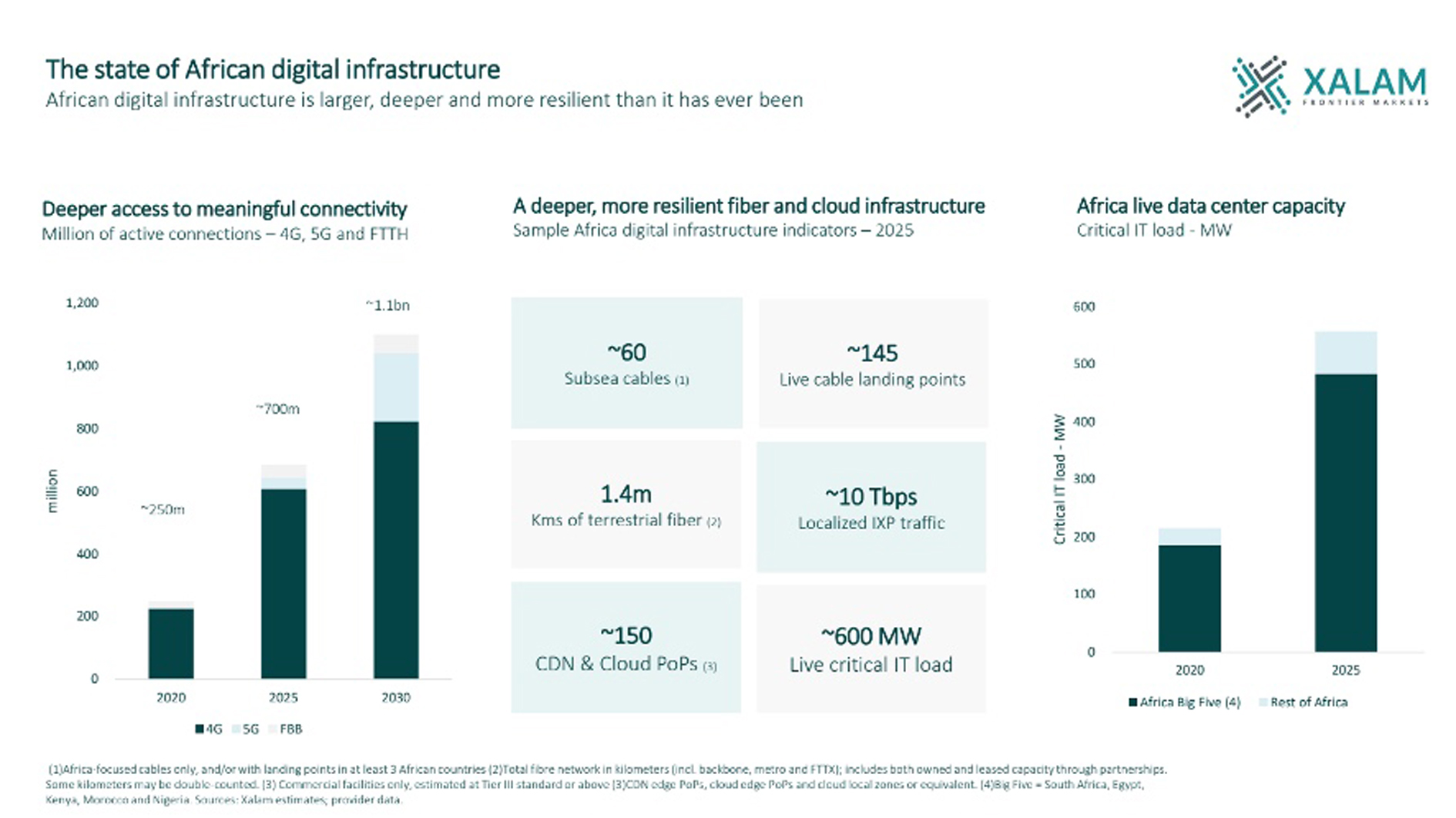
During the discussions, the concept of “meaningful connectivity” emerged as essential for fostering regional computing markets. Currently, around 700 million Africans utilize 4G, 5G, or fiber-based broadband, providing a foundation for the expansion of digital services. However, sustained concentration of workloads remains a prerequisite for the establishment of large cloud regions.
The digitalization of the public sector has been identified as a pivotal driver for burgeoning computing demand in emerging markets. Efforts to localize national identification systems, regulatory platforms, and financial infrastructure can serve as anchors for local hosting ecosystems, fostering greater confidence among investors. Zibi underscored this point, stating that as governments localize their workloads, infrastructure development will naturally follow.
Discussions also underscored that the growth of hyperscalers in Africa is closely aligned with maturing demand and available infrastructure. While cloud capacity is expanding through edge deployments and collaborative facilities in various markets, full hyperscaler regions remain concentrated in a limited number of hubs.
Zibi concluded that the future of Africa’s digital infrastructure hinges on the coordination of three critical systems: the formation of cloud demand, power availability, and the expansion of terrestrial fiber networks. Without comprehensive alignment across these factors, the speed of computing adoption is likely to remain inconsistent. Despite a decline in relative global share, he reiterated that Africa’s infrastructure trajectory is positive in absolute terms. The pressing question remains whether enhanced connectivity will foster a sustained rise in domestic workloads that can underpin a robust computing ecosystem across the continent.
In summary, the report highlights the digitalization of the public sector as a critical catalyst for change. By transitioning national identity systems, financial frameworks, and regulatory platforms to local servers, governments can generate the “anchor demand” necessary to attract major hyperscalers like Google, Microsoft, and AWS. Moving forward, the equation for the next decade depends on three foundational pillars: localizing domestic workloads, securing power for AI clusters, and extending terrestrial fiber beyond coastal landing sites. With 1.4 million kilometers of terrestrial fiber and 60 submarine cables in place, Africa has laid a solid groundwork for its 700 million broadband users. However, without dedicated efforts to shift to local hosting and stabilize power, the continent risks becoming a mere consumer of global digital services rather than emerging as a production hub.
