


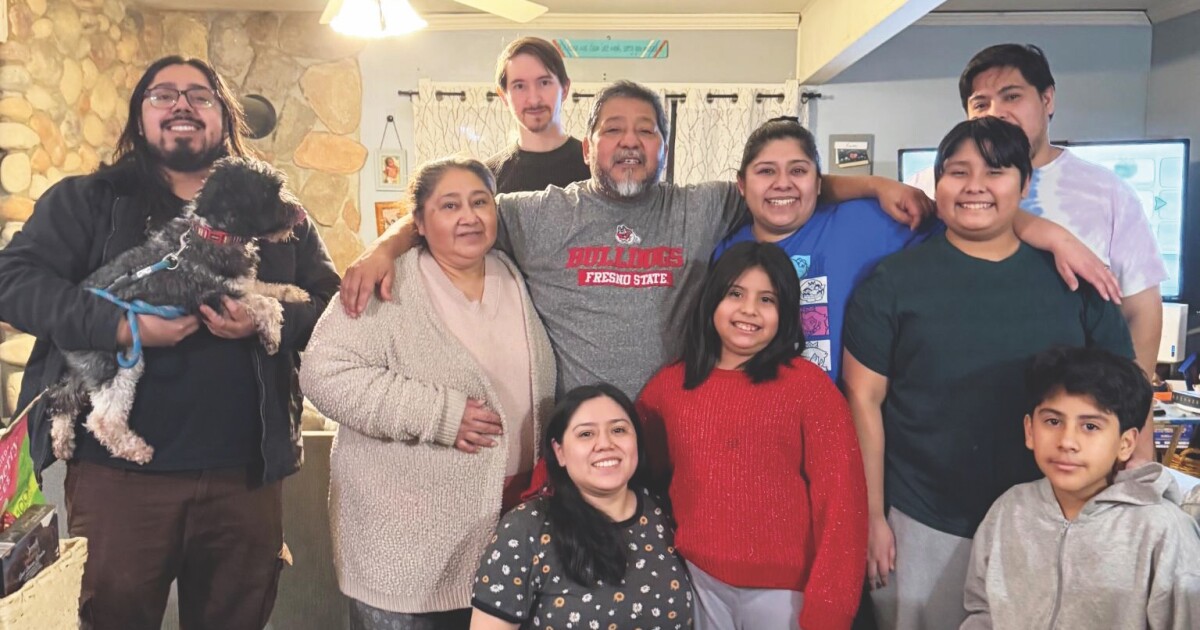
Family and Community Support for Detainees in Michigan
On January 17, one week after his release from a federal immigration detention center in Baldwin, Fernando Ramirez celebrated his oldest son Liam’s 13th birthday at their Grand Rapids home. As he placed a lit candle on the cake, Fernando expressed heartfelt wishes for the boy’s happiness in Spanish, evoking smiles and tears from Liam.
Fernando considers himself fortunate. His daughters, Samantha and Nahomi, live nearby and were able to visit him weekly at the North Lake Correctional Facility. In contrast, many families faced barriers—like lack of transportation or fears of immigration enforcement—that hindered their ability to visit loved ones. Fortunately, upon Fernando’s release, he was able to reunite with his daughters, who were determined to extend their support to other detainees as well.
The sisters launched a network of advocates through social media aimed at facilitating the return of released detainees and supporting immigrants still in detention. As of now, the network, established in early December 2025, has reportedly assisted 164 detainees from North Lake in either returning home or reuniting with family members.
“Every day, we prepare volunteers,” Samantha explained. “Some help transport individuals from Baldwin to nearby cities like Grand Rapids or even as far as New York and Ohio.” The network is critical, particularly given the often unpredictable hours of detainee releases.
Efforts to Reconnect Families
The Ramirez sisters have played an instrumental role in helping detainees reconnect with their families. Many warned of the hurdles detainees faced, such as losing access to their cell phones upon arrest and not recalling the contact details of loved ones. The sisters translated for families who didn’t speak English and even communicated essential medical needs to North Lake’s staff. They facilitated donations to detainees’ commissary accounts to allow them access to snacks.
When a friend of Fernando posted bail and was released, the sisters provided him a place to stay while he arranged transportation home. Their support extends not only to celebrating reunions but also to consoling family members emotionally affected by the separation. “It’s heartbreaking,” Nahomi shared, recalling the moments when parents and children had to part after brief reunions.
The Ramirez sisters began their efforts on the Facebook page “Reencuentros de la Luz” (“Reunion of Light”) to support families in the Chicago area. They later created “Raíces Migrantes” (“Roots of Immigrants”) to cater to families in western Michigan with relatives in ICE custody, many of whom are held at Baldwin’s North Lake facility. Since the launch, they have allied with various mutual aid organizations to provide guidance to families struggling with language barriers and detention-related concerns.
Concerns Over Detention Conditions
The Trump administration’s crackdown on illegal immigration has prompted much debate, particularly regarding the criteria for detaining individuals. Fernando, a 59-year-old from Mexico, had no criminal history aside from a minor traffic citation. He was stopped while driving a tractor-trailer in Indiana and subsequently found himself detained in Baldwin.
Initially arriving in the United States at the age of 19, Fernando had spent decades working in Michigan before fulfilling his dream of driving a big rig. While he was cognizant of the increasing ICE presence during a raid in Chicago, he and his daughters had decided that their last visit would occur just before his arrest.
At the Baldwin facility, managed by the private GEO Group under an ICE contract, nearly 1,500 individuals are currently detained. Alarmingly, 86% of these detainees reportedly have no criminal records, according to ICE data. Concerns about the conditions at Baldwin have intensified following reports of inmate complaints regarding overcrowding, insufficient staffing, and the fear of infectious outbreaks.
Emerging Leadership Behind Bars
While detained, Fernando quickly emerged as a leader among his peers. Fluent in English, he helped fellow detainees—most of whom were Hispanic—by translating and providing moral support. His encouragement for them to stay active and positive earned him the affectionate nickname “comandante” from one young detainee, a title that has stuck with him.
During his time at North Lake, Fernando took a stand against mistreatment, once demanding that a guard treat detainees with respect. While most guards displayed empathy, he noted that some showed a lack of compassion, often hiding their name tags to avoid accountability.
Fernando’s experiences deepened his family’s resolve and advocacy efforts. Following his release on January 10, he celebrated with a much-anticipated meal—a stark contrast to the stark reality he faced while detained, where meals were often cold and unappetizing. Now, he is savoring the comfort of family and food, marking the beginning of a new chapter for him and his daughters.
This reporting is made possible by the Northern Michigan Journalism Collaborative, led by Bridge Michigan and Interlochen Public Radio, and sponsored by Press Forward Northern Michigan.
