


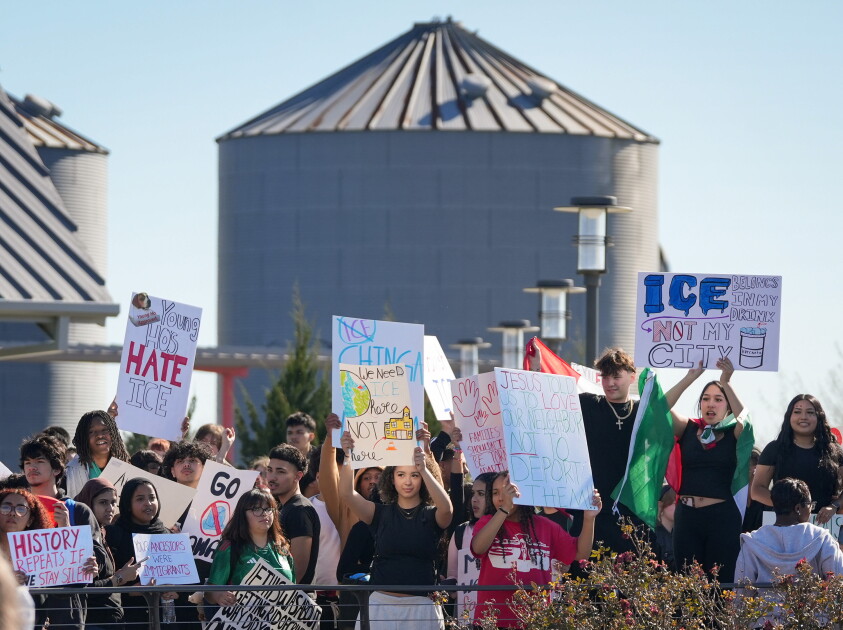
This spring, the impact of tightened immigration controls across the United States has become increasingly apparent in K-12 schools. Educators are reporting heightened levels of student anxiety, increased absenteeism, and a greater demand for counseling services, according to new data from a national survey.
The EdWeek Research Center conducted an online survey from March 25 to May 5, engaging 753 school district leaders, principals, and teachers to assess the effects of federal immigration enforcement actions. This latest survey builds on similar questions posed to 693 educators in the fall, revealing a clearer picture of the ongoing challenges faced by schools.
Those who work closely with immigrant students are reporting that the adverse effects of immigration enforcement are more pronounced now than they were last fall. Specifically, educators in urban settings and larger school districts are seeing more widespread impacts on their students.
Since last fall, the Trump administration’s immigration policies have disrupted the lives of many immigrants, including those with legal status. Operations such as the January Metro Surge in Minneapolis have escalated tensions, with tragic outcomes including the deaths of two Americans in the Twin Cities.
Bill Nelson, an English language development teacher at Community of Peace Academy in St. Paul, Minnesota, noted earlier this year that federal immigration agents have been observed “parking very close to the school,” raising concerns among students and their families.
While there has been a national decline in large-scale enforcement efforts, educators continue to report a significant presence of federal agents in their communities, contributing to an environment of anxiety in schools.
Increased Anxiety and Absenteeism Among Students
According to the EdWeek Research Center’s latest surveys, educators working with immigrant students have indicated a notable increase in anxiety and fear among their students. In the spring, 57% of educators reported witnessing such emotions, up from 50% in the fall. The proportion of those observing decreased attendance due to immigration enforcement jumped from 24% to nearly 39% during the same period.
Additionally, the number of educators asserting that there was no impact from immigration enforcement fell to 23%. These trends highlight a troubling escalation, particularly in urban environments, where elementary and middle school students are increasingly affected.
Among urban educators, a staggering 81% reported increased anxiety among students this spring, a rise from 66% during the fall. Similarly, 59% reported declines in student attendance compared to 43% in the previous survey. The statistics reveal that larger school districts are particularly affected; 53% of educators in districts with 10,000 or more students noted a drop in attendance among immigrant students.
In New York City, a school like Ellis Prep, which serves newly arrived immigrants, has faced significant attendance challenges. History teacher Eric Marquez, a member of the National Newcomer Network, mentioned that after an incident involving the arrest of a student at a courthouse last year, enrollment projections were adjusted downward due to rising absenteeism.
Even though his school has not seen the scale of crackdowns evident in other areas, the lingering effects have created a sense of unease among students. These events contribute to the difficulties educators face in maintaining consistent instructional time and tracking attendance effectively.
Schools Implement Enhanced Counseling and Support
The EdWeek surveys have also shed light on how schools are responding to the growing mental health needs of students amid increased immigration enforcement. In the spring, 36% of educators reported that their institutions had stepped up counseling services for those exhibiting anxiety or fear, a significant rise from only 26% in the fall.
Urban educators are leading the charge, with 54% stating their schools offer additional mental health support, compared to 37% of suburban educators and 26% in rural areas. The pressure on mental health resources has compelled schools like Nelson’s to engage interns from local universities to help address the needs of students from immigrant families.
At Ellis Prep, while students did not openly express fear during lessons, they actively supported their detained classmate, advocating for his release. Counselors have taken a proactive step by employing former students to make current students feel more comfortable discussing their concerns.
Both surveys inquired whether schools had protocols in place for handling requests from immigration officials. Responses were consistent across both surveys, with 72% of educators affirming the existence of procedures this spring. As a precautionary measure, Nelson’s school had established a clear policy prior to the federal operations, providing staff with a framework to address potential encounters with immigration agents.
Nelson expressed his increasing attentiveness to immigration news and the necessity of connecting families with community resources. He remarked, “Dealing with the growing fear and needs of families is now part of my role, which wasn’t the case before.”
