


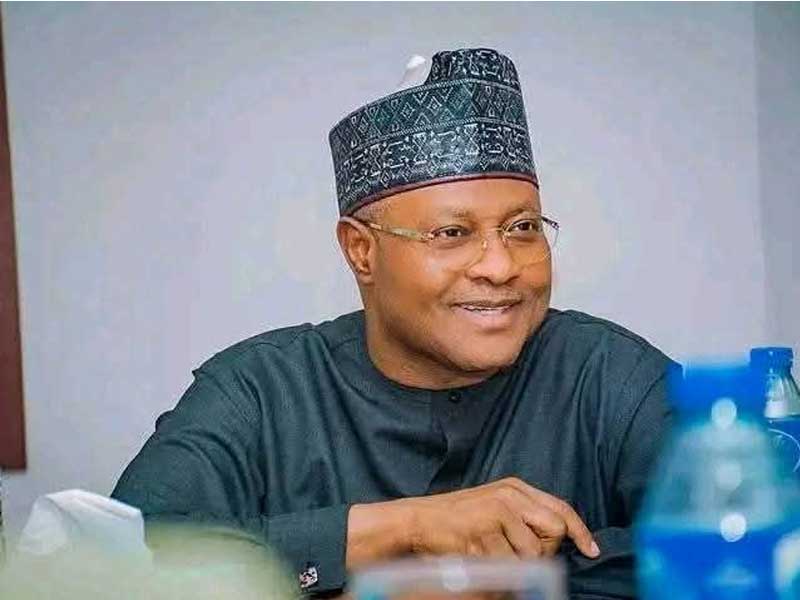
Uba Sani Recognized as Governor of the Year
In a ceremony celebrating exemplary leadership and impactful governance, Governor Uba Sani of Kaduna State received the prestigious 2026 Governorship Award from the National Leadership Awards at Merit House in Abuja. This acclaimed platform honors excellence in public service across Nigeria, acknowledging Sani’s courageous and people-centric leadership. Since taking office in May 2023, significant strides have been made in enhancing security, fostering social cohesion, and accelerating infrastructure development throughout the state.
This accolade transcends mere ceremony; it serves as a powerful testament to the transformative impact of Uba Sani’s administration and embodies hope for the potential of modern Nigerian leadership.
Leadership During Challenging Times
Chief BJ Opara, team leader of the National Leadership Summit Group who presented the award, effectively summarized the essence of Governor Sani’s stewardship. He noted, “Governor Uba Sani exemplifies the type of leadership Nigeria urgently requires: resilience amidst security challenges, a commitment to unite a diverse populace, and decisiveness in delivering tangible development.” His words resonated powerfully in a nation facing challenges such as banditry, kidnappings, and communal tensions. For many, this award signifies a remarkable turnaround for a state previously characterized by insecurity and division.
Community-Centric Governance
On behalf of Governor Sani, Director of Information Malam Ahmed Mayyaki expressed gratitude, stating that this honor reflects the collective resolve of the people of Kaduna and the administration’s steadfast dedication to peace, inclusive growth, and sustainable development. Sani reiterated the importance of collaboration, underscoring that the award symbolizes the unity and determination of the people, emphasizing a collective pursuit of a safer and more united Kaduna.
The governor highlighted key initiatives that contributed to the administration’s achievements, including intelligence-led security operations, partnering with federal security agencies, and enhancing community engagement. These strategies have substantially decreased banditry incidents, restored public confidence, and revitalized economic and social activities in previously troubled areas.
Innovative Security Strategies
Since taking office, Uba Sani has made significant gains in improving security, marking one of the most notable accomplishments within Nigeria’s recent governance landscape. Faced with a backdrop of rampant banditry and communal conflicts—particularly in southern Kaduna—his administration implemented the “Kaduna Peace Model.” This integrated framework prioritizes dialogue and community-led intelligence over traditional mobilization approaches, and it has successfully maintained a zero-ethno-religious crisis record for over 34 months, a feat lauded by President Bola Tinubu.
A pivotal element of this success was the establishment of the Kaduna Vigilance Service (KADVS), which recruited and trained 7,000 personnel supported by a fleet of 150 security vehicles. Joint operations with traditional leaders, youth groups, and federal military forces provided valuable grassroots intelligence, leading to the dismantling of bandit networks and the restoration of previously dangerous routes, such as the Kaduna-Abuja highway. The strategic placement of forward operating bases has significantly eased public movement, enhancing trust in a formerly unstable environment.
Building Social Cohesion
Amidst ongoing security initiatives, Sani’s administration has made concerted efforts toward fostering social cohesion in a state historically fractured along ethnic and religious lines. Despite these divisions, the governor has engaged in interfaith dialogue and reconciliation, bridging gaps between diverse communities. By facilitating discussions among Christian and Muslim leaders and promoting equal representation across Kaduna’s three senatorial districts, Sani has nurtured a culture of mutual respect and trust.
This effort demonstrates that the “Kaduna Peace Model” is more than just a theoretical framework; it has institutionalized dialogue as a meaningful governance tool. In lifting Kaduna as a beacon of peace within a tumultuous region, Sani has shown that unity can indeed emerge through intentional policy and diverse representation.
Infrastructure Development and Economic Growth
In tandem with security and community engagement, the administration is actively pursuing infrastructure development to propel economic growth and improve living conditions. Since 2023, the Governor has initiated over 140 road projects totaling 1,335 kilometers across all 23 local government areas, with more than 60 percent currently completed. Significant projects include the 35-kilometer Gadargayan-Gwaraji-Malaban-Kujama asphalt road, enhancing connectivity for farming communities previously devoid of essential infrastructure.
Transforming rural areas has been a priority, intensifying development efforts beyond urban centers to ensure market re-opening and agricultural promotion. In the healthcare sector, improvements include upgrades of over 255 primary healthcare centers to Level 2 status, with more than 174 completed, enhancing access to quality care in rural regions. Educational investments and housing initiatives, like the Qatar Sanabil Program, further exemplify this administration’s commitment to sustainable growth.
Uba Sani’s interconnected approach, integrating security with infrastructure and socio-economic initiatives, has turned Kaduna from a violence-plagued area into a model of stability, attracting investment and national recognition. His leadership—characterized by resilience, compassion, and inclusivity—sets a standard for what Nigeria profoundly requires, paving the way for states to overcome inherited challenges and advance toward progress.
