


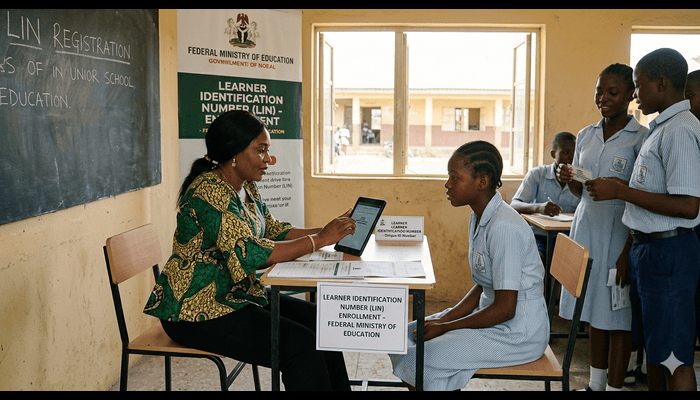
Nigeria Launches Nationwide Learner Identification Number System
In a significant move to digitize the educational landscape, the Federal Government of Nigeria has introduced a nationwide Learner Identification Number (LIN) system. This initiative has already issued over 1.9 million unique IDs to candidates in the initial phase of its rollout.
Enhancing Educational Infrastructure
The LIN system aims to provide a permanent and traceable academic identity for all students. Its primary objectives include strengthening educational data management, enhancing planning strategies, ensuring the integrity of examinations, and facilitating continuity in learning across all educational levels.
Government Commitment to Educational Transformation
According to a statement from Mr. Boriowo Folasad, Director General of Press and Public Relations at the Federal Ministry of Education, Minister Malufu Tunji Alausa hailed the initiative as a transformative step aligned with President Bola Ahmed Tinubu’s “New Hope” agenda. He emphasized that this initiative showcases the government’s dedication to leveraging technology for improved service delivery and human capital development in the education sector.
Supporting Learners’ Academic Journeys
Minister Alausa described the LIN initiative as a pivotal development that will reshape Nigeria’s education system. By providing each learner with a unique identification number, the government is building structures that will support every child’s educational journey from the classroom to their future careers, ensuring that no student falls behind.
Implementation Milestones and Future Expansion
The Ministry confirmed that more than 1.9 million candidates, who registered for the 2026 examinations administered by the West African Examinations Council and the National Examinations Council, have been captured in the LIN system. This system endows each student with a unique and permanent digital identity that encompasses vital information, such as their state, local government area, school, and individual learner code. This capability allows students to maintain their academic records even if they transfer schools or relocate.
Strengthening Exam Integrity and Student Tracking
The LIN initiative is built upon the existing Digitized National Education Management Information System (DNEMIS), which has established a comprehensive national database of schools. Each school is assigned a unique 10-digit identification number that serves as the foundation for the Integrated Education Data System. By linking learners to verified school identities, the government aims to enhance the examination verification process, reduce impersonation, and bolster the credibility of public exams across Nigeria.
Addressing Educational Gaps and Supporting Sustainable Management
Beyond improving exam security, the LIN system is anticipated to assist government agencies in identifying out-of-school children, monitoring student progress, detecting dropouts, and designing targeted interventions to bridge learning gaps. The platform is fully digital, promoting efficient, transparent, and eco-friendly education management practices.
As the Ministry of Education gears up for the next stage of implementation, plans are underway to extend the LIN initiative to all learners in both public and private schools nationwide. Further integration with national data systems and the annual school census is also anticipated. The Minister has called upon stakeholders—including schools, examination bodies, parents, and students—to actively support this initiative, underscoring its importance in cultivating a more inclusive and accountable education system in Nigeria.
