


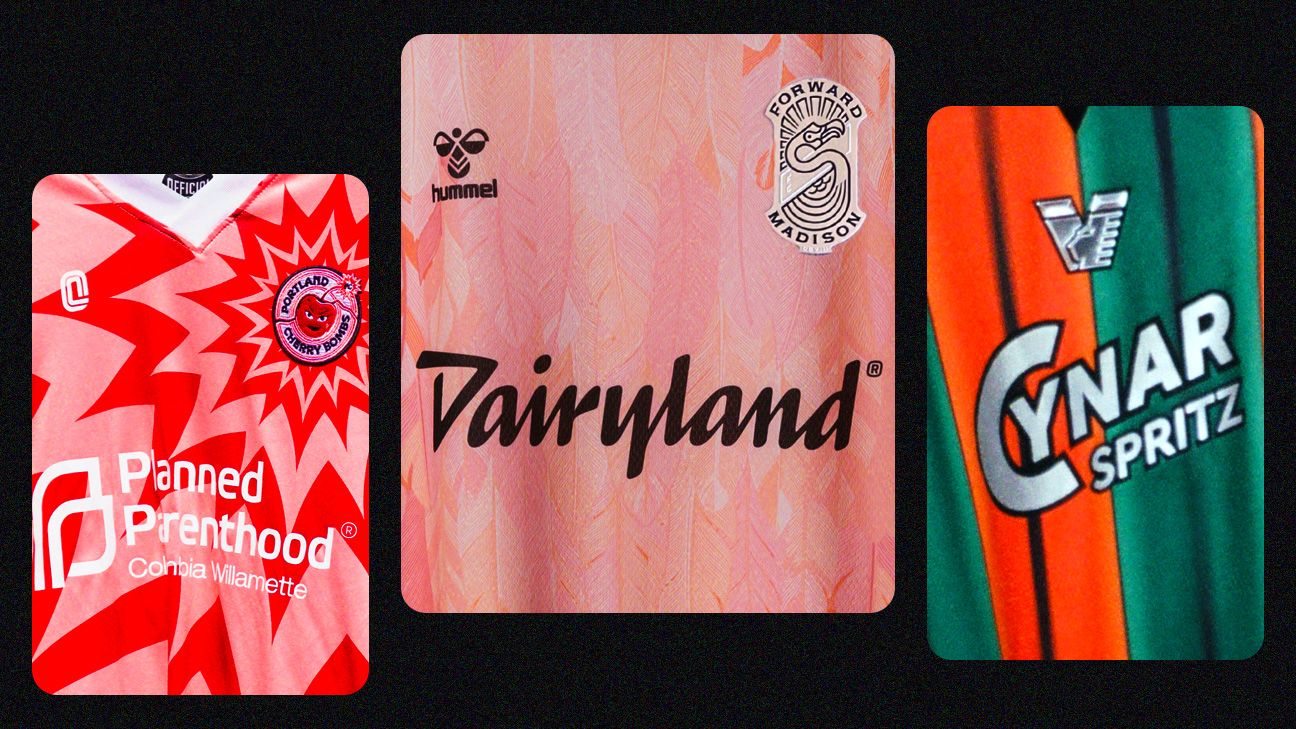
William Jenkins, located nearly 4,000 miles from Madison, Wisconsin, recalls the surreal moment he experienced when he spotted his team’s lower league jerseys being sold in England. As the creative director for Forward Madison, he expressed his astonishment, stating that seeing their kit in London was both humbling and incredible. He emphasized the unique nature of this experience, recognizing how it connects various chapters around the globe.
Competing in the modest USL League One, Forward Madison may not yet be a dominant force in the global soccer landscape. A matchup between them and illustrious teams like Arsenal or Barcelona would likely result in a substantial loss. However, when it comes to jersey design, these third-division clubs are increasingly making a mark in their own right. The growing visibility of smaller clubs highlights their innovative approaches to team branding and merchandise.
Emerging Trends in Kit Design
From stylish looks gracing red carpets to using jerseys to express personal empowerment, lower league teams are redefining the role of kits in sports. Through these unique apparel designs, these clubs are elevating their profiles significantly. Arsenio López, art director at kit manufacturer Hummel North America, noted that these jerseys are the ultimate expression of team identity. He emphasized that great design captures both the imagination and the eye, blending creativity with authenticity.
Venice Team Takes Jerseys to New Heights
During the previous Venice Film Festival, players from Venice FC donned their away shirts on the red carpet, creating a striking contrast with traditional formal wear. Venere managing director Tancredi Vitale remarked that, while many attendees adhere to a specific dress code, the players opted to showcase their jerseys, sparking interest and conversation. This moment not only highlighted the team but also underscored a cultural shift, as Venice FC has emerged as a social media sensation since its rebranding in 2021.
In a city renowned for its art and culture, Vitale acknowledged the abundance of creative inspiration drawn from Venice. This authenticity serves as a key differentiator in their marketing strategy. He pointed out that Venice FC boasts attendance figures that rival some Serie A teams, thriving on the synergy between design, culture, and fan engagement.
Forward Madison Engaging Fans in Design
For those interested in soccer kit production, Forward Madison offers a distinctive approach. Alyssa Bruce, the team’s retail director, highlighted their commitment to involving fans in the design of away and home kits. Each season, the apparel design committee, comprised of supporters from The Flock, collaborates closely with the club and Hummel to create unique jerseys. This open and experimental approach contrasts with the more conventional practices of many first-division teams, further amplifying the club’s appeal.
Jenkins noted the importance of infusing meaning into the designs, stating that great visual appeal becomes even more powerful when linked to compelling stories and community engagement initiatives. Such strategies, which allow fans to purchase beers through QR codes and promote LGBTQ+ outreach, demonstrate the team’s commitment to leveraging their kits as instruments for social impact.
Portland Cherry Bombs Ignite Interest Before their Debut
Just days following the inaugural celebration of the Portland Cherry Bombs, general manager Courtney Schmidt experienced a memorable encounter on a flight when another passenger recognized her team gear. Although their inaugural season has yet to begin, interest in the USL W-League team is growing, buoyed by its spirited image and community focus. Schmidt expresses commitment to fostering a strong, empowering brand identity for the team, which was evident in their inaugural jersey partner, Planned Parenthood.
By aligning with organizations that resonate with their values, the Cherry Bombs are striving to advocate for women’s empowerment and support marginalized communities within Portland. This sharing of community ideals connects the team with a broader audience, emphasizing how the aesthetics of lower league teams often reflect deeper values and social commitments.
The creative appeal seen in the kits of Venezia, Forward Madison, and the Cherry Bombs is more than superficial. These clubs are successfully engaging their communities and supporters, generating meaningful conversations around soccer that transcend the field. The spotlight is shifting toward these teams, driven not just by visually striking apparel, but also by their dedication to culture and community.
