


Health Secretary Faces Scrutiny Over Vaccine Policies and Agency Reforms
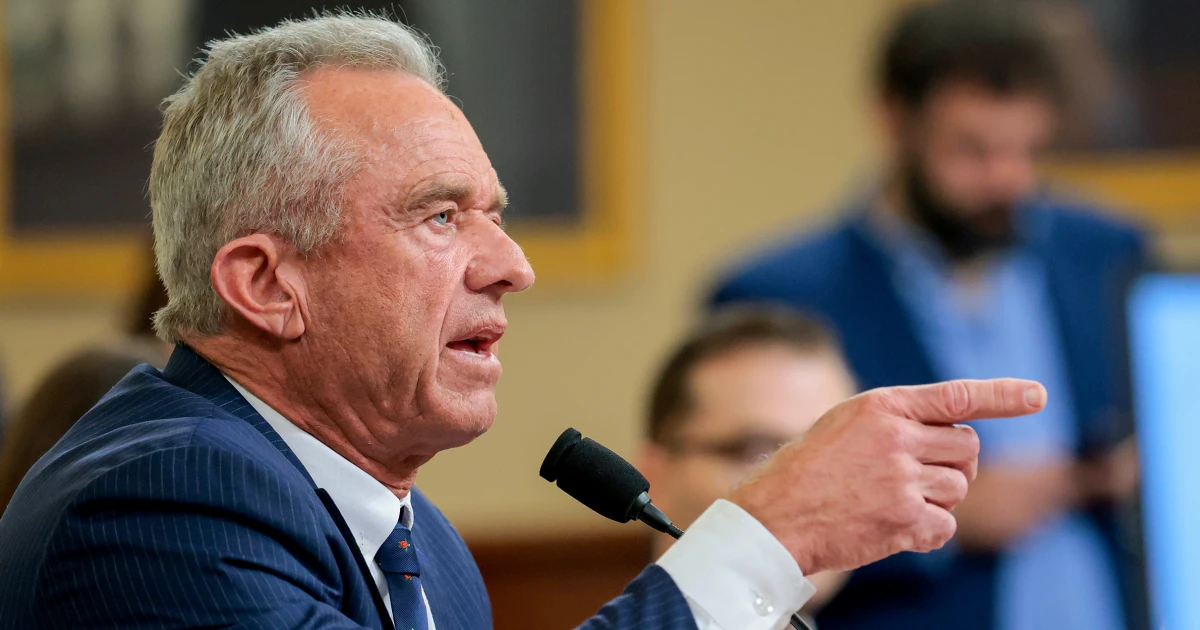
Health Secretary Robert F. Kennedy Jr. encountered significant backlash from Democrats during two separate House committee hearings on Thursday, focusing on his vaccine policies and proposed changes to federal health agencies.
The hearings were centered on the Department of Health and Human Services’ budget for the upcoming year. The department is requesting a total of $111.1 billion, reflecting a reduction of $15.8 billion from the current allocation.
President Kennedy announced plans to consolidate various health agencies within HHS while enhancing the department’s emphasis on disease prevention. He faced pointed inquiries regarding the radical modifications he has enacted since assuming office early last year, particularly concerning the childhood vaccination schedule and the elimination of universal recommendations—a modification that was subsequently blocked by a court. Comments regarding the safety of the measles vaccine and the potential link between Tylenol use during pregnancy and autism further fueled the discussions.
The Trump administration had previously implemented substantial layoffs across federal health agencies, some of which have since been reversed. During the House Appropriations subcommittee meeting, Representative Steny Hoyer (D-Md.) challenged Kennedy on this issue. Kennedy remarked that the layoffs contributed to “the greatest decline in health conditions in the history of the world,” alleging that the former staff had neglected their responsibilities.
With a current workforce of 72,000 employees at HHS, Kennedy indicated plans to hire an additional 12,000 staff members. “We’re going to recover all the personnel we lost,” he affirmed, asserting that the newly hired individuals would better address chronic health issues.
Kennedy defended his department’s response to a recent measles outbreak, which has resulted in 2,287 cases last year—the most significant spike since the disease was thought to be eliminated from the U.S. over 25 years ago. Additionally, 1,714 cases have already been reported this year. California Democratic Representative Linda Sanchez pressed Kennedy to clarify his stance on measles vaccinations, pointing to tragic consequences, including fatalities linked to the disease.
In response to criticism concerning his approach to measles vaccinations, Kennedy acknowledged the possibility that the measles vaccine could have saved lives. He claimed that the U.S. has excelled in measles prevention compared to other countries, a statement contested by health experts who cite rising cases elsewhere linked to declining vaccination rates.
During the hearings, Kennedy revealed two significant policy reforms. He announced an overhaul of the U.S. Preventive Services Task Force, responsible for national disease screening guidelines, expressing the need for improved efficacy and transparency. He criticized the committee for being “lazy and negligent” and assured that new members would bring renewed energy to the task.
Additionally, Kennedy modified the classification of 12 peptides from Category 2 to Category 1 substances, thereby permitting compounding pharmacies to manufacture them while the FDA continues its safety evaluations. These peptides have gained traction within the wellness community, with claims related to anti-aging benefits and performance enhancement. Nevertheless, except for a few FDA-approved peptides, the safety of most remains unverified.
Kennedy’s remarks also touched on the leadership vacuum within several federal health agencies, including the CDC. He asked Congress to confirm Dr. Casey Means as Surgeon General, describing him as a key advocate for the “Making America Healthy Again” movement. However, Means has received criticism from lawmakers across the political spectrum for his controversial views on vaccines and other health issues. Her nomination remains uncertain as the Senate Health, Education, Labor, and Pensions Committee has yet to schedule a vote.
