


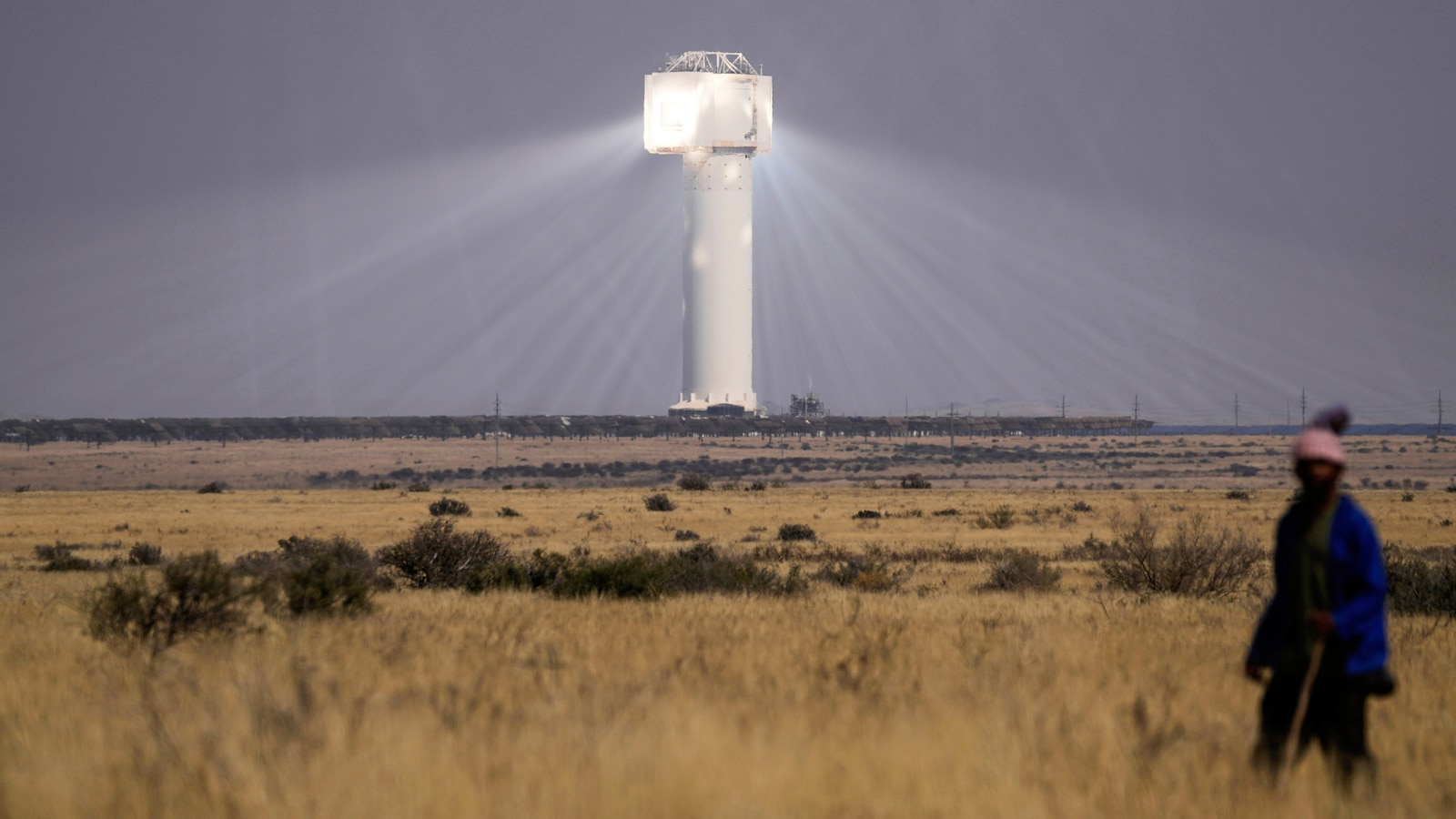
A Shift Towards Renewable Energy in Africa
Nairobi, Kenya — Africa’s emerging power projects are increasingly centered around solar and wind energy, along with battery storage, as governments and investors move away from coal and large hydroelectric dams. This transition is driven by the quest for more affordable, efficient, and dependable electricity.
Investment Trends in Renewable Energy
This trend is illustrated by the recent $1.5 billion energy agreement between China and Zambia, which, announced in early May, encompasses three distinct 300-megawatt initiatives that include solar, wind, and coal power. While coal remains part of the energy mix, underscoring the continent’s ongoing need for stable electricity, rising fuel import costs and decreased grid reliability have prompted many African nations to prioritize renewable energy solutions, which can be implemented more swiftly and cost-effectively than conventional power plants.
Rising Solar Projects Across the Continent
Recent data from Electron Intelligence reveals that of the 322 energy projects announced across Africa for 2025, 173 are solar initiatives. This is followed by 46 hydropower projects, 34 wind projects, 22 gas projects, and 14 hybrid energy projects. Experts suggest that Africa is not merely on the fringes of the global energy transition but is, in fact, at its core. Magwe Manga, head of climate finance at FSD Kenya, emphasizes that the continent boasts some of the world’s most excellent renewable resources, marking a significant shift toward clean energy.
Strategic Evolution in Energy Infrastructure
According to Olamide Nii Afue, CEO of the African Mini-Grid Developers Association (AMDA), Africa is experiencing a major strategic transformation in energy infrastructure development. This shift favors systems that can be deployed rapidly and scaled incrementally with adaptable financing options. Solar power is increasingly integral to these mini-grid systems, allowing rapid deployment and adaptability to local needs.
Record Growth in Renewable Energy Capacity
The International Renewable Energy Agency predicts that Africa will record an unprecedented increase in renewable energy capacity, projecting 11.3 gigawatts of new capacity by 2025—three times the amount recorded last year. Countries like South Africa, Egypt, and Ethiopia are expected to contribute significantly to this growth.
Cost-Effectiveness of Renewable Technologies
The decreasing affordability of renewable technology is contributing to this trend. Since 2010, the cost of utility-scale solar energy has plummeted by nearly 90% globally, while onshore wind energy costs have decreased by about 70%. Consequently, renewable energy now stands as the most economical option for new power generation in many African markets. As noted by Matt Tillard, CEO of Crossboundary Energy, which invests in renewable energy projects across Africa, renewable sources are the swiftest, most affordable, and most viable means of meeting the energy needs for growth.
Challenges and Opportunities Ahead
Despite promising developments, the continent faces significant challenges. Many African power companies are grappling with financial difficulties, leading to lender hesitance regarding long-term power purchase agreements. According to the International Energy Agency, perceived country risks render financing renewable projects in Africa three times costlier than in developed countries. However, development finance institutions such as the African Development Bank and the International Finance Corporation are stepping in to bridge the financing gap through concessional lending, guarantees, and risk-sharing mechanisms.
Manga concludes that the main hurdles are not rooted in technology or costs but lie in financing mechanisms, political determination, and the ability to craft viable projects that address the continent’s pressing electricity demands.
