


Arsenal Fans Reflect on 2006 Champions League Heartbreak Ahead of Final in Budapest
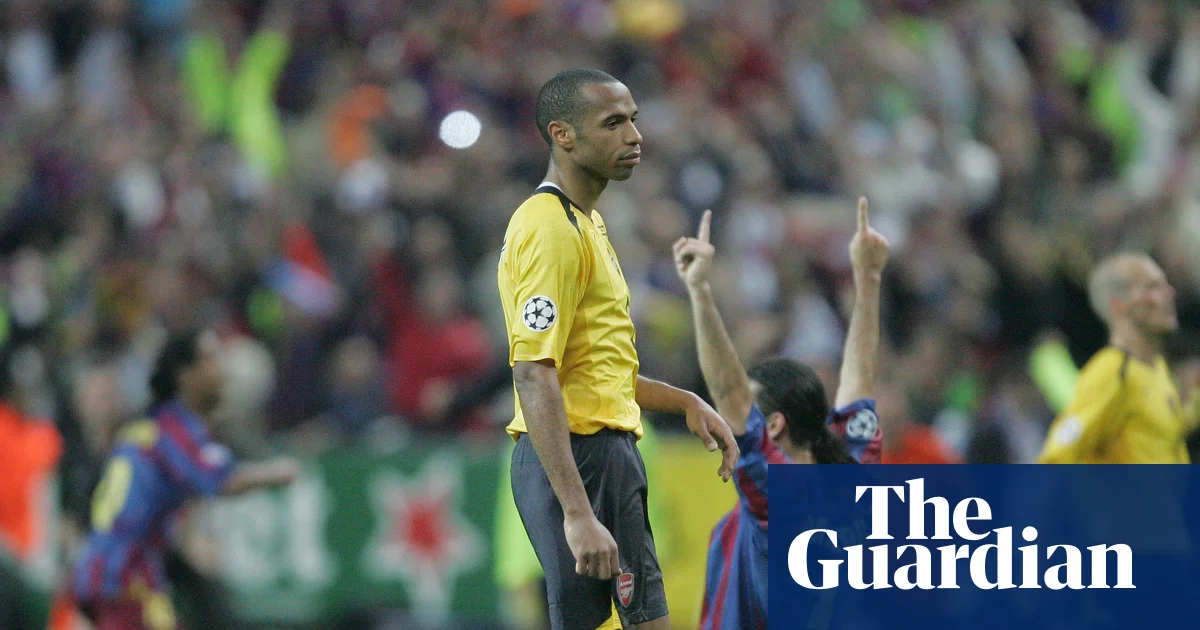
Amid high hopes and intense anticipation, thousands of Arsenal supporters journeyed from London to Paris for the springtime allure of the 2006 Champions League final. However, this excitement lasted a mere 18 minutes, as Arsenal goalkeeper Jens Lehmann was sent off, marking the beginning of a heartbreak that would linger for years.
Fast forward twenty years, and Arsenal fans are once again filled with excitement as they prepare for the club’s second Champions League final, this time in Budapest. Yet, the shadow of past disappointments still looms large for the Gunners, whose journey since that fateful day in 2006 has been fraught with challenges.
At that time, in May 2006, Arsenal’s prospects appeared promising. The legacy of their iconic players—Patrick Vieira, Thierry Henry, Dennis Bergkamp, and Robert Pires—still resonated in the air. New talents like Ashley Cole and Cesc Fabregas were rising through the ranks, while Arsène Wenger’s knack for scouring undiscovered gems continued with signings like Kolo Touré, Robin van Persie, and Gael Clichy.
With the opening of the Emirates Stadium in August, Arsenal aimed to position themselves for a perennial title challenge against Manchester United. This monumental shift should have set the stage for success, but capturing their first Champions League title was crucial to solidifying their reputation on the global stage.
Those involved with the club remember the 2006 final with a mix of frustration and disbelief. Keith Edelman, who served as managing director at the time, expressed a sense of injustice, claiming the referee had made a mistake in issuing the red card to Lehmann. Acknowledging the pivotal moment, he noted that had they retained all eleven players, the outcome could have been different.
The match took a turn as Arsenal initially took the lead through Sol Campbell, holding strong until the 76th minute when Samuel Eto’o equalized, followed shortly by Giuliano Belletti’s winning goal for Barcelona. Observers noted that Wenger’s era might have peaked; key players had departed or were nearing the end of their tenure, leaving a gap that would prove challenging to fill.
The transition that followed was turbulent. Arsenal’s ambitions were complicated by significant financial burdens stemming from the new stadium and increased competition from clubs fueled by affluent investors. As the club grappled with a debt of £400 million, they found themselves in an environment where maintaining competitiveness became increasingly difficult.
Despite these challenges, Arsenal managed to secure substantial sponsorship deals, including £140 million with Nike and an additional £100 million partnership with Emirates. However, these agreements often meant sacrificing future revenues to ensure the club remained afloat during financially trying times. The fallout of losing players like Ashley Cole, who left for Chelsea over a contract dispute, began a worrying trend that saw the club struggle to reclaim its former glory.
As football entered a new era dominated by tactical analysis and strategic management, the departure of key figures in the club’s hierarchy further exacerbated Arsenal’s woes. The fallout from decisions made in the years following the 2006 final, including the resignation of vice-chairman David Dein, created a rift that would take time to heal. With new leadership under Stan Kroenke and his son Josh steering the club today, supporters remain hopeful for a resurgence.
While there have been glimpses of redemption, including Mikel Arteta’s leadership during the FA Cup victory in 2014, the pain from the 2006 final lingers. Now, as Arsenal returns to the Champions League stage in Budapest, fans and players alike hold onto the belief that their time to celebrate has finally arrived, offering a chance for healing over two decades of disappointment.
