


Progress in New York State Budget Negotiations Amid Immigration Proposals
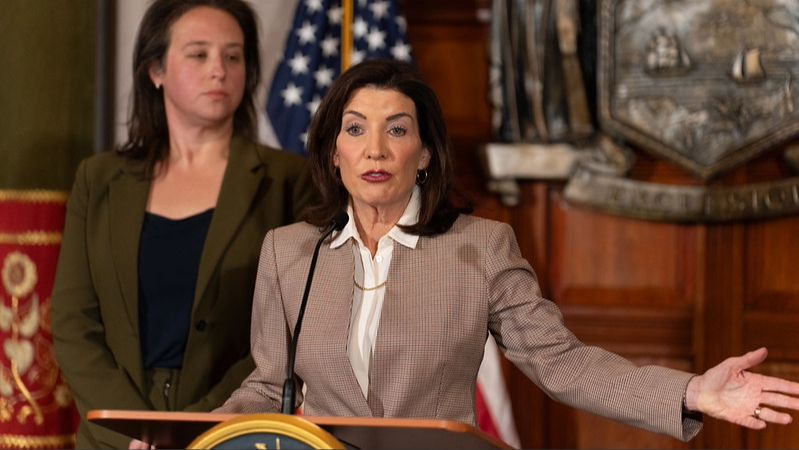
Following a tense first half of the week in Albany, the last two days of New York’s state budget negotiations have begun to show signs of movement, akin to a train finally departing after a lengthy delay. This shift was underscored when Governor Kathy Hochul announced advancements during her briefing, following an unrelated event, regarding negotiations with the Democratic-led Legislature focused on immigration protections that have been under discussion since the start of the legislative session. The urgency surrounding this issue heightened after tragic incidents related to the Trump administration’s immigration policies in Minneapolis claimed the lives of Renee Good and Alex Preti.
Typically reticent about the specifics of private budget discussions, Hochul revealed to reporters that a revised proposal would be unveiled after weeks of consultations with state lawmakers. This process was intertwined with ongoing budget talks, indicating a comprehensive effort to address complex issues.
In her announcement, Hochul framed the update as an overview of her current stance, clarifying that no formal agreement has yet been struck with legislative leaders and that discussions are still active. The governor emphasized her intention to build upon earlier proposals aimed at curtailing formal arrangements between local governments and U.S. Immigration and Customs Enforcement (ICE), particularly the 287(g) agreements. Key measures in her expanded proposal include providing legal remedies for individuals whose constitutional rights are compromised by ICE and shielding specific sensitive locations from unwarranted ICE actions.
Significant within the framework of these discussions is the manner in which state and local law enforcement will interact with ICE. While some lawmakers and advocates continue to voice serious concerns, it appears Hochul has made concessions that may appease various stakeholders. The proposed guidelines stipulate that local law enforcement agencies would be barred from cooperating with federal authorities regarding noncriminal offenses and would not be allowed to inquire about or share an individual’s immigration status unless legally mandated. Additionally, individuals can only be referred to immigration authorities if they have been convicted of a crime, and no governmental resources should be utilized for immigration enforcement purposes.
Hochul clarified that protections would not extend to individuals convicted of serious or violent offenses, and immigration infractions such as illegal entry would remain outside the proposed changes. She expressed a clear stance that local law enforcement should not act against individuals based solely on their immigration status. “These are not the people we want local law enforcement or state or local officials to help arrest if they are the only person suspected of committing a crime,” she remarked.
The expansion of protected sensitive locations from unwarranted ICE interventions now includes areas owned by state and local governments, such as schools and libraries, with provisions for private entities to optionally designate sensitive zones. Notably, the proposal prohibits ICE officers from wearing face coverings, a critical sticking point for some state lawmakers, including Senator Pat Fahey. Yet, concerns persist regarding how the proposal’s language will be interpreted, particularly surrounding the ‘probable cause’ standard that may lead to arbitrary enforcement.
Assembly Speaker Carl Heastie highlighted the ongoing discussions among House members, noting that while consensus on probable cause remains elusive, there’s overall satisfaction with the governor’s revisions elsewhere in the proposal. Hochul echoed these concerns, asserting, “Every community can go to great lengths to protect its residents from ICE.” She noted that her administration is establishing a foundational framework, allowing communities to decide their level of engagement with ICE.
As both chambers advance discussions on a fourth budget extension to bridge the legislative gap, the state budget remains over two weeks overdue. Heastie confirmed that while some progress has been made on key issues, several critical items are still unresolved. Senate Majority Leader Mike Gianaris remained optimistic, indicating that next week could bring significant advancements across the board in the budget negotiations and related issues, such as the governor’s climate change initiatives. The urgency for legislative action intensifies as Hochul aims to make progress amidst a backdrop of ongoing public concern over immigration policy and its broader implications on community safety and civil liberties.
