


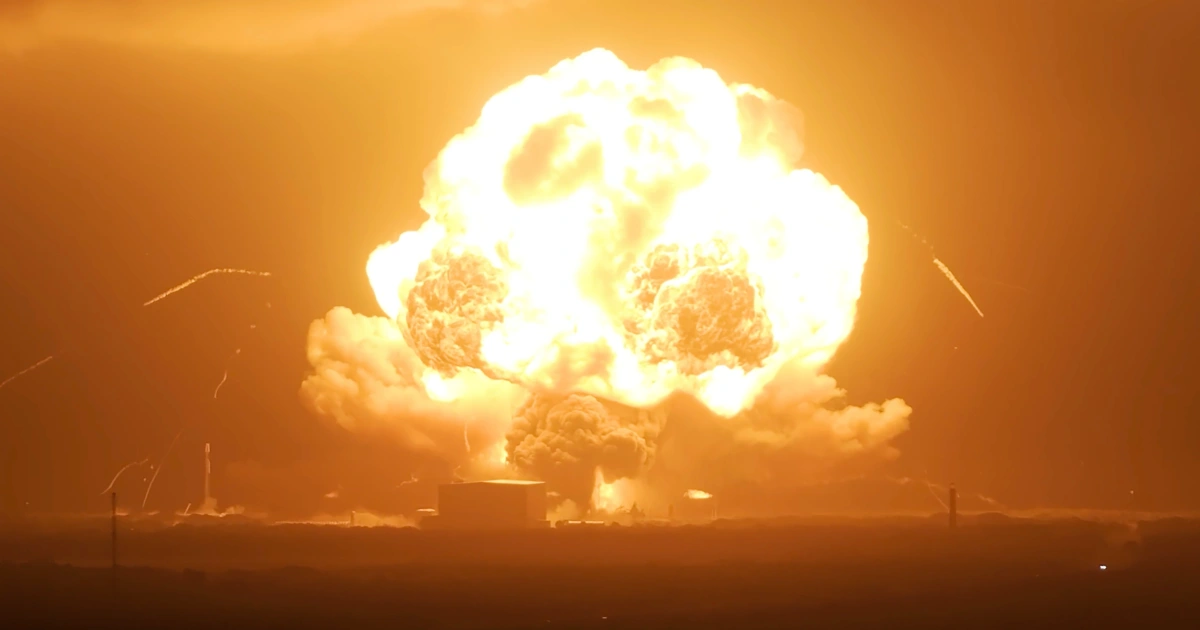
Explosion of Blue Origin Rocket Signals Significant Setback
Thursday night’s explosion of the Blue Origin rocket represents a considerable challenge not only for the aerospace company founded by Jeff Bezos but also for NASA. This incident could jeopardize efforts to return astronauts to the Moon and commence construction of a lunar base.
The company now faces the unfortunate reality of losing one of its few operational New Glenn rockets alongside the destruction of its primary launch pad. Investigations into the explosion and the subsequent repair processes could span months or even years, further delaying any potential return to flight.
Navigating similar uncertainties, NASA had counted on Blue Origin’s involvement in its Artemis program aimed at lunar exploration. The firm has been in competition with SpaceX to develop a lunar lander capable of ferrying astronauts from Earth orbit to the Moon’s surface. Plans were already in place for testing one or both of the commercially built landers during next year’s Artemis III mission.
Days prior to the explosion, Blue Origin secured a significant contract to deliver two robotic landers for future lunar missions, demonstrating its critical role in NASA’s plans. However, the recent disaster raises questions about its ability to meet upcoming deadlines.
Kathleen Curley, a research analyst at Georgetown University’s Center for Security and Emerging Technologies, characterized the incident as a major setback for Blue Origin. She emphasized the challenges associated with achieving reliable spaceflight, particularly when developing new heavy-lift launch capabilities.
NASA Administrator Jared Isaacman acknowledged the difficulties inherent in space exploration, remarking on the unforgiving nature of the industry and the complexities faced in developing robust launch systems. In the wake of the explosion, he reiterated the importance of navigating these setbacks with diligence.
The explosion occurred around 9 p.m. ET during a static fire test at Cape Canaveral Space Force Station in Florida, where the rocket is fueled, and the engines are fired while remaining securely fastened to the launch pad. Fortunately, the Space Force confirmed that all personnel were accounted for and no injuries were reported in the wake of the explosion. However, the fireball generated by the incident underscored the gravity of the damage, devastating both the rocket and much of the launch pad infrastructure.
According to Casey Dreier, director of space policy at the Planetary Society, the scale of this damage is particularly alarming. While rocket explosions occur with some frequency, incidents that destroy launch pads are rare. Such occurrences not only obliterate the rocket itself but also compromise the vital infrastructure necessary for future launches, creating a challenging situation for Blue Origin.
With the damaged launch pad being the sole operational site for the New Glenn rocket, even a swift resolution to the rocket’s issues may not facilitate immediate launches. Dreier noted that reconstructing the launch pad is a complex task that will require considerable time. Although Blue Origin has initiated plans for a second launch pad at Cape Canaveral, that project remains in its infancy and unlikely to alleviate immediate challenges.
Looking ahead, Dreier predicts that a launch could be delayed anywhere from six months to two years as Blue Origin conducts its assessments. NASA has committed to working collaboratively with Blue Origin to investigate the explosion and evaluate its implications for future missions. As Bezos remarked, while today is difficult, rebuilding efforts are essential to moving forward in aerospace exploration.
