


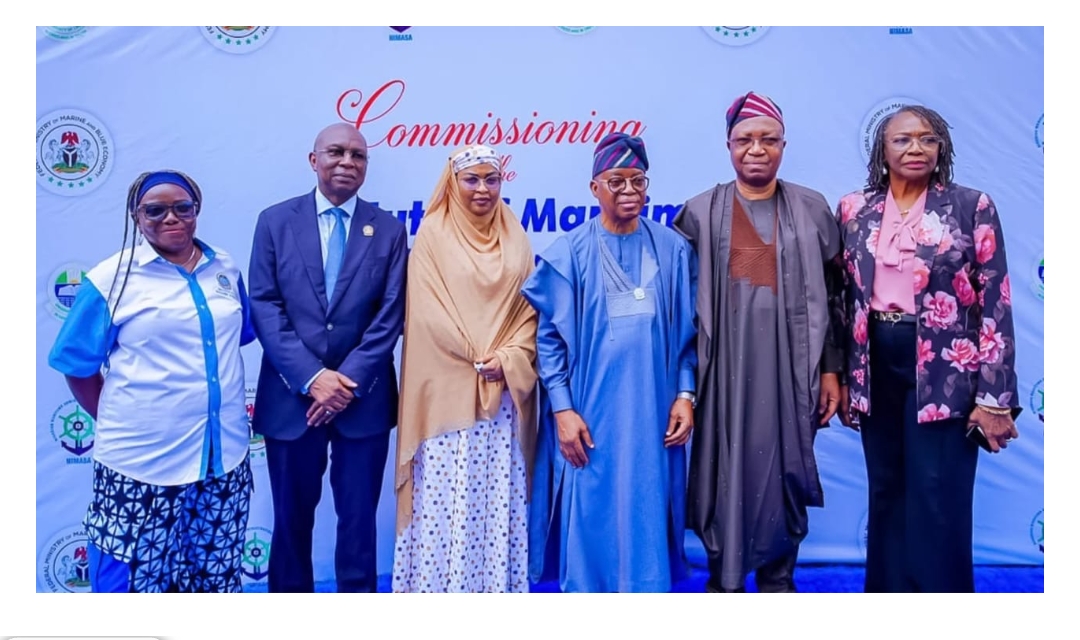
New Maritime Research Institute Launched to Enhance Nigeria’s Blue Economy
The Nigerian government is taking significant strides to bolster expertise in the maritime sector with the recent establishment of a maritime research institute at the University of Lagos. Adegboyega Oyetola, the Minister of Maritime and Blue Economy, underscored the importance of knowledge-driven development as a cornerstone of economic growth during the institute’s commissioning.
Oyetola unveiled the multi-purpose building project on Thursday, describing it as a pivotal milestone in the nation’s ambition to enhance institutional capacities, promote innovation, and expand the human capital necessary for the maritime and blue economy. “This project symbolizes our collective commitment to national prosperity,” he stated.
The minister highlighted that the state-of-the-art facility, equipped with modern lecture theaters and administrative spaces, exemplifies the federal government’s dedication to advancing knowledge-driven initiatives. He pointed out that the future of the blue economy relies not only on natural resources but also on the quality of spirit and collaboration fostered within institutions like this.
Oyetola articulated Nigeria’s compelling vision for its ocean and blue economy, emphasizing sustainable utilization of marine resources, economic diversification, environmental protection, and inclusive growth. “This vision is grounded in a clear mission to transform this sector into a key driver of national development,” he affirmed.
He noted that with over 90% of Nigeria’s trade conducted via maritime routes, the blue economy is not merely a sector but an essential component of the national economy. The minister stressed that realizing this vision hinges on the strength of the country’s human capital.
Folashade Ogunsola, Vice-Chancellor of the University of Lagos, remarked that the new building is the first phase of the Maritime Research Complex, a project made possible by the Nigeria Maritime Administration and Safety Agency (NIMASA). Since its establishment in 2013, the Maritime Institute has formed a robust partnership with NIMASA to cultivate maritime talent, having graduated 2,000 students and enrolling over 400 in the current academic session.
Ogunsola elaborated on the institute’s diverse graduate programs, which encompass key areas such as Maritime Administration, Hydrographic Surveying, and Logistics Management. She mentioned that students benefit from practical learning experiences facilitated by partnerships with various maritime organizations, including NIMASA and private shipping companies.
Dayo Mobeleola, Executive Director of NIMASA, emphasized the organization’s commitment to building capacity within the sector. He affirmed that sustainable growth is not solely driven by infrastructure and policy but significantly relies on the quality and preparedness of human capital. NIMASA’s Nigerian Seafarer Development Program (NSDP) aims to address industry talent gaps, training nearly 2,500 young Nigerians in world-class seafaring skills.
Fatima Sugura-Mahmood, Permanent Secretary of the Ministry of Oceans and Blue Economy, described the initiative as crucial to the ongoing governmental reforms aimed at enhancing the capacity of Nigerians. She reiterated the critical role of human capital development in driving national progress, highlighting that investments in talent are essential to unlock the vast opportunities in the ocean economy.
Wole Olanipekun, Chairman of the Promotion Board at UNILAG, praised the Minister for his leadership in launching the project and urged further collaborations between the Ministry and the university to support more such initiatives.
