


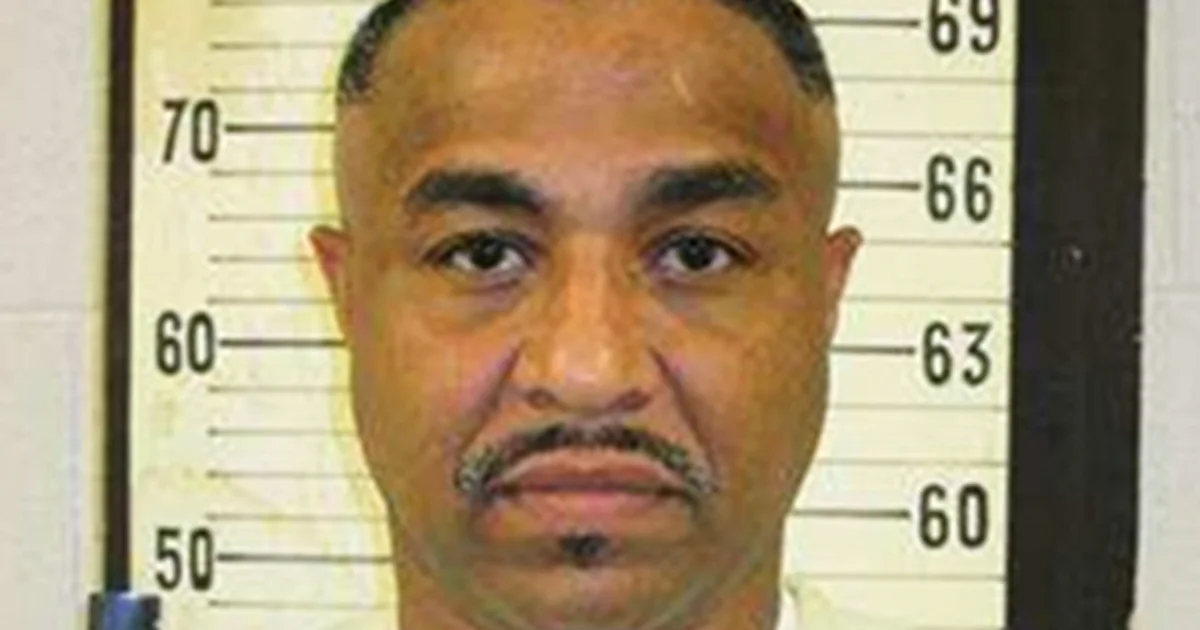
Discovery of Bodies in Memphis Cemetery Unveils Dark Crime Case
On March 3, 1994, the remains of Marcelos “Cello” Anderson, his mother Delois Anderson, and Frederick Tucker were discovered buried beneath a coffin in a Memphis cemetery. The trio had been missing for a week after their abduction from Delois Anderson’s home.
Crime Scene Evidence Points to Possible Suspects
Inside the grave with the victims was a blood-stained blanket-like cloth. Investigators were led to the burial site by a man named Jonathan Montgomery, who implicated his brother, James Montgomery, and Tony Carruthers as suspects. Fingerprints recovered from the Anderson residence further indicated the possibility of foul play.
Trial Proceedings and Convictions
During the subsequent trial, the prosecution argued that Carruthers and his two co-defendants, James and Jonathan Montgomery, kidnapped Marcelos Anderson with the intent to rob. Tragically, Jonathan Montgomery was found hanged in his jail cell before he could stand trial. In 1996, both Carruthers and James Montgomery were convicted of three counts of first-degree premeditated murder and sentenced to death.
ACLU Challenges Evidence Against Carruthers
As Carruthers prepares for execution next month for the crimes, a newly filed complaint by the American Civil Liberties Union (ACLU) raises significant concerns. The organization claims that key DNA evidence from the crime scene does not match Carruthers’s profile, and a reexamination could potentially exonerate him.
Post-Conviction DNA Testing Motion Submitted
The motion for post-conviction DNA testing, filed on April 9 with the Tennessee Supreme Court in Nashville, requests that another suspect identified by Montgomery be tested for fingerprints and DNA evidence. This evidence currently does not match either Carruthers or Montgomery.
Deep Flaws in the Original Case Against Carruthers
The ACLU’s complaint underscores the lack of physical evidence linking Carruthers to the crimes, emphasizing that the prosecution’s case hinged largely on testimony from prison informants—an area notorious for contributing to wrongful convictions. Moreover, the motion asserts that crucial fingerprint evidence was never disclosed to the jury, and Carruthers was compelled to represent himself at trial due to problematic behavior with multiple attorneys.
Continued Allegations and Unidentified DNA Evidence
The motion highlights that DNA testing conducted during Montgomery’s retrial failed to match either him or Carruthers. One notable finding was a profile of a stout individual on a white blanket buried with the victims, yet this sample remains unidentified. Montgomery later made allegations implicating another suspect, Ronnie “Eyeball” Irving, while affirming that Carruthers played no part in the crimes.
Implications for Carruthers’ Upcoming Execution
While the motion for reexamination of evidence is unlikely to alter the timeline of Carruthers’ scheduled execution, if the results suggest his innocence, he would move to suspend the execution pending further review. Recently, the Tennessee Court of Criminal Appeals rejected his request for fingerprint analysis, stating there was no reasonable probability that the desired results would have changed the outcome of his trial.
