


Legal Status Uncertainty for Millions of Immigrants
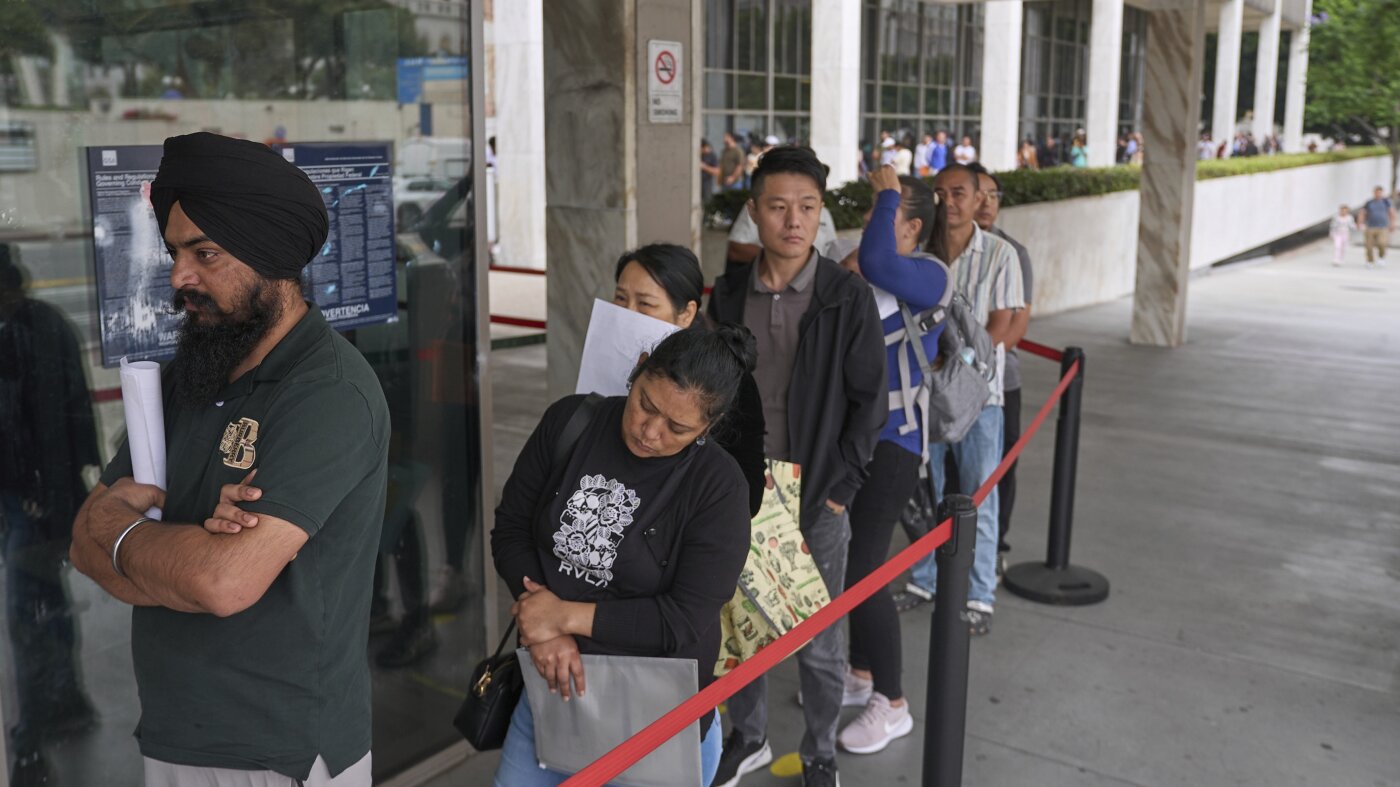
Millions of immigrants find themselves in legal limbo, navigating complex changes to their status under the second Trump administration. An analysis by NPR highlights that many are at risk of deportation amid growing delays in the processing of applications.
Prolonged Processing Times for Immigration Applications
Since early last year, the Department of Homeland Security (DHS) has increasingly extended the time required to process immigration applications, leaving many waiting for months without confirmation of receipt. A review of data from U.S. Citizenship and Immigration Services (USCIS) reveals that nearly 12 million applications—including those for citizenship, work permits, and residency—are currently pending decisions.
Impact of Pending Applications on Legal Immigration
The surge in pending applications, which surged dramatically in the first quarter of the second Trump administration, reflects a broader strategy to curtail legal immigration. Many immigrants struggle to even receive acknowledgment of their submissions, intensifying fears of deportation. David Bier, director of immigration studies at the Cato Institute, states this approach signals a shift towards prioritizing deportations over the processing of applications.
Categories of Applications in Backlog
The backlog of 11.6 million applications comprises citizenship, green card, work, and asylum requests. Additionally, USCIS maintains a “front log” of 247,974 applications that have not yet been opened. This increase in backlogged applications coincided with a tougher immigration enforcement stance from DHS, which claims that national security considerations are necessitating delays or halts in processing certain requests.
Changes to Immigration Procedures Create Confusion
The agency’s more rigorous screening processes have left many applicants feeling anxious and confused about their legal status. Luis Cortez Romero, an immigration lawyer, has noted the heightened stress and uncertainty among clients trying to navigate this complex landscape. He cites one client who has been waiting a year for a rescheduled green card interview after an initial denial, highlighting the real-world consequences of processing delays.
Increasing Numbers in the Front Log
Despite the general uptick in pending applications, the influx into the front log has been notable. An increasing number of applications are taking longer to process, and while some may be approved relatively quickly, others are rendered more vulnerable to deportation due to protracted waits. Nicole Melak from the National Partnership for New Americans points out that this slowdown in processing opportunities can result in further complications for those seeking legal status.
Infrastructure Challenges and Client Impact
Cortez Romero points to outdated infrastructure at USCIS, which has hindered the implementation of more efficient electronic filing processes. Renata Castro, another immigration attorney, reports that clients often wait up to eight months merely for receipt confirmation. This delay creates significant challenges, particularly for those already in deportation proceedings, as judges may require immediate proof of pending applications that the agency cannot promptly provide.
Policy Changes Spark Backlash and Demand for Streamlining
As new policies have emerged, both supporters and critics highlight the urgency of streamlining processing times. Brandi Perez-Carbaugh from the Heritage Foundation indicates that the overwhelming number of pending applications underscores a systemic issue within the immigration framework, advocating for a moratorium on new applications until the backlog is manageable. However, the need for scrutiny in application reviews remains a contention point within the ongoing debate about immigration policy and enforcement.
