


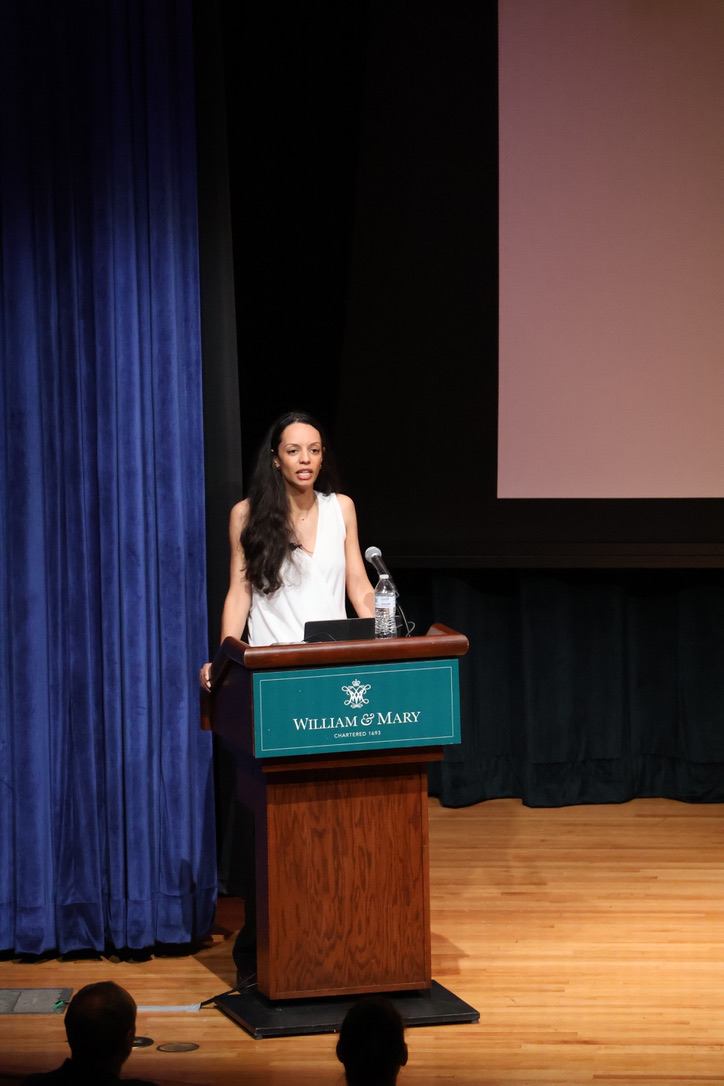
Journalist Caitlin Dickerson Shares Insights on Immigration
On April 2, Atlantic staff writer Caitlin Dickerson delivered a compelling talk at the Commonwealth Auditorium in the Sadler Center. The event was hosted by Alma Mater Productions and sponsored by the Roy R. Charles Center, the University Liberal Arts Center, the Dean’s Fund, and the Department of Hispanic Studies. Dickerson’s presentation focused on her extensive experience reporting on immigration issues in the United States.
Recognition for Covering Immigration Issues
Dickerson, who won the Pulitzer Prize in 2023 for her groundbreaking work “We Must Take Our Children,” addressed the family separation policies implemented during the first Trump administration. She began her discussion by sharing her personal journey in documenting immigration and highlighted the stark realities faced by many migrants.
Firsthand Accounts from the U.S.-Mexico Border
Through vivid storytelling, Dickerson recounted her time spent in a migrant camp situated along the U.S.-Mexico border. She painted a picture of the camp’s harsh conditions, revealing how the exposure to the elements affected families and how many children were denied educational opportunities.
Visual Narratives of Migrant Journeys
During her presentation, Dickerson showcased powerful images from her work in the Darien Valley, illustrating the perilous journeys undertaken by migrants. Despite the overwhelming challenges, she interspersed her narrative with uplifting stories, including a touching encounter with a child in a refugee camp who was thrilled to have his photo taken.
The Historical Context of Immigration Policy
Throughout her lecture, Dickerson emphasized the importance of understanding the historical context of immigration rhetoric. She prompted the audience to recognize the origin of derogatory terms used to describe immigrants, evoking responses that identified figures like Stephen Miller and Donald Trump. She later revealed that these sentiments echoed language from early 20th-century xenophobic political cartoons.
Challenges of Advocacy Journalism
Dickerson took a moment to reflect on the current administration’s immigration enforcement tactics. She criticized U.S. Immigration and Customs Enforcement (ICE) for implementing restrictive policies and employing racial profiling, which, though deemed legal by the U.S. Supreme Court in some cases, lead to public unrest and tensions with protesters. She underscored the critical role journalism plays in informing the public and sustaining political discourse.
Engaging with Students and Faculty
Following her lecture, Dickerson participated in a lively discussion with John Riofrio, an associate professor of Hispanic Studies, touching on topics including human rights, historical shifts, and the diminishing respect for government transparency. The audience engaged with her through questions, prompting a dialogue about the discomfort that can arise when uncovering inconvenient truths.
The Importance of Student Journalism
Highlighting the vital role that student journalism plays in democracy, Dickerson stated that universities often require too many reports, leaving students uniquely positioned to explore pivotal issues. Riofrio, who initiated contact with Dickerson, expressed satisfaction with the event’s execution and student turnout, while attendees echoed sentiments about the impact of her stories on their perspectives regarding migration.
Emotional Responses from the Audience
The event drew nearly 250 attendees, with many noting the emotional resonance of Dickerson’s anecdotes. Riyana Mohammed, chair of the AMP Impact Committee, shared her feelings of empathy, stating that the talk deepened her understanding of the struggles faced by families seeking better lives. Participants left the auditorium with newfound insights, solidifying the significance of Dickerson’s work in shaping public discourse around immigration.
