


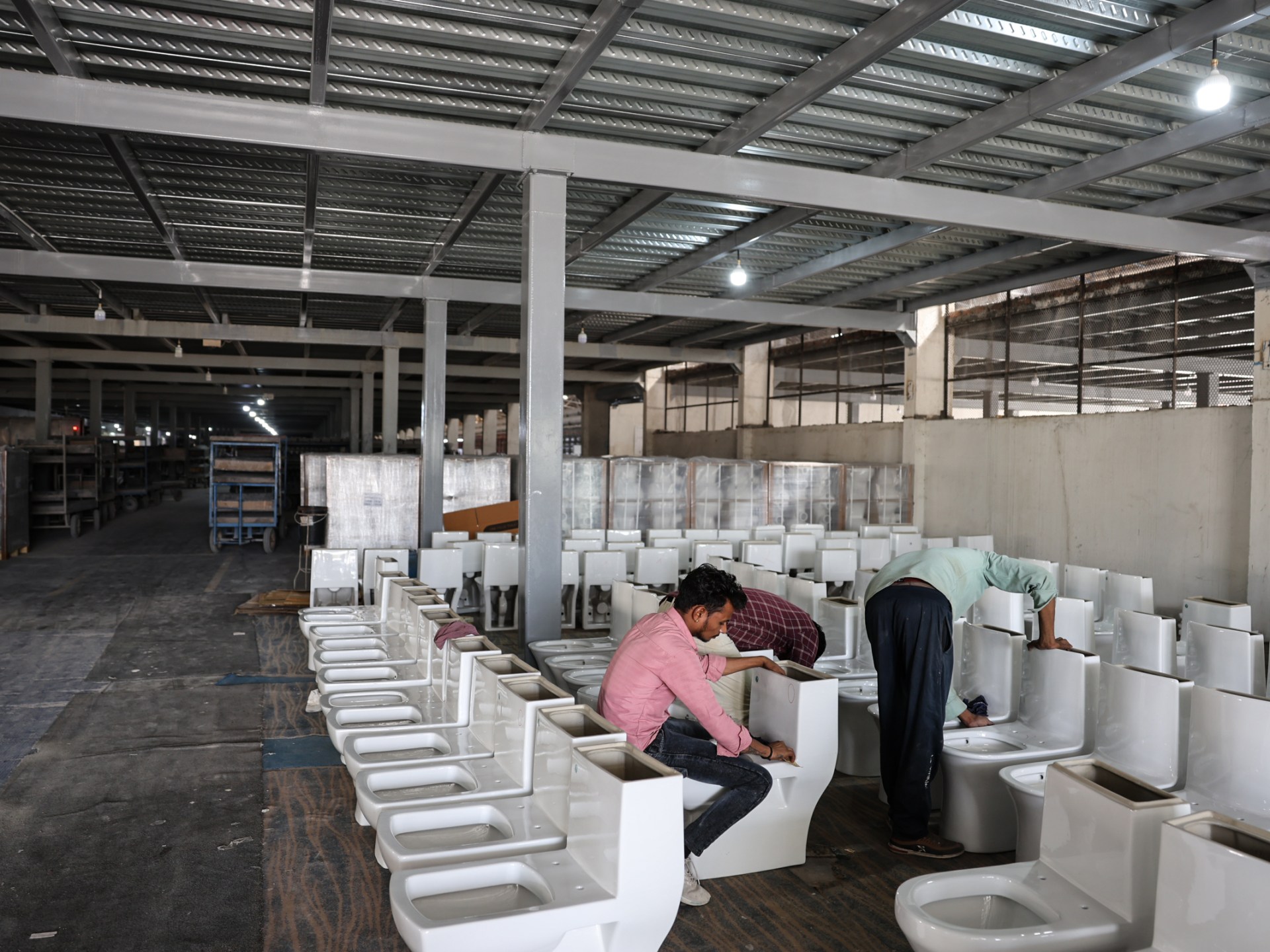
MORBI, India – For seven years, Pradeep Kumar worked at a pottery factory in western India, beginning each day at 9 a.m. and enduring the heat and dust generated by the kilns. His responsibilities included loading raw materials like clay, quartz, and sand, as well as handling the clay at various stages of production.
The job was both repetitive and physically demanding, with no protective equipment to safeguard workers from the intense heat. Kumar had voiced concerns about the upcoming summer, when temperatures would peak.
However, on March 15, he faced an unexpected turn of fate when he lost his job, a casualty of escalating geopolitical tensions. The outbreak of conflict between the United States and Israel and Iran triggered a global fuel crisis, forcing the ceramics company he worked for to shut down due to a severe shortage of propane and natural gas.
Located in Morbi, Gujarat, the company was among numerous ceramics manufacturers reliant on these essential raw materials. The region, a significant hub for India’s ceramics industry, employs over 400,000 workers, many of whom are migrants from economically disadvantaged states like Uttar Pradesh and Bihar.
Five days later, Kumar returned to his hometown of Haldoi in Uttar Pradesh, taking his wife and three children with him. He expressed his commitment to wait until all the migrant workers who journeyed with him home returned. Kumar’s apprehensions were rooted in the harrowing experiences of the COVID-19 pandemic when many workers faced an arduous journey back to their villages amid severe economic hardship.
Significant Company Closures Amid Geopolitical Tensions
Morbi’s ceramics sector is vital to India’s economy, accounting for approximately 80% of the nation’s ceramics production, including tiles, toilets, bathtubs, and basins. However, the ongoing conflict in the Strait of Hormuz—a critical route for gas imports—has forced around 450 of the 600 partnering companies in the area to halt operations.
The war escalated further when U.S. forces seized an Iranian cargo ship, fueling tensions and impacting talks for peace. Despite efforts for dialogue, a fragile ceasefire recently expired, amplifying fears of sustained disruptions to global fuel supplies and driving up oil prices.
Siddharth Bhopaliya, a third-generation manufacturer in Morbi, noted that the local manufacturing units depend heavily on propane and natural gas for high-temperature kiln operations. Approximately 60% of manufacturers prefer propane due to its cost-effectiveness. According to Manoj Alvadiya, president of the Morbi Ceramics Manufacturers Association, many factories remain closed, anticipating a resolution to the crisis but currently struggling to resume operations due to inconsistent supply.

The current crisis has severely impacted nearly 200,000 workers, many of whom have returned to their villages. The ceramics industry, valued at $6 billion, also relies significantly on exports. With approximately 25% of Morbi’s ceramics sent to the Middle East, Africa, and Europe, delays and halts in production have jeopardized these international agreements.
Illness Drives Workers Back Home
Ankur Singh, a 27-year-old worker, is one of those fleeing Morbi. He recounted how his recent diagnosis of silicosis—a incurable lung disease resulting from prolonged exposure to silica dust—compelled his return home. Symptoms he initially ignored became more pronounced, ultimately leading to life-altering tests.
Chirag Chavda, a labor rights activist in Gujarat, highlighted the concerning prevalence of silicosis among workers in Morbi. The constant exposure to silica dust during ceramic production poses substantial health risks, and inadequate regulation leaves many workers vulnerable. Chavda emphasized that the lack of proper ventilation exacerbates the situation, affecting even those indirectly involved in the manufacturing process.
Harish Zara, who worked in Morbi’s ceramic industry for two decades, shared his distressing experience of developing silicosis without any support from his employer. He lamented the inherent risks of the industry, noting that fatalities from silicosis are alarmingly common among workers. The absence of legally binding employment agreements and social security leaves many devoid of basic protections and rights.

Despite the grim outlook, some like Sushma Devi, aged 56, chose to remain in Morbi, relying on her son’s tile company for support in the form of shelter and food as they await the resumption of work. This communal approach offers a degree of stability amid uncertainty, yet many like Kumar face daily struggles to secure basic necessities. Hesitant to exhaust their limited savings, they tread a precarious line between hope for recovery and the fear of falling into debt as they navigate the challenges of this ongoing crisis.
Kumar is exploring opportunities as a daily wage laborer while grappling with the financial strain of supporting his family. He noted the urgency of repairs needed for his home, having recently borrowed money from relatives—with no clear path to repayment. His plight reflects a broader narrative of the economic fragility faced by many in Morbi during these turbulent times.
