


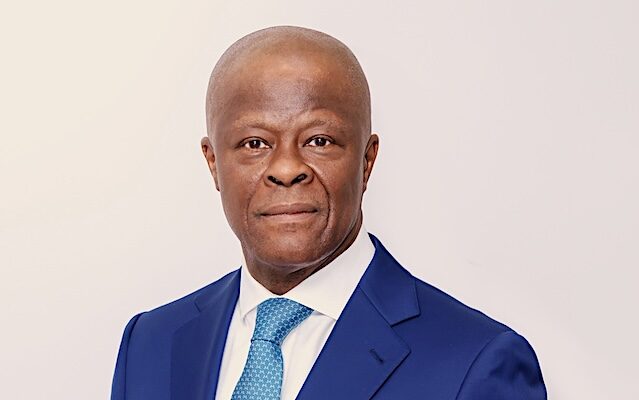
Wale Edun’s Career Journey in Finance and Politics
Wale Edun, Nigeria’s former Minister of Finance and Coordinating Minister of Economic Affairs, resigned from his role on Tuesday, marking a transition from a distinguished career in corporate finance to a significant political position. Before entering politics following Nigeria’s shift to democratic governance in 1999, Edun had established himself as a finance expert, equipped with a BA in Economics from the University of London and an MSc in Development Economics from the University of Sussex.
Early Career and Establishment of IBTC
Edun launched his finance career in 1980 at Chase Merchant Bank in Lagos, where he climbed the ranks to lead the finance department and eventually became the deputy head of corporate finance. He departed from Chase in 1986 after acquiring substantial experience in financial markets and advisory services. In 1989, he co-founded Investment Banking & Trust Company (IBTC) Limited, which subsequently evolved into a commercial bank and achieved public company status in 2005.
Consolidation and Growth in Banking Sector
In 2005, IBTC embarked on a significant merger with Chartered Bank PLC and Regent Bank PLC, forming the expanded IBTC Chartered Bank PLC in January 2006. A year later, it merged with Stanbic Bank Nigeria Limited to become Stanbic IBTC Bank, enhancing its footprint in the banking sector.
Leadership in Investment Banking
In 1994, Edun founded Denham Management Limited, which later became the Chapel Hill Denham Group, a prominent investment bank headquartered in Lagos. He served as chairman from 2008 until 2021 and also established West Africa Ratings Limited, now part of Moody’s, after a series of mergers led to its current form as Global Credit Ratings.
Political Engagement and Economic Reforms
Edun stepped into the political arena when President Bola Tinubu, then governor of Lagos State, appointed him as Director-General for Finance in 1999, a role he maintained until 2004. In this capacity, he was instrumental in reforming the state’s tax system, achieving remarkable increases in internal revenue. Following Tinubu’s presidential election victory, Edun was appointed Minister of Finance and Coordinating Minister for the Economy in August 2023.
Economic Achievements and Challenges
As a key figure in the Tinubu administration’s economic policy team, Edun monitored the synergy between fiscal and monetary policy. Upon taking office, Nigeria’s economy was growing at 2.5%; by the end of the first quarter of 2026, this figure had risen to 4.1%. Under his guidance, inflation tumbled from 35% to 15%, despite changes to the measurement methods. He implemented crucial reforms aimed at stimulating economic growth while curbing the government’s reliance on deficit financing through the Central Bank of Nigeria.
Criticism and Financial Struggles
Despite these achievements, Edun faced criticism due to the unpopular decision to eliminate fuel subsidies, which precipitated Nigeria’s most severe cost-of-living crisis in three decades. This reform, although aimed at fiscal prudence, intensified financial strain on many households. Additionally, repeated currency devaluations, while rendering the economy more attractive to foreign investors, inadvertently fueled inflation. Budgetary challenges persisted, including delays in the approval of the 2025 and 2026 spending bills, which were only signed into law in February of the subsequent year.
