


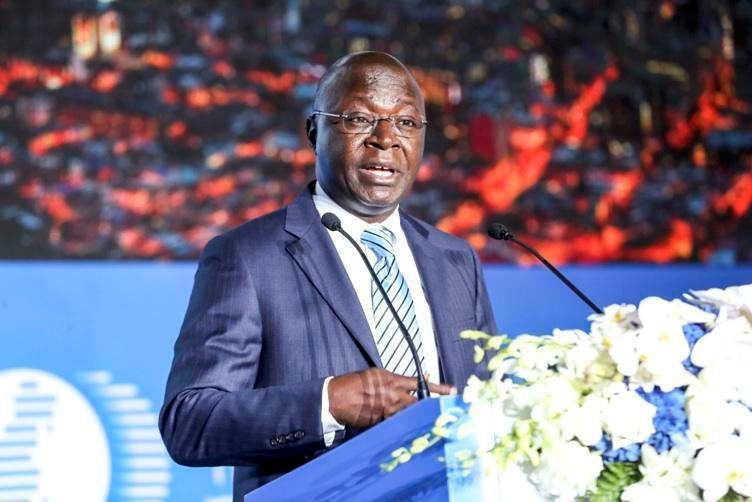
Written by Lazaro Ambazo
Institutional Investor Mindset at the Global Infrastructure Summit
The recent global infrastructure summit highlighted a clear sentiment among institutional investors: many in Europe and North America perceive that capital allocation to developing markets like Africa will likely diminish. This perspective arises in a context where capital demands for energy transitions, grid expansion, and digital infrastructure are escalating rapidly.
Misunderstanding Africa’s Position in Global Infrastructure
This conclusion, while intuitive, misses the mark. A closer examination of global trends—ranging from power shortages and geopolitical fragmentation to persistent inflation—reveals that these dynamics do not undermine Africa’s case for infrastructure investment; in fact, they strengthen it.
Evolution of Infrastructure Investment Strategy
Traditionally, infrastructure investments have been considered a defensive asset class, offering stable cash flows and inflation protection. While these characteristics remain, the landscape is evolving. Governments across developed regions are now pouring unprecedented amounts of capital into energy, logistics, and digital infrastructure, not merely to stimulate growth but to bolster resilience. Electricity, once abundant, is becoming increasingly rare, localized, and fiercely contested.
Execution Challenges in Developed Markets
In many advanced economies, the constraints are shifting from capital availability to execution bottlenecks. Issues such as grid congestion, lengthy interconnection queues, and labor shortages are impeding progress. In parts of the United States, connecting new power generation to the grid can take years. Meanwhile, in Europe, limitations in electricity transmission are emerging as significant obstacles to large-scale electrification.
African Infrastructure: An Opportunity Amid Challenges
This situation is provoking a structural shift. Many large industrial consumers and tech firms are opting to bypass congested public utilities by investing in dedicated power solutions, striving for reliable energy supply. Although Africa is often characterized by inadequate infrastructure—such as electricity deficits and underdeveloped logistics—this critique overlooks a vital point. In a world where established systems are burdened by inefficiencies and slow to expand, Africa represents an opportunity to build infrastructure tailored to current needs, with fewer legacy barriers.
Reevaluating Investment Opportunities
From an investment standpoint, the focus is shifting from identifying the “safest” infrastructure sites to determining where capital can be most effectively deployed to satisfy future demands. This necessitates a more nuanced evaluation of risks. While Africa faces well-documented challenges, including currency volatility and regulatory uncertainties, developed markets are increasingly marked by execution risks, policy complexities, cost overruns, and fierce competition for capital, which compresses returns.
Strategizing Infrastructure Investment Approaches
Africa is not devoid of risk; rather, it requires a different risk assessment. The primary issue lies not in a lack of opportunities but in the absence of frameworks conducive to securing investment. Nowhere is this more critical than in the energy sector, where worldwide electricity demand is surging due to industrial recovery and technological advancements. However, existing delivery systems struggle to match this rising demand.
Electrifying Africa is not just a peripheral goal; it is fundamental to its industrialization and economic productivity. The drive for reliable electricity—central to modern growth—underscores the strategic importance of enhancing generation, transmission, and distribution capabilities.
Navigating the Financial Landscape for Infrastructure Initiatives
As stakeholders work to mobilize both domestic and international funding for Nigeria’s infrastructure, the challenge is not a lack of investor interest. Instead, too many opportunities remain improperly structured to attract institutional capital. This is where the Nigeria Infrastructure Platform steps in, repositioning infrastructure as an investable asset class grounded in robust project pipelines and governance models.
By developing a portfolio of viable projects, aligning public and private investment through clear risk-sharing frameworks, and prioritizing project execution, the platform aims to shift investor perception from viewing infrastructure as a problem to perceiving it as a strategic asset. For both institutional investors and development finance institutions, the implications are significant.
Reassessing Africa’s Strategic Value
Infrastructure in Africa should not be seen merely as a concessional allocation or a side project; it demands recognition as a strategic component of global infrastructure allocations. In a world increasingly focused on resilience and economic sovereignty, there needs to be a paradigm shift. Risks cannot be entirely mitigated, but many can be structured and shared effectively. While certain markets may not support large-scale investments, those in Africa are often positioned to exploit unique growth dynamics unattainable in more mature economies.
The global infrastructure landscape is undergoing a transformation driven by structural forces, and Africa is not a marginal player—it is increasingly central to this evolution. The pressing question is not whether Africa carries risks but whether these risks are overestimated relative to its strategic importance amid growing constraints elsewhere. In this environment, Africa’s infrastructure gap should be reframed not as a burden but as a strategic opportunity waiting to be maximized.
*Dr. Lazarus Angbazo is the Managing Director and CEO of InfraCorp, Nigeria’s infrastructure investment platform.
