


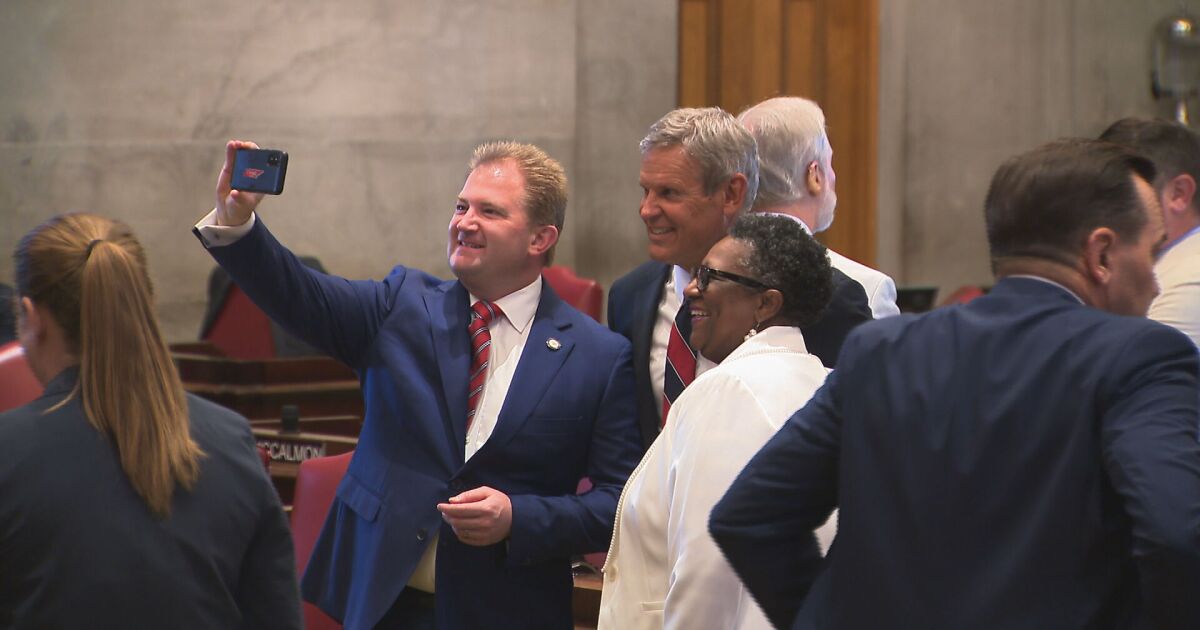
NASHVILLE, Tenn. — Tennessee lawmakers wrapped up the 2026 legislative session on Thursday, working to finalize important legislation concerning the use of deadly force, educational funding, and immigration enforcement before adjourning.
Legislation on Deadly Force for Property Protection
Among the concluding pieces of legislation was a controversial bill introduced by state Rep. Kip Capeley (R-Summertown), permitting Tennesseans to use deadly force to protect their property. Capeley emphasized that the law applies only under specific circumstances, stating that individuals may resort to lethal measures if they reasonably believe it is necessary to prevent crimes such as arson, burglary, aggravated robbery, or aggravated animal cruelty.
Concerns regarding the implications of this legislation were voiced by lawmakers across party lines. State Rep. Justin Pearson (D-Memphis) expressed his disapproval, arguing against granting individuals the right to kill in defense of their belongings. Similarly, state Rep. Greg Martin (R-Hamilton County) pointed out that property theft does not equate to an immediate threat to life.
Changes to Education Voucher Testing Requirements
The session also saw discussions surrounding an education bill that initially aimed to expand the Education Savings Account (ESA) voucher program, affecting students in Davidson, Shelby, and Hamilton counties. House Speaker Cameron Sexton noted uncertainty regarding the bill’s support as the session progressed.
Ultimately, the proposed expansion was eliminated, and the bill now requires private schools to offer ESA students the option to take either the TCAP test or a national standardized test. Previously, students in the program were only obligated to take the TCAP.
Representative William Slater clarified that this adjustment merely alters the testing requirements. However, Democrats raised concerns about the potential challenges in measuring student progress adequately. Rep. John Ray Clemons emphasized the necessity for consistent metrics to effectively compare student outcomes.
Controversial Immigration Enforcement Legislation
Several contentious immigration bills were introduced, including one mandating that all county sheriffs enter agreements with federal immigration authorities by 2027. This legislation builds on the existing 287(g) program, which allows local sheriff’s offices to collaborate with ICE in detaining undocumented immigrants. Currently, participation is voluntary in multiple counties, but the new requirement may jeopardize funding for those who refuse compliance.
A Changing Legislative Landscape
The conclusion of this session signifies a pivotal moment for several long-standing members of Congress. Lt. Gov. Randy McNally (R-Oak Ridge) retires after nearly five decades of public service, joining State Rep. Jeremy Faison (R-Cosby) and State Rep. Johnny Shaw (D-Bolivar) as they step away from their legislative roles. Additionally, this marks Governor Bill Lee’s final session as he prepares to conclude his tenure.
In the closing moments of the session, Bobby Trotter, the longtime House sergeant-at-arms, also announced his retirement. Trotter, along with two fellow sergeants-at-arms, received recognition for their years of dedicated service during the final assembly of the House of Representatives.
As the gavel falls to signal the end of the session, both Republican and Democratic leaders are set to hold year-end press conferences. NewsChannel 5 will provide a comprehensive recap of the legislative activities on Friday.
