


Finance Minister Commits to Ongoing Reforms
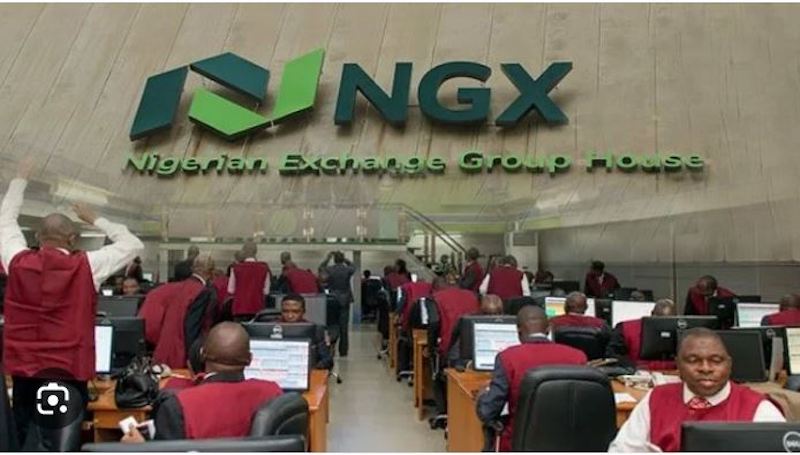
Nigeria’s finance landscape is set for transformative changes as newly appointed Minister of Finance, Taiwo Oyedele, steps into his role. Amid a backdrop of rising geopolitical tensions, the Nigeria Exchange Limited (NGX) has displayed remarkable resilience, with gains of ₦16.13 trillion since the beginning of the month. This performance is largely attributed to strong fiscal year 2025 corporate results from listed companies and Nigeria’s reclassification from unclassified to frontier market status by FTSE Russell. The stock market’s rally underscores a renewed wave of investor confidence, shining as a bright spot in an otherwise uncertain global landscape.
Introduction of New Automobile Tax Scheduled for July 1
The federal government is set to implement a new tax on high-engine vehicles, ranging from 2% to 4%, effective July 1. This measure aligns with the government’s 2026 fiscal strategy and is categorized as a green tax surcharge, targeting vehicles based on their engine displacement. The initiative aims to bolster revenue generation while advancing environmental goals.
Market Performance Delivers Positive Results
According to data from NGX, the market capitalization for listed companies started at ₦129.21 trillion in April 2026, surging by ₦16.13 trillion (12.5%) to reach ₦145.335 trillion. The NGX All-Share Index also reported a significant increase, closing at 225,722.49 basis points—up 12.14% from 201,287.78 basis points just three months prior. Notably, the market crossed the ₦140 trillion threshold earlier this month, primarily driven by a surge in demand for fundamental stocks.
FTSE Russell Reclassification Boosts Investor Confidence
The recent reclassification by FTSE Russell has seen Nigeria’s market capitalization rise above ₦130 trillion, a change fueled by renewed foreign investment interest. Year-to-date performance indicates a robust growth trajectory, with market capitalization climbing by ₦45.96 trillion (46.25%) from ₦99.376 trillion at the end of 2025. The NGX All-Share Index has also demonstrated a strong upswing, gaining 70,109.46 basis points (45.05%) since the previous year, reflecting a favorable market environment.
Analysts Predict Increased Inflows with Market Reclassification
A report from Cordros Research anticipates enhancements in market flow dynamics as a result of Nigeria’s re-entry into the frontier market tier. Foreign inflow forecasts range between $840 million and $1.04 billion (₦1.15 trillion to ₦1.42 trillion), driven by benchmark-driven rebalancing efforts and gradual discretionary allocations. This trend emphasizes the importance of solid infrastructure, transparency, and market accessibility to attract global capital.
Oyedele Pledges to Continue Economic Reforms
In his inaugural address, Minister Oyedele expressed a strong commitment to sustaining current policy reforms—a sentiment echoed by the Director of Information and Public Relations at the Ministry of Finance, Efe Ovakpolye. Acknowledging the achievements of his predecessor, Wale Edun, Oyedele emphasized the need for measurable impacts across critical economic sectors. His readiness to collaborate with the Ministry’s staff is a key aspect of his approach to driving tangible results aligned with government priorities.
New Vehicle Tax Initiative and Broader Fiscal Policy Measures
The upcoming green tax targets vehicles with engine sizes exceeding 2,000cc, with a 2% tax for those between 2,000cc and 3,999cc and a 4% tax for larger engines. Notably, exemptions will apply to vehicles below 2,000cc, electric vehicles, and specific locally produced vehicles, designed to encourage cleaner alternatives. This green tax is part of a comprehensive strategy to not only restructure fiscal policy but also align tax measures with environmental stewardship.
The Federal Government’s Fiscal Policy Measures for 2026, which includes significant adjustments to import duty and excise taxes, has been officially approved. The new measures are set to replace the 2023 Fiscal Policy Measures, enhancing Nigeria’s fiscal framework and stimulating growth in important sectors. For example, the Import Adjustment Tax (IAT) on crude palm oil has been reduced to an effective rate of 28.75%, a significant decrease from prior high tariffs.
