


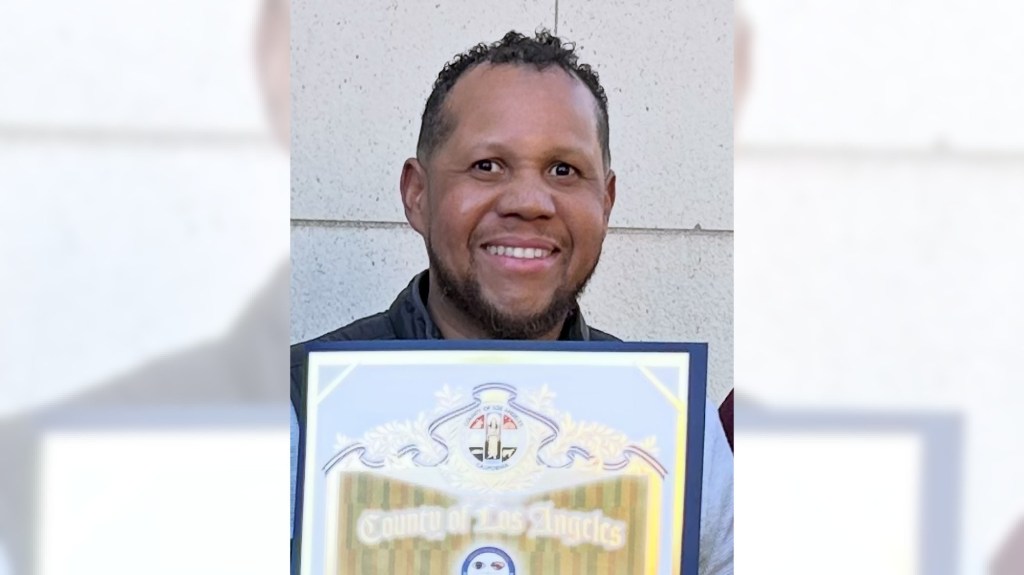
Pasadena Resident Released from Detention Amid Controversial Immigration Tactics
Isaac Villegas Molina, a Pasadena resident and lead plaintiff in a lawsuit challenging federal immigration agents’ “loitering” operations in Southern California, was released from the Adelanto Detention Center on Thursday evening. His release followed a federal judge’s order and the support of demonstrators, as confirmed by his attorneys on Friday.
On Friday, supporters, including local elected officials and members of the National Day Laborer Organizing Network (NDLON), gathered in Pasadena to celebrate Villegas’ release. However, they also raised concerns about what they describe as excessive federal actions in response to his previous objections to immigration enforcement that began last summer.
For Villegas, a Panamanian national, the past year has been tumultuous, marked by a journey that moved him from a Pasadena bus stop to a federal detention center in downtown Los Angeles, back to freedom, and then into the Adelanto federal detention facility. His circuitous path ultimately led him back home to Pasadena.
While he rested at home on Friday, Villegas did not attend a press conference celebrating his release. Nevertheless, others present shared details about his experience within the immigration system.
“While we rejoice at Isaac’s return, we cannot overlook the broader implications,” stated Rep. Judy Chu (D-Pasadena). “His arrest should never have occurred in the first place.”
The series of events began on a cool June morning when Villegas was seated at a bus stop alongside fellow day laborers Pedro Vázquez Perdomo and Carlos Alexander Osorto. On June 18, as federal migrant raids swept through Southern California, their quiet morning was abruptly interrupted when four vehicles pulled up, and six masked federal agents emerged, detaining the men without identification, as detailed in a lawsuit filed by the Public Defender and the American Civil Liberties Union (ACLU).
Accompanied by Jorge Hernandez Viramontes, who was questioned and detained at a car wash in Orange County, and Jason Brian Gavidia, who was stopped at a tow yard in Los Angeles County, the three men had no way of knowing that they would soon embody the fight against these aggressive immigration tactics.
Subsequently, Villegas was released on bail the following month after an immigration judge deemed him neither a danger to society nor a flight risk, placing him in the Intensive Supervised Appearance Program (ISAP). Following this, he became a plaintiff in a class action lawsuit originally named Vázquez Perdomo v. Noem, which addressed the constitutionality of federal immigration raids.
The legal action was initiated on behalf of Villegas and other claimants who asserted they were unlawfully detained by federal agents monitoring areas where immigrant workers congregate. This lawsuit received representation from the Public Defender’s office, ACLU, and various attorneys advocating for residents and workers in Southern California.
A district court judge issued a ruling favoring the plaintiffs, asserting that federal authorities had conducted their operations without reasonable suspicion during a raid in the previous summer. This ruling led to a temporary restraining order against ICE agents operating in Southern California. Although a panel of the Ninth Circuit Court of Appeals upheld this decision, a subsequent U.S. Supreme Court ruling allowed ICE to continue street raids, predominantly fueled by racial and ethnic assumptions.
Villegas and his co-plaintiffs became the face of a broader legal fight against ICE’s patrol operations in the ongoing federal lawsuit, Vázquez Perdomo v. Marin. However, trouble arose again last week when Villegas was arrested by ICE for a second time while en route to an ISAP appointment.
Homeland Security officials released a statement regarding his arrest, criticizing the judicial decision to release Villegas. They noted his previous legal troubles, including felonies related to forgery and fraud, as well as a DUI charge, branding him a “criminal illegal alien.”
Since June 2025, federal authorities had suggested a “softer” enforcement policy. However, this shift sparked backlash, as many individuals who had not committed serious offenses were still detained and deported, disrupting communities where immigrants play pivotal roles in local economies and societies.
Despite these concerns, new Homeland Security Secretary Markwayne Mullin is expected to continue the enforcement policies initiated under the previous administration, albeit with less public controversy.
Villegas’ legal team argues that ICE’s actions constituted unlawful retaliation for his involvement in litigation against the agency. Following his second arrest, community leaders and advocates demonstrated outside a federal building in downtown Los Angeles, urging his prompt release.
Ultimately, U.S. District Judge Michelle Williams issued a temporary restraining order, leading to Villegas’ release on Thursday. “We take a moment of victory, reaffirming the Constitution’s promise for all citizens to challenge their government,” remarked Mohammad Tajsar, an attorney with the ACLU of Southern California.
Supporters reported that Villegas endured a week at the notoriously harsh Adelanto detention center, known for its poor living conditions and several fatalities in recent years. After his release, it was noted that he felt unwell, with Rep. Chu suggesting his condition was likely due to his time in detention. Reports indicated that Villegas contracted the coronavirus while at Adelanto.
Originally scheduled to appear in court on Friday, Villegas’ hearing has been postponed to May 7.
The Associated Press contributed to this report.
