


Trump Capitalizes on Security Incident to Push for White House Ballroom
WASHINGTON — In a dramatic turn of events at a hotel ballroom on Saturday, President Donald Trump rushed out amidst reports of a suspected gunman at a security checkpoint. This incident has since been leveraged by Trump to galvanize support for the White House Ballroom project, which currently faces legal challenges that could potentially halt its construction.
Call for Enhanced Security Following Security Breach
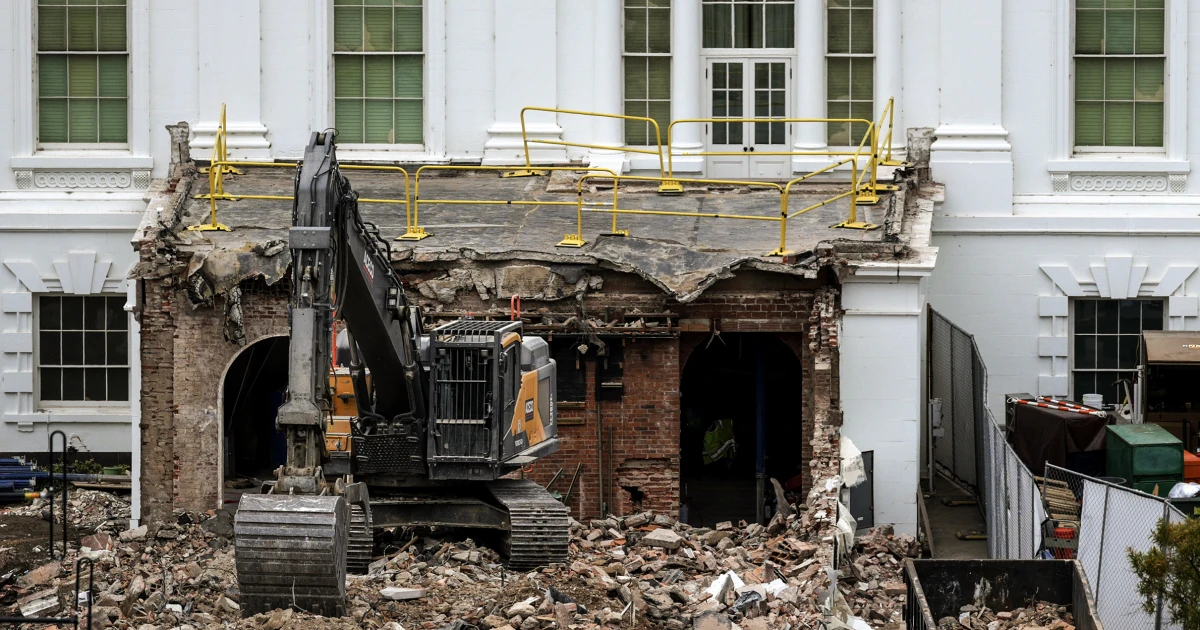
In the aftermath of the annual White House Correspondents’ Association Dinner, President Trump emphasized the need for a secure banquet hall on White House grounds, arguing that it would mitigate risks for the president and senior officials. During an interview with Fox News on Sunday, he described the planned 90,000-square-foot ballroom being constructed at the site of the former East Building as “something we really need,” particularly after the security vulnerabilities exposed at the event.
Design Features for Safety and Security
Trump asserted that the ballroom’s design was developed in collaboration with military and Secret Service officials, boasting comprehensive safety features. He expressed urgency about the project on social media the following morning, stating, “This event would never have happened if there was a secret military banquet hall currently being built at the White House. We can’t build it fast enough!”
Legal Challenges Persist Amid Support
Despite these assertions, a federal judge has issued repeated orders blocking Trump from proceeding with the banquet hall construction due to claims that he exceeded his authority by moving forward without Congressional approval. However, a recent ruling from a federal appeals court has allowed construction to continue while a lawsuit challenging its legality is pending.
Government Support Grows for Trump’s Vision
In the wake of the alarming incident at the Washington Hilton, Trump’s allies and appointees in Congress are stepping up efforts to eliminate judicial hurdles related to the ballroom project. The Justice Department has reached out to the National Trust for Historic Preservation, asking the organization to withdraw its legal challenge. In a letter from Assistant Attorney General Brett Shumate, it was asserted that the ballroom would bolster the president’s safety for decades and deter future attempts on his life.
Concerns About Future Fundraising Events
The White House Correspondents’ Association Dinner, an event celebrating the First Amendment and independent press, might shift its future venue if construction proceeds. While the Hilton can accommodate up to 3,000 guests, Trump’s proposed ballroom would only host about 1,000. This change could significantly impact the revenue potential for the WHCA, which relies on these funds for scholarships awarded to students.
Legislation on the Horizon
In a show of support for the ballroom project, Senator Lindsey Graham, R-S.C., announced plans to introduce a bill to authorize its use and secure funding. Similarly, Senators Tim Sheehy and Representative Lauren Boebert have expressed intentions to propose corresponding legislation. Graham stated his belief that the ballroom is not merely a vanity project but essential for future presidents. He remarked that safety measures must be prioritized in light of vulnerabilities exposed at events attended by top officials.
Reassessing Security Protocols and Future Risks
The recent security breach has prompted discussions on tighter controls for future events involving the president. Law enforcement officials are already considering potential new screening processes and entry protocols, especially in light of the shooting conducted by suspect Cole Thomas Allen. The unexpected incident raises critical questions about governmental safety and the balance between accessibility and security for public officials in a politically charged environment.
