


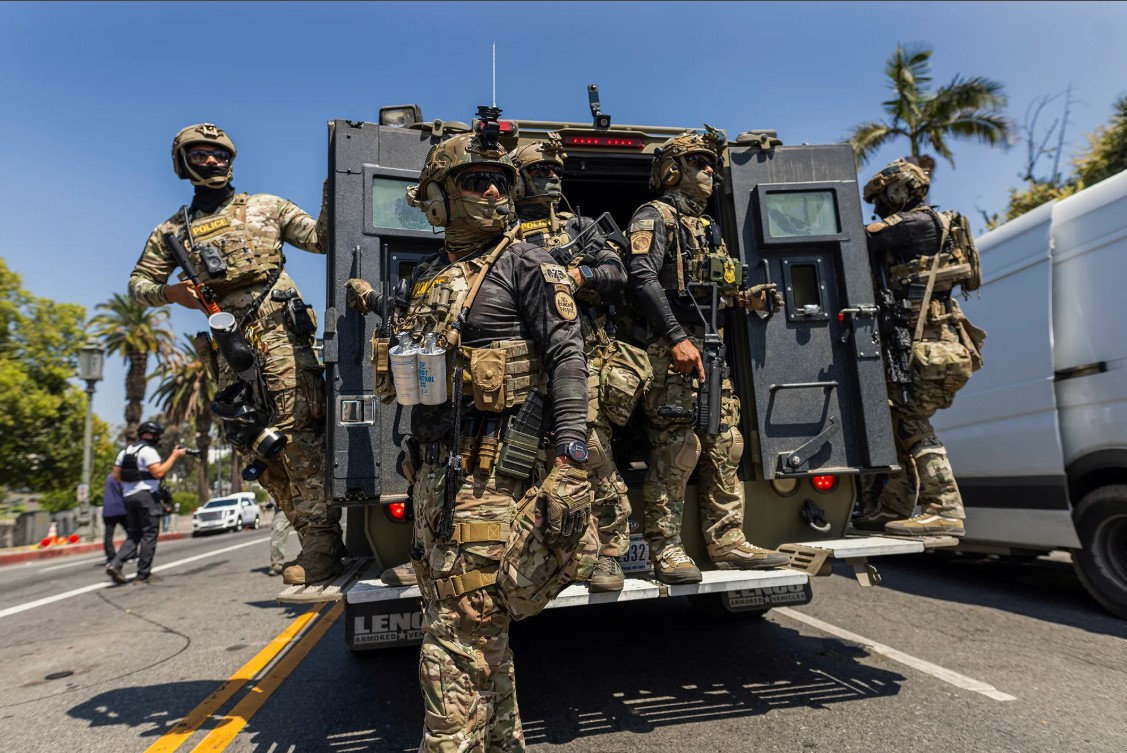
Federal Appeals Court Rejects California’s Mask and ID Law for Federal Agents
A federal appeals court has dismissed California’s request to require undercover federal agents to disclose their identities, marking a significant setback for the state’s ongoing opposition to the Trump administration’s deportation initiatives. The ruling came from a panel of the 9th U.S. Circuit Court of Appeals, which determined that California cannot enforce a provision of a 2025 law mandating that federal law enforcement officers visibly display identification during their official duties.
Legal Precedents Favor Federal Authority
The law faced considerable legal challenges from the outset, as it was anticipated to attract high levels of scrutiny from the federal judiciary. An 1890 Supreme Court ruling establishes that states lack the authority to prosecute federal law enforcement officers while they are executing their duties. Moreover, the law violated the Constitution’s Supremacy Clause, which prohibits states from regulating federal government operations.
Gov. Newsom Enacts Related Legislation
In a move that has been met with legal pushback, Governor Gavin Newsom signed a bill prohibiting federal immigration agents from wearing masks while on duty. The Trump administration has since instigated lawsuits to contest both the mask mandate and the identification requirement.
Federal Judges Reinforce Injunctions
On February 19, a federal judge issued an injunction against the mask mandate, but the latest 3-0 ruling has shifted the focus to identification requirements. Justice Mark J. Bennett emphasized that any state law that directly governs the conduct of the United States is invalid, irrespective of the importance of the regulated activity to federal functions.
California’s Legal Strategy Under Scrutiny
California’s legal representatives argued that, despite the law violating the Supremacy Clause, the court should have taken into account the state’s concerns regarding public safety and the ramifications of federal immigration enforcement. However, Bennett countered that since the federal government demonstrated the law’s violation of the Supremacy Clause, the balance of public interest heavily favors issuing a preliminary injunction against it.
Legislative Responses Amidst Tensions
In response to the actions of federal agents during the Trump administration, California lawmakers passed the Vigilante Act designed to penalize federal officers who did not comply with identification and mask regulations. Currently, legislators are advancing additional measures, which include a proposal prohibiting the hiring of federal immigration enforcement workers within California law enforcement agencies and another bill aimed at making it easier for individuals to sue federal employees for civil rights infringements.
U.S. Attorney Applauds Court Decision
Acting U.S. Attorney Todd Blanche expressed strong support for the 9th Circuit’s ruling on social media. He affirmed the Department of Justice’s commitment to the federal agents of ICE, stating that today’s decision not only halts California’s mask ban on ICE officers but also represents a significant victory for law enforcement protections.
