


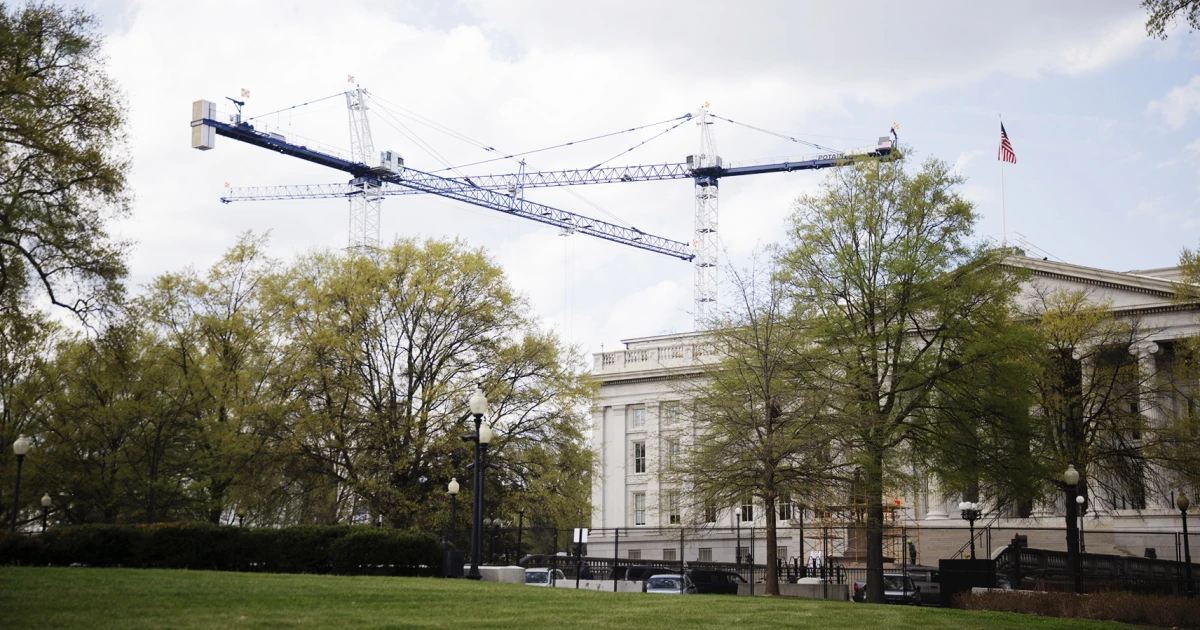
National Trust for Historic Preservation Persists with Lawsuit Against White House Ballroom Construction
The National Trust for Historic Preservation confirmed on Monday its decision to continue its lawsuit aimed at stopping the construction of President Donald Trump’s White House Ballroom, despite a request from the Justice Department to withdraw the complaint.
In a public statement, Carol Quillen, president of the Trust, emphasized their commitment to the case. She stated that the decision to proceed is grounded in the belief that it is crucial for the administration to adhere to the law, asserting that the lawsuit poses no risk to anyone involved.
The Justice Department’s request came just a day prior, citing that the lawsuit jeopardizes the safety of the president, his family, and staff, suggesting that halting the legal action is in everyone’s best interest.
During a press conference on Monday, White House Press Secretary Caroline Leavitt defended the ballroom project, asserting its importance beyond mere aesthetics. According to Leavitt, the new construction aims to bolster security within one of the world’s most secure environments, accommodating the growing needs for large gatherings involving the president, vice president, and cabinet members.
Leavitt explained that the ballroom is essential for fostering an environment where future leaders can assemble safely, free from intimidation or violence. She stressed the urgency of completing the project, voicing that it should be expedited to meet national security needs.
The Justice Department has yet to respond to inquiries related to the matter. However, concerns about security were amplified following a shooting incident at the White House Correspondents’ Association dinner, which highlighted the challenges of hosting events with numerous high-profile attendees, including key government officials.
Following the arrest of a suspect connected to the incident, President Trump noted the uncertainty of future events occurring on White House grounds, suggesting that the ballroom’s construction is critical for ensuring a secure gathering space. The media will host the upcoming dinner, diverging from traditional government involvement.
In response to the Justice Department’s correspondence, Quillen expressed appreciation for the prompt actions taken by the Secret Service and law enforcement during the shooting incident. She revealed that construction on the ballroom can proceed until June 5, the date set for the next oral arguments in the ongoing case.
Quillen further remarked on the necessity for expansive meeting spaces within the White House, asserting that legal construction hinges on Congressional approval, which the administration is free to pursue at any time.
A letter from Brett A. Shumate, assistant attorney general in the Justice Department’s civil division, underscored the urgency of the situation. He stated that recent events confirm the ballroom’s importance for maintaining the safety and security of the presidency. Shumate noted that once the ballroom is operational, future presidents will no longer need to exit the secure confines of the White House for large-scale events.
As President Trump frequently travels domestically and internationally to attend various events, including rallies and conferences, the completion of the ballroom is framed not just as a personal preference but as a matter of strategic importance for the administration’s operations.
