


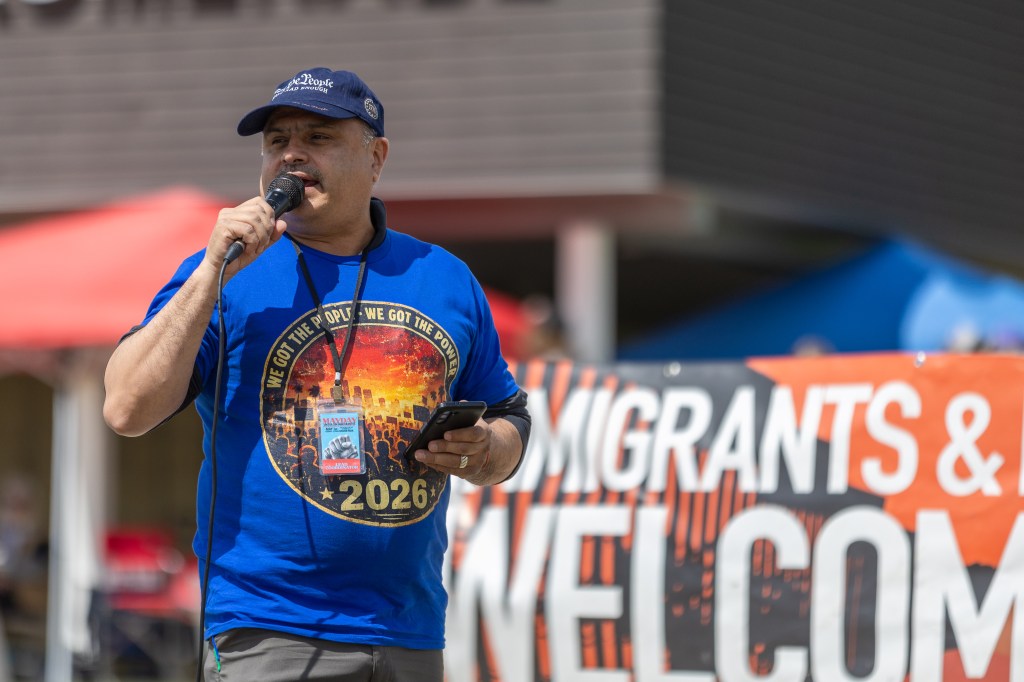
Community Rally in Aurora Highlights May Day and Worker Rights
On Friday, over 100 individuals gathered in Aurora to commemorate May Day and express solidarity with workers and immigrant communities. Participants convened at Wilder Park, brandishing signs with messages such as “Aid workers, not war” and “Immigrant workers deserve rights, not attacks,” as American flags fluttered in the breeze.
May 1 has been designated a national day of action, providing an opportunity for workers to unite in support of labor rights. Historically, events and rallies have taken place throughout Chicago to recognize this significant date. This year, activists promoted a “no work, no school, no shopping” initiative to protest the policies of former President Donald Trump while advocating for the rights of immigrants and workers.
The Aurora event aimed to honor the contributions of the immigrant community and advocate for “protection of dignity, due process, and labor rights,” according to a statement from the organizers. A coalition comprising community, labor, and advocacy groups sponsored the rally, with participants including Aurora Mutual Aid, Aurora Rapid Response Team, and the Illinois Workers in Action, among others.
Following the rally at Wilder Park, attendees marched through downtown Aurora, where local leaders and officials addressed the audience regarding the historical significance of May Day and the ongoing challenges faced by workers and immigrant families. Aurora Vice Mayor Casildo “Casey” Cuevas emphasized the importance of the May Day tradition, stating it embodies the voices of ordinary individuals demanding recognition of their labor’s value and their inherent rights.
Identifying himself as a “proud immigrant,” Cuevas called for increased protections for migrant workers, asserting, “We want an America that recognizes immigrants as vital contributors to the fabric of this country.” He reflected on America’s heritage, acknowledging that while the founding principles may not be perfect, the framework is designed to evolve toward greater equity and justice.
Robert Bruno, a labor and employment professor from the University of Illinois at Urbana-Champaign, echoed these sentiments during the rally. He recounted the struggles of labor movements in the 1880s, including the pivotal events surrounding the push for an eight-hour workday. He noted that the violence and convictions that followed the Haymarket affair in Chicago underscored the historical roots of May Day, which continues to inspire contemporary activism against authoritarianism and corporate dominance that threatens workers’ rights and democracy.
State Senator Karina Villa, representing West Chicago, addressed the rally, highlighting the issue of wealth inequality exacerbated by the recent failure to pass a constitutional amendment aimed at taxing high-income residents in Illinois. She emphasized the state’s capacity to impose taxes on affluent individuals to address economic disparities.
Elgin Community College professor Vincent Gaddis stressed the importance of unity across diverse groups in advocacy for worker and immigrant rights. In his remarks, he challenged attendees to recognize their commonalities with all workers, regardless of racial or economic backgrounds, urging solidarity against the divisive tactics of wealthier elites.
