


Massive May Day Protests Erupt Across the U.S.
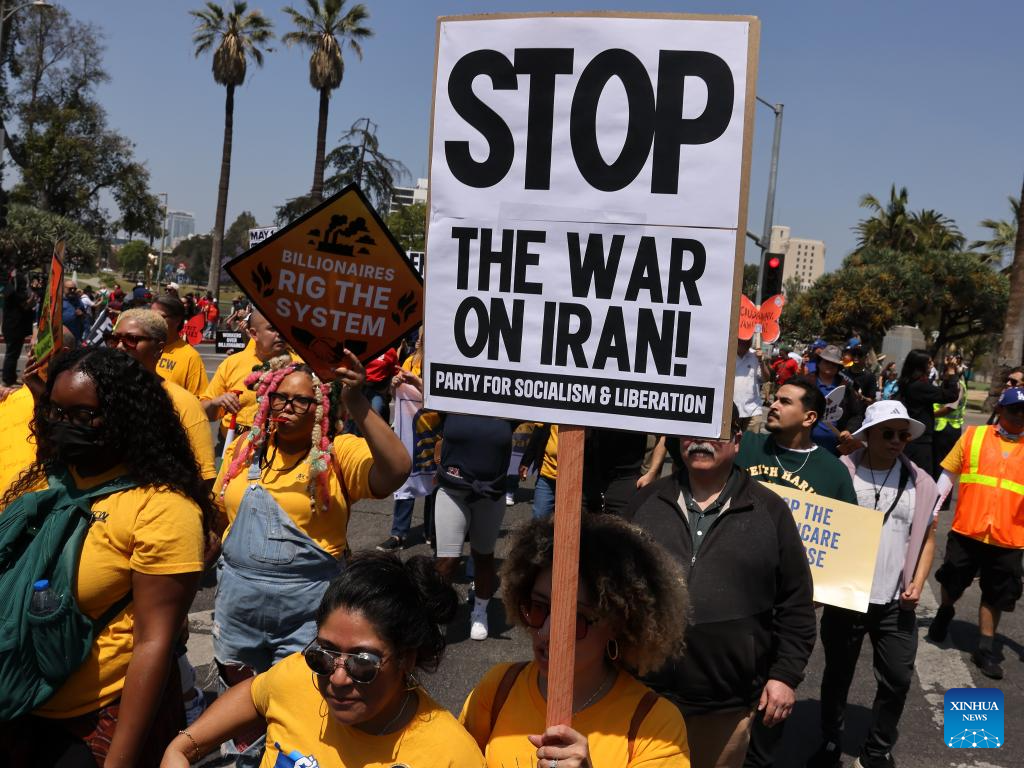
On May 1, 2026, tens of thousands of Americans took to the streets in cities nationwide, rallying for worker rights and against the ongoing U.S.-Israel military actions in Iran. The demonstrations encompassed roughly 30 major cities, including Washington, D.C., New York City, Los Angeles, Chicago, Boston, and San Francisco, mobilized by Mayday Strong, a coalition of activist organizations and labor unions.
New York Protests Showcase Diverse Voices
In Manhattan’s Washington Square Park, a large crowd convened, wielding signs emblazoned with messages such as “Stop the war with Iran,” “Get ICE out of our cities,” and “Workers united will never lose.” Protesters then marched down Broadway toward Foley Square, energizing the afternoon air with chants and slogans aimed at both the government and the corporate elite.
Voices of Dissent from Academia and the Community
Among those in attendance, Nancy Goldring, a professor at Montclair University, expressed her discontent with the current state of U.S. foreign policy, emphasizing the billions spent on war. “This war with Iran is not only costly but senseless,” she asserted, highlighting the humanitarian crises in Gaza, the West Bank, and Lebanon as a direct consequence of U.S. alignment with Israeli actions.
Concerns Over Immigration Policies
Cecilia Dietrich, a New Yorker, shared her frustrations with the Trump administration’s immigration policies, criticizing the treatment of individuals seeking a better life. “Authorities are forcing these people into labor exploitation,” she remarked, pointing out the detrimental impact such practices have on the workforce.
Support from Local Leaders
New York City Mayor Zoran Mamdani addressed the crowd, showing solidarity with labor and immigrant rights. He vowed to protect citizens from what he termed the “brutality of ICE,” advocating for increased taxes on the wealthy to fund social services and labor protections.
Demonstrations in Los Angeles Demand Economic Justice
In Los Angeles, a significant gathering of immigrants, union members, and activists rallied at MacArthur Park, calling for comprehensive immigration reform and stronger worker protections. David Huerta, president of United Service Employees West, voiced the spirit of resilience, stating, “We will not be silent.” Aerial footage captured the scale of the event, with thousands marching, waving placards and demanding equitable treatment for laborers.
Historical Significance of May Day Celebrations
The march in Los Angeles held particular significance, as it honored the anniversary of the landmark 2006 “Day Without Immigrants,” which inspired hundreds of thousands to protest for rights and recognition. As demonstrators made their way to the streets, the sentiment echoed throughout the National Mall in Washington, D.C., where crowds rallied against war and federal policies, further amplifying calls for social justice and worker rights across the nation.
Commemorating Workers’ Rights
International Workers’ Day, or May Day, has its roots in the late 19th-century labor movement, particularly following the 1886 Haymarket Affair in Chicago. This historical context serves as a poignant reminder for unions and advocacy groups, who utilize this day to spotlight labor rights and champion the struggles of immigrant communities in pursuit of justice.
