


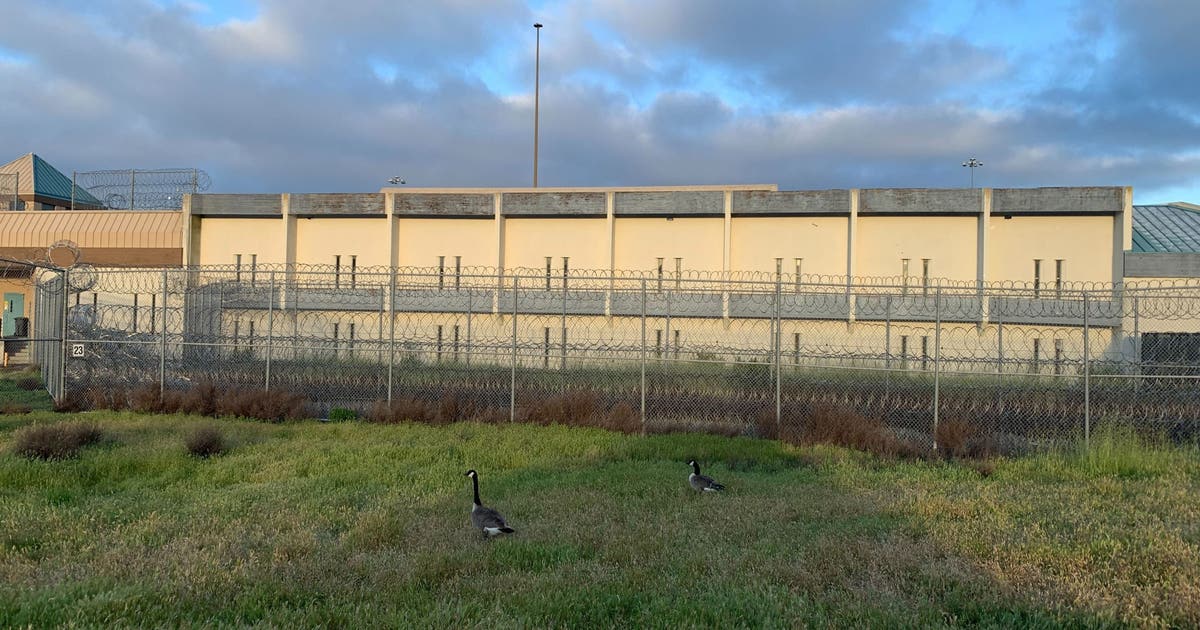
Geese walk around the closed FCI Dublin prison on April 7, 2026
Dublin, California – The Federal Correctional Institution (FCI) Dublin halted operations two years prior, and the Bureau of Prisons (BOP) has proposed permanently decommissioning the aging facility. However, immigrant rights advocates are pushing for an alternative vision—demolishing the prison and repurposing the site for community benefit.
Concerns About Living Conditions
Numerous former inmates have voiced distressing accounts of life at FCI Dublin. Amy Chavira, a former inmate, highlighted the unsuitable living conditions, stating, “This is not a comfortable situation for anyone to live in.” Chavira’s proposition to convert the site into a Costco underscores her belief that the area is no longer fit for human habitation.
The Immigrant Rights group, an extension of the Dublin Coalition, convened a press conference to unveil their plans for the 87-acre property located at 5701 Eighth Ave. Their vision includes transforming the site into a community park, library, health center, and possibly a memorial dedicated to the women who were once incarcerated there.
Community members are encouraged to share their thoughts with the BOP ahead of a June 30 feedback deadline via email. The BOP will review all public comments before deciding on the future of the facility and will not conduct a formal vote. Additionally, the timeline for asset transfer to the U.S. General Services Administration (GSA) remains unclear, raising questions about the ultimate fate of the property.
Activist groups are apprehensive, fearing that the GSA may redirect the site to the Department of Homeland Security or the Department of Defense, potentially perpetuating past inequities.
Environmental and Structural Concerns
The BOP’s environmental assessment, released on May 1, has shed light on numerous issues reported by the 600 women formerly incarcerated at FCI Dublin. Concerns include exposure to mold, asbestos, and unsanitary conditions exacerbated by significant pest infestations. This assessment marks the first time the BOP has estimated the financial burden for necessary repairs and upgrades, projecting costs of $26 million over three years and $118 million over a decade.
The BOP closed the prison in 2024, following statements from a former warden indicating that the toxic culture at FCI Dublin was beyond redemption. Recently, a ninth prison guard has been sentenced for sexually assaulting an inmate, and all women previously held at the facility have been released or transferred to other prisons nationwide.
While many complaints have been documented verbally by former inmates, the BOP’s 2,731-page report formally captures their testimonies. Findings from the assessment highlight severe internal conditions, such as deteriorating drywall posing fire hazards, leaky roofs, and extensive pest-related damage to infrastructure.
Unanswered Questions About the Future
As discussions progress, many uncertainties linger regarding the next steps for FCI Dublin. Given the closure of correctional facilities, what will become of the vacated land?
Initial rumors following the inauguration of former President Donald Trump suggested a potential repurposing of abandoned facilities for immigration detention. However, both ICE and the Department of Homeland Security reiterated in February that they were not pursuing such plans, a statement met with skepticism by advocates. Despite official reassurances, immigrant rights activists continue to vigilantly monitor developments, fearing that prior injustices could be replicated.
Activists assert that Northern California is a specific focus for ICE, citing the absence of detention centers in the region north of Bakersfield. “The ICE system has a long history of abuse similar to what we witnessed at FCI Dublin,” noted Susan Beatty, a staff attorney with the California Immigration Justice Collaborative. She cautioned that the potential for future centers remains a viable threat.
