


Markwayne Mullin Advocates for a Quieter DHS Approach
Markwayne Mullin, upon taking over as Secretary of the Department of Homeland Security (DHS), made it clear he intended to steer the agency in a different direction than his predecessor, Kristi Noem. Following a turbulent year marked by controversy, Mullin aims for the DHS to maintain a lower profile. He has halted plans to convert industrial warehouses into immigration detention centers and implemented new guidelines instructing immigration officers not to enter homes without a judicial warrant. Additionally, at President Trump’s request, Immigration and Customs Enforcement (ICE) officers are now being rebranded as “NICE” officers.
Balancing Politicians’ Concerns and Voter Expectations
The shift in strategy reflects apprehensions within the Republican Party that aggressive enforcement tactics may alienate voters ahead of the upcoming midterm elections. However, this rebranding effort has not been without criticism. Some of Trump’s staunch supporters are demanding that the administration ramp up arrests and extend its focus beyond immigrants with criminal records. Mixed signals from Marin and White House officials regarding the extent to which they will pursue Trump’s campaign promise of mass deportations have raised further questions about the department’s direction.
White House Officials Stand Firm on Immigration Policies
Despite claims of a more lenient approach, White House officials refute any suggestions that the government is relaxing immigration enforcement. Tom Homan, White House Border Security Director, firmly stated that critics are misinformed. He emphasized that mass deportations are still very much on the agenda, declaring it will be a productive year for enforcement efforts. Homan also announced plans to increase the number of immigration agents in New York, contingent upon legislative changes that would restrict cooperation between state and local officials and ICE. Mullin supported Homan’s assurances, stating that although ICE figures indicate a decline in arrests, the department remains determined in its enforcement activities.
Strategic Shift Amid Ongoing Challenges
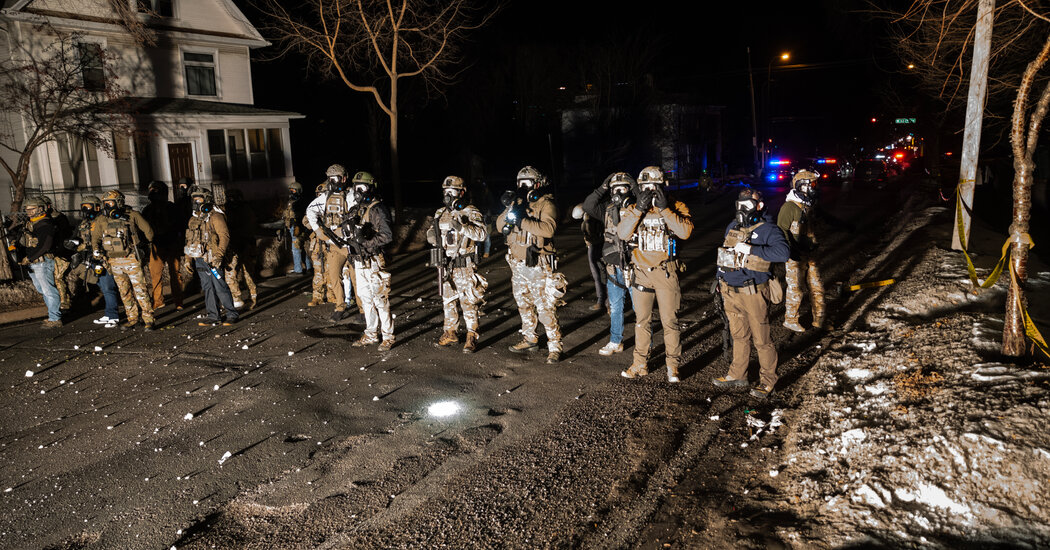
In an effort to clarify the department’s focus, Marin articulated that ICE will no longer employ broad tactics that disproportionately impact non-criminal individuals in urban areas. He specifically noted that the agency would not replicate the events in Minnesota, where immigration officers were involved in shootings during protests, resulting in public outrage. Mullin reaffirmed this stance in a recent interview, assuring that the focus will be on apprehending felons rather than indiscriminately targeting ordinary residents.
Public Opinion and Enforcement Statistics
While the administration upholds that no substantial policy shifts are occurring, recent polls indicate a growing sentiment among Americans that the government is overstepping in its deportation efforts. However, a Pew Research Center survey reveals an increasing number of Republicans believe the administration’s deportation initiatives are insufficient. White House Press Secretary Abigail Jackson clarified that the prevailing immigration enforcement policies still prioritize the deportation of criminal illegal immigrants considered dangers to society. Department representatives echoed this message, emphasizing that ICE operations are not diminishing in intensity.
Yearly Deportation Figures Reveal Trends
During the first year of the Trump administration, the government deported approximately 230,000 individuals arrested domestically in addition to 270,000 at the border, according to an analysis from The New York Times. Notably, the number of deportations stemming from domestic arrests surpassed the total throughout all four years of the Biden administration.
Calls for Enhanced Labor Enforcement
Despite declarations of intent, critics like Howell, who leads the recently established Mass Deportation Coalition, emphasize that rhetoric surrounding mass deportation is not enough; concrete numbers reflect the true efficacy of policies. His perspective is echoed by Mark Krikorian, executive director of the Center for Immigration Studies, who argues for focusing enforcement efforts at job sites, as the majority of illegal immigrants are not involved in serious crimes. Ashe also pointed out the need for stricter labor-related enforcement to effectively address the challenges posed by illegal immigration.
Mixed Reactions to ICE Strategies Under the Trump Administration
There remains skepticism among conservatives regarding the administration’s commitment to aggressive immigration policies, particularly as Trump has previously tempered his stance to align with economic interests. Comments from Kenneth T. Cuccinelli II, who served as acting deputy secretary of homeland security, reflect a belief that a quieter operational style may enhance ICE’s effectiveness while also safeguarding both officers and the public from potential confrontations. This ongoing discussion indicates a complex interplay between political pressures, enforcement strategies, and public sentiment in shaping the future of immigration policy.
