


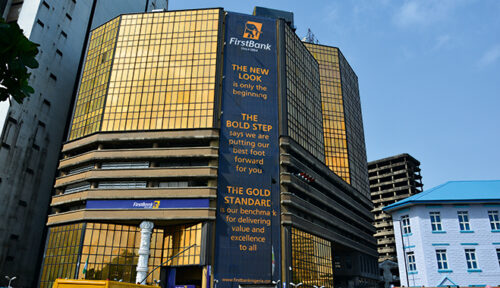
FirstHoldCo’s Profits Reflect a Restructured Banking Strategy
FirstHoldCo Plc’s impressive profit growth in Q1 2026 might initially appear to be a direct benefit of Nigeria’s high interest rate environment. However, a deeper dive into the bank’s financials reveals a foundational shift. The group’s profit before tax surged to ₦321 billion, up 72% year-on-year, bolstered by a significant cleanup of its balance sheet amounting to ₦830 billion in 2025.
Performance among Nigeria’s Leading Financial Institutions
As the parent company of First Bank of Nigeria, FirstHoldCo secured its position as the second most profitable financial institution in Nigeria based on absolute profit before tax, following Zenith Bank’s ₦360.91 billion for the same quarter. GTCO followed closely with ₦302.89 billion, while Access Holdings and UBA reported profits of ₦272.2 billion and ₦160.65 billion, respectively.
The Significance of Debt Consolidation
One key element of FirstHoldCo’s restructuring strategy is known as a “balance sheet reset” or “debt wipe.” This process involves identifying and either removing or significantly reducing the value of non-performing loans—debts unlikely to be repaid—from the bank’s books. In 2025, FirstHoldCo undertook a historic ₦830 billion impairment claim, recognizing a loss in value for some loans and assets that were unlikely to be recovered. This upfront absorption of losses, often referred to as “kitchen sinking,” can initially depress profitability but can lead to improved long-term financial health.
Return on Equity Recovery
Following the 2025 cleanup, FirstHoldCo’s return on equity (ROE) suffered, dropping to 4.6% in December 2025. However, by Q1 2026, the situation reversed dramatically, with the ROE climbing to 31.6%. This performance outpaced the entire FUGAZ banking group, which comprises FirstHoldCo, UBA, GTCO, Access Holdings, and Zenith Bank. Notably, even as banks generally experience diluted ROE during recapitalization, FirstHoldCo’s rapid earnings growth managed to counterbalance this effect, indicating a more efficient profit generation process.
Strategic Lending and Revenue Growth
Nigeria’s banking sector has reaped benefits from recent interest rate hikes following the Central Bank’s stringent monetary policies, currently set at 26.5%. While higher interest rates typically boost bank profitability through increased earnings from loans, FirstHoldCo’s management demonstrated a proactive strategy that extended beyond merely capitalizing on favorable monetary conditions. Unlike competitors who primarily invested in government securities, FirstHoldCo aggressively targeted high-yield lending in the private sector, resulting in substantial revenue growth.
Operational Efficiency and Cost Management
Another indicator of FirstHoldCo’s recovery is its improved cost-to-income ratio (CIR), which decreased from 53.8% in the second half of 2025 to 45.2% in Q1 2026. This metric signifies how well a bank controls its operating expenses relative to its revenue. With operational costs rising by 21% year-on-year, FirstHoldCo’s ability to achieve revenue growth that substantially outpaced its expenses is an example of “positive operating leverage,” where increased revenue trumps rising costs.
Strengthened Debt Collection Efforts
A clear testament to the effectiveness of FirstHoldCo’s balance sheet reset can be seen in its loan recovery efforts. In Q1 2025, the bank reported loan recoveries of just ₦1 billion. By Q1 2026, this figure skyrocketed by 1,570% to ₦19 billion. This transformation showcases the bank’s renewed vigor in collecting funds from previously troubled loans, contributing positively to its non-interest income and enhancing overall profitability.
A Leaner and More Competitive Institution
Despite the newfound revenue generation, FirstHoldCo’s total assets decreased by 2% to ₦26.8 trillion as of March 2026. This reduction signifies the bank’s strategic move to streamline its balance sheet post-cleanup, resulting in a leaner institution with improved liquidity and financial metrics. The first-quarter results indicate that management is not just surviving a challenging landscape but is actively repositioning FirstHoldCo for enduring competitiveness amidst a rapidly evolving market.
Impact on the Nigerian Banking Landscape
FirstHoldCo’s swift bounce-back is poised to heighten competition among Nigeria’s leading banks, as the industry faces ongoing recapitalization challenges and regulatory pressures. For investors, the bank’s remarkable ROE highlights its potential for generating superior shareholder returns compared to many competitors. If this positive trend continues, the valuation discrepancies between FirstHoldCo and other industry players like Zenith Bank and GTCO may elegantly narrow, signaling a decisive pivot from restructuring to sustainable growth.
