


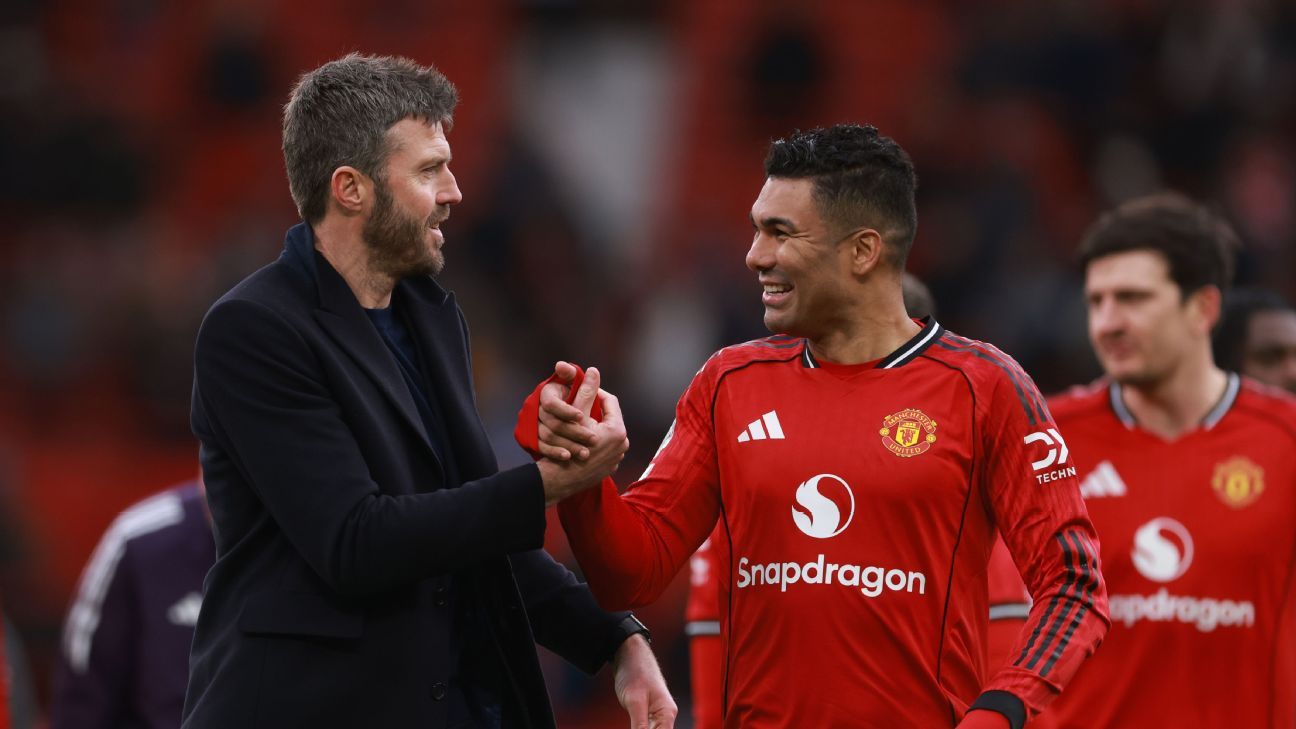
Michael Carrick’s Impact at Manchester United
Manchester United recently parted ways with their struggling Portuguese manager, bringing in a beloved former player as interim manager. Under his leadership, the team swiftly turned things around, winning 10 of their first 15 matches. Players have expressed their unwavering support for Michael Carrick, emphasizing his deserving nature for the permanent position and their willingness to battle on his behalf.
Following Carrick’s appointment, Manchester United qualified for the Champions League for the first time in three years, a remarkable turnaround from their previous 15th-place finish under Ruben Amorim. Carrick’s connection with the players and his effective management have sparked discussions about his potential permanence at the helm, raising the question: can short-term success be a reliable predictor of future achievement?
Reasons Behind Manchester United’s Interest in Retaining Carrick
Since Carrick took over, Manchester United has amassed more points than any other club in the Premier League. If this trend continues, they could be on track for an impressive 84-point season, which places them in contention for the championship. Players like Mason Mount have suggested that this squad has what it takes to challenge for the title next season.
The team’s success isn’t incidental; they achieved this while facing the league’s top contenders. Carrick’s side secured 15 points out of a possible 15 against Arsenal, Manchester City, Liverpool, and Aston Villa, alongside victories against Chelsea and Spurs. Notably, he has fostered an environment conducive to the development of academy talents like Koby Mainu, who has seen significant playing time under Carrick’s guidance, contrasting sharply with his limited appearances under Amorim.
Challenges in Assessing Carrick’s Management Style
Despite early successes, the complexities of management cannot be overlooked. Carrick’s role entails enhancing player performance through tactical direction, morale building, and strategic choices—all while navigating the pressures of a demanding schedule. The 15 games he has overseen represent a significantly less demanding workload compared to rivals competing in both domestic and international tournaments.
The stark contrast in responsibilities between coaching teams engaged in back-to-back fixtures versus those with a single weekly match cannot be understated. Such differences can significantly impact a manager’s ability to prepare and adapt, adding an extra layer of uncertainty to Carrick’s early performance metrics.
The Current Landscape of Goals and Performance Metrics
While Manchester United’s attack has been effective in securing wins, underlying statistics reveal a more complicated picture. Expectations surrounding goal performance suggest a discrepancy, with Carrick’s team averaging fewer expected goals compared to their predecessors. This could indicate that their current scoring success may not be sustainable as the season progresses.
Comparative analysis shows that under Amorim, the team produced 32 goals from an expected 33, while Carrick’s squad has netted 25 from 19 expected goals. This suggests a dependence on factors that may be beyond managerial control, raising questions about the longevity of their current success.
A Cautionary Perspective for Manchester United
Historically, Manchester United has witnessed early manager successes dissipate over time without sustained performance. High-profile coaches like Louis van Gaal, José Mourinho, and Ole Gunnar Solskjær experienced promising starts but ultimately struggled to maintain consistency in creating scoring opportunities. As United contemplates Carrick’s future, it’s essential to consider these historical patterns and the potential ramifications of a hasty decision.
While Carrick presents a refreshing change in philosophy—favoring youth and a more measured tactical approach—the lack of concrete data to confidently predict his continued success, amidst a backdrop of increased competition and scrutiny, warrants a cautious approach from the club. Is he equipped to manage a more grueling schedule, or will history repeat itself under his stewardship?
