


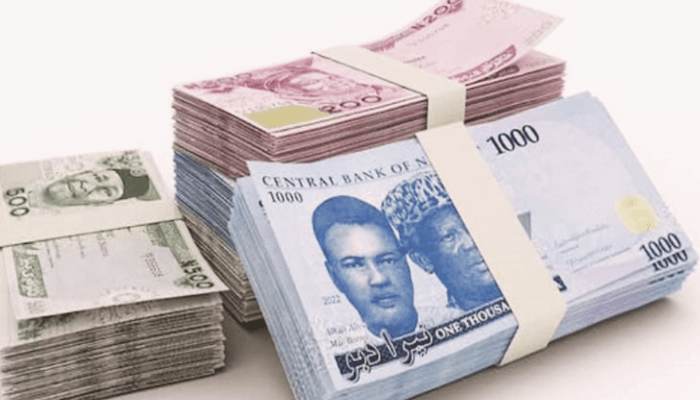
Naira Shows Stability in April Amid Declining Foreign Exchange Inflows
The naira demonstrated remarkable stability in April, even as foreign exchange (FX) inflows into the market experienced a significant decline. This resilience occurred despite weak import demand, which alleviated some pressure on the local currency amidst escalating geopolitical tensions in the Middle East.
Foreign Exchange Inflows Drop Significantly
According to a report from Quest Merchant Bank, foreign exchange inflows fell by 30% month-on-month, totaling $2.9 billion in April. This decline was mainly attributed to restrictions on foreign investor participation, fueled by rising tensions between the United States and Iran.
Naira Appreciates Against the Dollar
Amid these challenges, the naira managed to appreciate by approximately 1% compared to the previous month, closing at 1,374 naira per dollar in April. The report indicated that the average exchange rate rose slightly to 1,361.51 naira per dollar, up from 1,381.18 naira in March, signaling lower volatility in the foreign exchange market.
Reduced Demand-Side Pressures Enhance Currency Stability
Analysts believe the naira’s strength during this period resulted more from diminishing demand-side pressures than from increased foreign exchange inflows. Data from Forex Market Check revealed that import-related trading activities saw a marked decline, with rising geopolitical tensions disrupting global supply chains and altering trade routes.
The slowdown in import demand has lessened the need for dollar financing by importers, contributing to a more stable exchange rate despite dwindling currency inflows. The naira’s gains were evident not only in the official market but also in the parallel market, where it increased approximately 2% month-on-month to 1,398.15 naira per dollar.
Narrowing Market Gaps Indicate Improved Domestic Sentiment
The report highlighted that the robust performance of the naira across both segments has led to a narrowing of the gap between the official exchange rate and the parallel market rate. This trend suggests a decrease in speculative activity and a boost in domestic confidence.
Geopolitical Tensions Continue to Cast Doubt on Import Activity
Despite these positive signs, analysts cautioned that ongoing geopolitical issues could suppress import activity in the near term. Factors such as uncertainty, transportation delays, and increased transaction costs are likely to keep importers on alert. There are expectations that importers may delay procurement and reduce trade volumes until there are clearer signs of normalization in global trade flows.
Mixed Results in the Official Market
On Monday, the naira faced depreciation on the official foreign exchange market, with trading volumes diminishing across all segments, despite a spike in volumes on the Nigerian Foreign Exchange Market (NFEM). Data from the Central Bank of Nigeria indicated that the dollar traded at 1,373.16 naira, representing an 0.86% decline from Friday’s NFEM figure of 1,361.39 naira.
The number of transactions on the NFEM dropped by 15.29%, from 327 to 277 as of May 8, 2026. Conversely, sales surged by an impressive 244.4%, escalating to $502.29 million from $145.84 million reported the prior day.
Continued Weakness in Interbank Market
Trading activity in the interbank sector also reflected weakness, with transaction volumes falling by 26.37% from 91 to 67 on Monday. Additionally, sales declined by 26.98%, plummeting from $78.15 million to $51.17 million.
In the parallel market, the naira depreciated by 5 naira, closing at 1,400 naira per dollar, compared to 1,395 naira on Friday. The spread between the official and parallel market rates narrowed to 27 naira per dollar, down from 34 naira at the end of the prior week. On a positive note, Nigeria’s foreign exchange reserves remained stable, rising marginally by 0.06% to $48.36 billion as of May 8, 2026, up from $48.33 billion on May 5.
