


Emotional Toll of Detention on 85-Year-Old French Widow
ORVAUX, France (AP) – As darkness descended on the Louisiana immigration detention facility, an unsettling silence was soon broken by the sound of children crying.
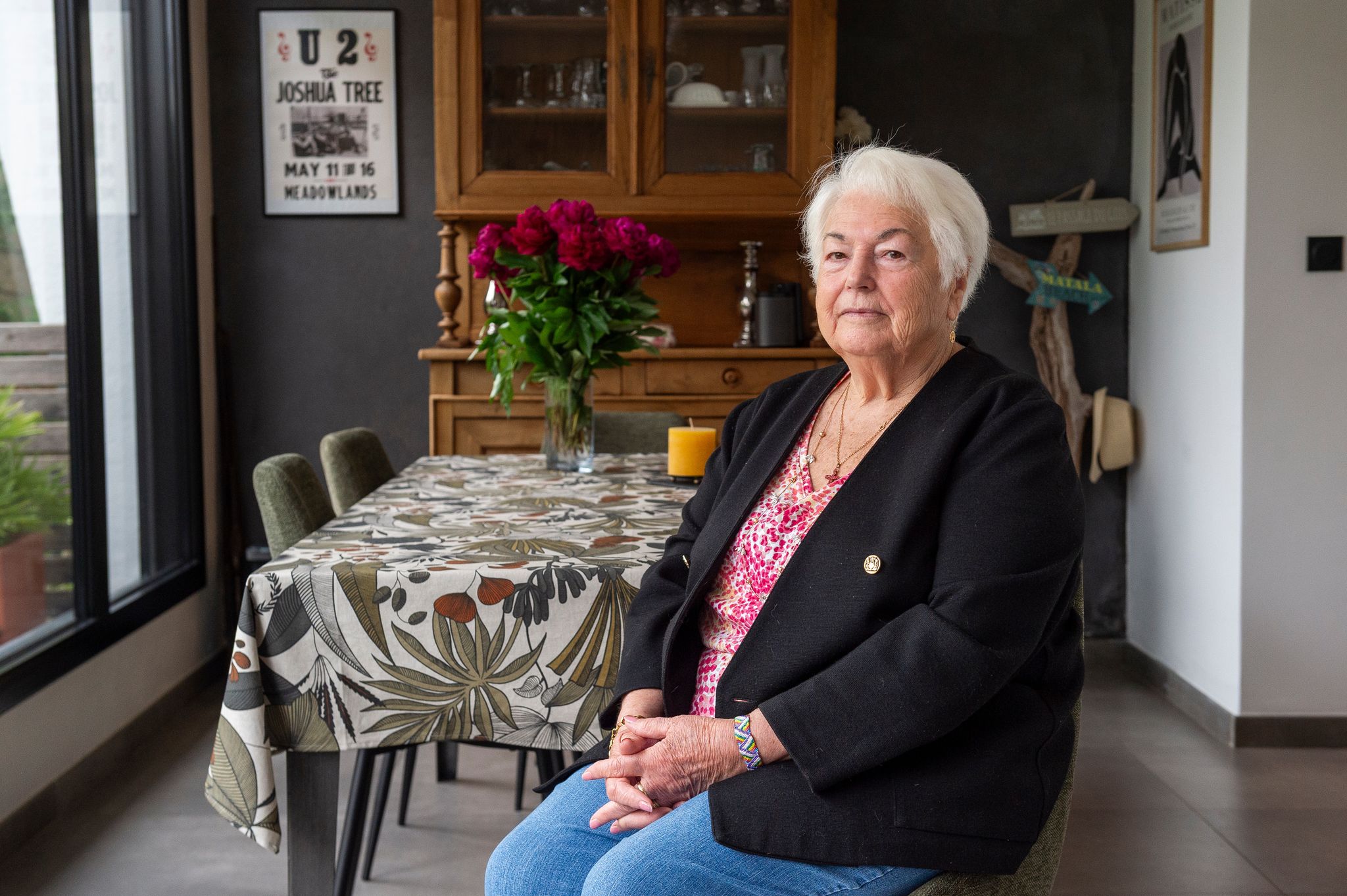
Marie-Thérèse Ross, an 85-year-old widow of a U.S. military veteran, shared her experience with The Associated Press during an interview in her hometown of Orvaux, France. Ross made international headlines following her arrest last month, part of a broader crackdown on immigration under the Trump administration.
In the April 1 raid in Alabama, Ross found herself in custody on suspicion of overstaying her visa, spending 16 days in a federal facility. She recounted the harrowing conditions and the emotional upheaval she experienced during that time.
Ross described her confinement in a dormitory shared with 58 other women, many of whom were mothers anxious about the whereabouts of their children. “Some of them didn’t know where their children were,” she lamented, expressing her horror at the uncertainty these women faced.
The speed at which her arrest unfolded left Ross bewildered. Five men claiming to be immigration officers arrived at her door, handcuffed her, and placed her in a car while she was still in her night clothes. Just two days later, she was transferred to another facility in Basil, Louisiana, before finally being released at the end of the month. Upon her return to France, the nation’s foreign minister publicly called for her release, criticizing U.S. immigration practices as inconsistent with French values.
Ross had moved to the United States decades earlier to build a life with her husband, William B. Ross, a retired U.S. soldier she had met in France during the 1950s. Their love story culminated in marriage in April 2025, but controversy surrounding her husband’s passing in January sparked further scrutiny of her legal status. An Alabama judge found that Ross’s son-in-law, a federal employee, may have played a role in her immigration arrest.
In the wake of her ordeal, Ross detailed the oppressive environment of the detention facility, pointing out the strict rules and the condescending treatment received from guards. “The prison was clean and the food was okay, but this is how they talked to us. The guards couldn’t talk without screaming,” she recounted.
Amid this anguish, Ross experienced moments of solidarity and kindness from fellow detainees, who referred to her affectionately as “Grandma.” A friendship bracelet made by one of them remains a cherished token of her time there, a reminder of the community that formed even in hardship.
While she continues to recover from her traumatic experience, Ross faces ongoing emotional struggles and memory loss. She has requested medical assistance to address symptoms associated with post-traumatic stress. Ross remains haunted by thoughts of the women she met, many from South America, who were similarly separated from their families.
Her experience has profoundly shifted her views on U.S. immigration policies. Despite being married to a supporter of Trump, Ross was shocked to witness firsthand the treatment of immigrants within detention facilities. “I once thought of the United States as a free country where people are not arrested based on their appearance and where those detained are treated fairly,” she reflected. She now believes that many of the women she met were unjustly incarcerated simply because of their nationality.
As she recuperates in France, Ross remains committed to advocating for those still in detention. “When I got out of prison in Louisiana, I told them that if I had a chance to talk about them, I would do it to help them,” she said, embodying a spirit of compassion that transcends borders.
