


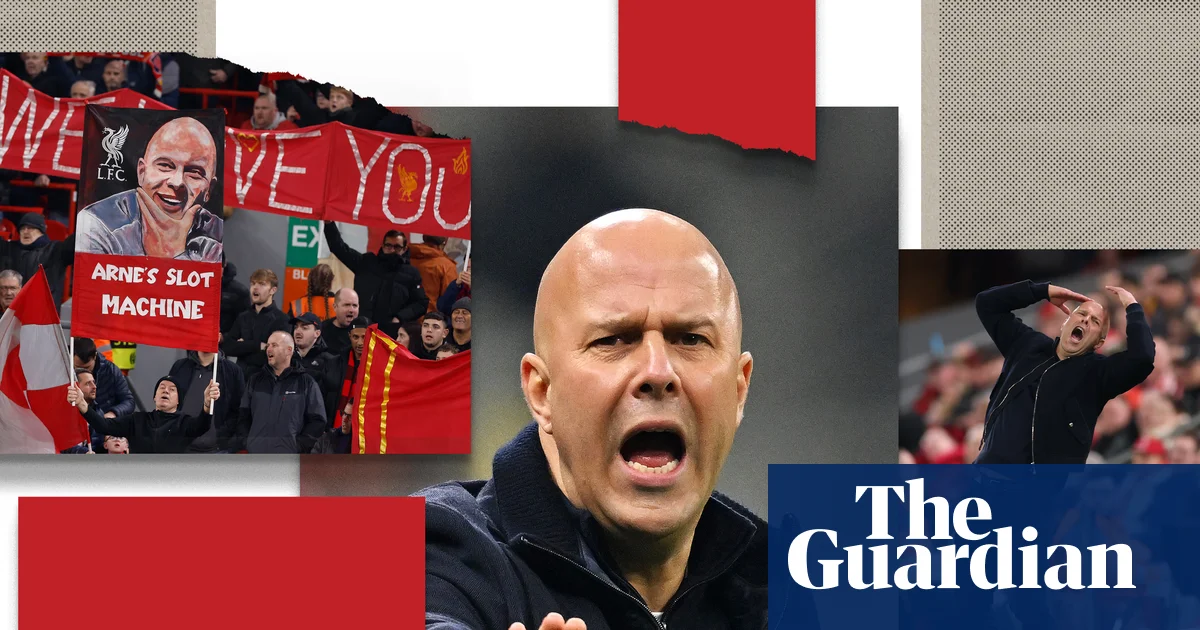
Turbulence at Anfield Following Draw with Chelsea
An unusual chorus of boos echoed around Anfield after Saturday’s match, a reaction typically reserved for an unexpected defeat. However, the 1-1 draw with Chelsea came amidst a backdrop of heightened expectations. Chelsea entered the matchup reeling from six straight league losses, yet Liverpool’s inability to capitalize on this opportunity has become a recurring theme this season.
Earlier this season, Manchester United secured their first away victory of the season at Anfield, managing only a single point from their initial three league fixtures. Nottingham Forest also struggled early on, with three losses and two draws in their first five away matches, before shocking Liverpool with a 3-0 victory in November. Even Burnley, who had lost eight of their last ten away league games, managed to hold Liverpool to a disappointing 1-1 draw in January.
March proved particularly challenging for Tottenham, who faced the prospect of relegation after five consecutive league defeats. However, a late goal from Richarlison salvaged a 1-1 draw against Liverpool, providing them with their only point in the Premier League during that turbulent period.
The frustration in the stands was palpable during Saturday’s encounter, even when Liverpool took an early lead through a stunning strike from Ryan Gravenbirch. Rather than pressing for a second goal, Liverpool adopted a passive approach, allowing Chelsea to equalize and leaving the home crowd disillusioned. Dominik Szoboszlai and Virgil van Dijk showed promise in the second half, but the overall performance was uninspired and a stark contrast to the celebrations a year prior after clinching the Premier League title.
Liverpool’s woes extended beyond the league as they faced a 3-0 humiliation at the hands of Crystal Palace in the League Cup. This marked the first time since February 1934 that Liverpool suffered a three-goal loss without scoring in a domestic cup match at Anfield. Additionally, with nine losses in the Champions League, their struggles have intensified as they see reminiscent statistics from the early 1950s.
On the road, Liverpool’s struggles continued, amassing just one point from seven away games against teams currently ranked in the top-nine of the Premier League. A worrying defeat against last-place Wolves in early March highlighted a season fraught with missed opportunities, culminating with their final away match against fifth-placed Aston Villa on Friday.
Reasons for Supporting Slot as Head Coach
1) Historical Success
Despite recent troubles, Slot’s achievement of winning the Premier League in his inaugural season should not go unnoticed. Critics may argue he benefited from the groundwork laid by Jurgen Klopp; however, Liverpool remains on the brink of Champions League qualification, possibly finishing in the top four if they can emerge unscathed against Aston Villa. While their current position isn’t ideal, it isn’t necessarily grounds for dismissal either.
Even with eleven league losses to their name, equating to their worst record since the 2014-15 season, only four teams have managed fewer losses in this unpredictable campaign. Expectedly, they’ll conclude the season without silverware, yet two other eliminated teams—the likes of Crystal Palace and Paris Saint-Germain—are en route to European finals, indicating the competitive nature of the league.
2) A Learning Opportunity
Liverpool supporters may be more concerned with the manner in which their team plays rather than the result itself. Slot himself reiterated the desire for a more proactive approach following Saturday’s performance. While it is incumbent upon him to motivate his players, numerous external factors contribute to a team’s on-field dynamics. Historically, Slot’s teams have been characterized by improvement and competitiveness; it remains unclear why this season has deviated significantly.
3) Transfer Market Impact
Liverpool invested heavily in the summer transfer market, yet the return on these investments has been disheartening. Injuries to key figures such as Trent Alexander-Arnold and Luis Diaz compounded these issues, exacerbated by inconsistent performances from new signings. Alexander Isak’s injury woes prevent him from providing the expected contributions, while Hugo Ekitike’s Achilles injury complicates matters further. Slot has yet to implement his strategies effectively due to these challenges, but with positive adjustments, the prospect for a stronger season ahead is plausible.
Challenges Confronting Slot’s Tenure
1) Stagnation of Performance
Fans have voiced rising concerns about the persistent mediocrity of the squad’s output. Liverpool, although seemingly on course for Champions League qualification, has exhibited insufficient improvements this season, with an alarming decline in overall performance metrics.
2) Defensive Fragility
The ease with which opponents can capitalize against Liverpool has emerged as a key concern. Chelsea’s slight edge in metrics during Saturday’s match indicates deeper systemic flaws. The defense has conceded 48 goals, a statistic that looms large over the team’s future as they inch closer to potential record losses.
3) Tactical Misalignment
The evolving dynamics of the Premier League have rendered Slot’s tactics less effective compared to last season. While discussions surrounding teams’ tactical shifts are prevalent, Liverpool has appeared vulnerable to teams employing set-piece strategies. With 18 goals conceded from set-piece situations already, adjustments are imperative for regaining defensive solidity.
Ultimately, the club seems inclined to support Slot as he navigates this turbulent phase, a decision that reflects a rare commitment to managerial continuity amidst fan skepticism. While his achievements deserve recognition, the critical question remains: Is he the right fit for Liverpool moving forward?
