


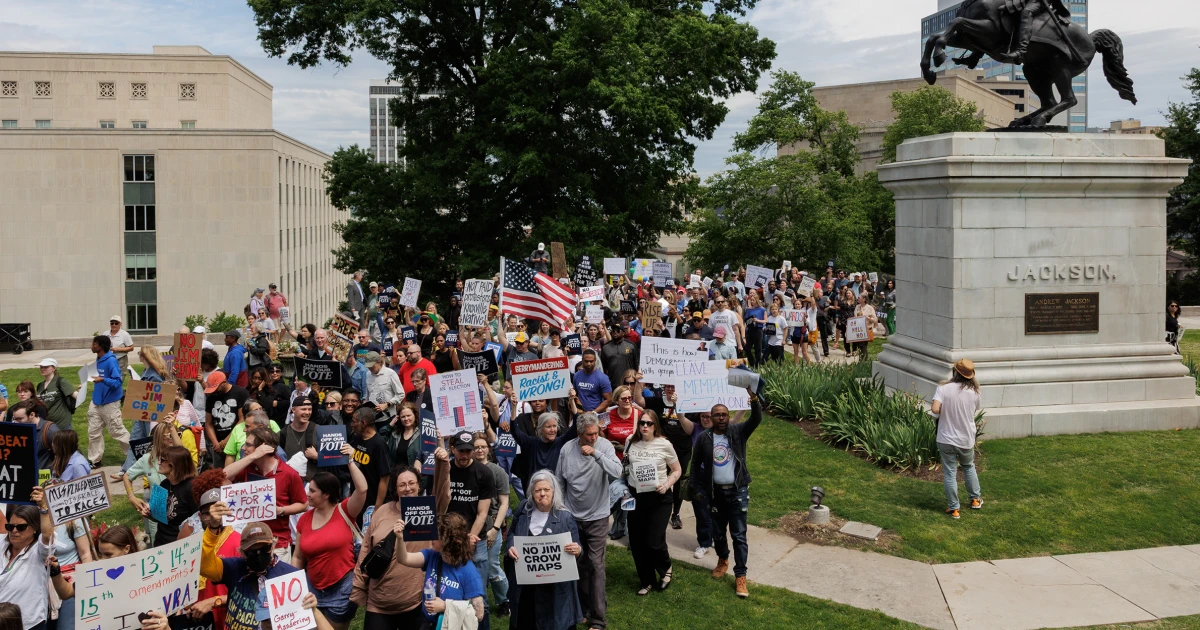
Democrats Face Challenges in Midterm Redistricting Strategies
As the midterm elections approach, Democrats find themselves with limited options to counteract a series of favorable court rulings for Republicans in national redistricting battles. These decisions have enabled Republican-controlled states to redraw congressional maps, presenting a significant challenge for Democrats who are preparing for critical contests this fall.
Focus on Congressional Control Ahead of 2028
Democrats are shifting their strategy to focus on gaining control of Congress in key states, which could set the stage for new congressional maps in the 2028 election cycle. Following a recent U.S. Supreme Court ruling, many Republican-controlled states with majority-minority districts held by Democrats are clearing the way to alter district lines. The trend toward Republican-friendly maps is ramping up, particularly at the instigation of former President Donald Trump.
Limited State Control Hinders Redistricting Efforts
With Democrats holding control over fewer state governments than Republicans, and many states relying on commissions rather than lawmakers to draw maps, time is of the essence. The upcoming November elections are crucial, as the narrowly divided House’s future hangs in the balance, leaving Democrats with few pathways to implement redistricting strategies before they are confronted with the electoral challenges ahead.
Looking Toward Future Opportunities
Despite current setbacks, Democrats are optimistic about their prospects in the 2028 electoral cycle. Should they achieve significant victories at the state level in the current elections, new avenues for redistricting could open up. CJ Warnke, communications director for the House Majority PAC, notes that while efforts to oppose Republican maneuvers will occur in 2026, the bulk of Democratic redistricting initiatives will be directed at 2028.
Investment in State Elections as a Strategy
To facilitate redistricting efforts in the coming years, the House Majority PAC, alongside the Democratic Legislative Campaign Committee and The States Project, is focusing on several states where Democrats have majority control. The DLCC plans to invest $50 million to replace up to 650 seats in various chambers across approximately 24 states. Key targets include Wisconsin, Arizona, and Minnesota, where Democrats aim to enhance their influence and secure governorships.
Significance of Recent Supreme Court Decisions
Recent Supreme Court rulings have invigorated Republican redistricting efforts, particularly the “Curry decision,” which Democrats view as a significant shift in the electoral landscape. As discussions continue regarding the importance of state-level majorities for future redistricting, DLCC President Heather Williams emphasizes the critical nature of every election in shaping democracy.
Republican Strategies and Continued Redistricting Efforts
Meanwhile, Republicans are not slowing their momentum. GOP lawmakers are examining the possibility of continuing redistricting actions post-election, calling for special sessions to redraw congressional maps in states like Georgia and Mississippi. While Republicans currently lead in the redistricting race, Democrats are preparing to invest heavily in state elections in 2026, understanding that future map-drawing will rely on legislative control established in these pivotal contests.
Democratic Resilience Amid Obstacles
Despite the challenges ahead, House Minority Leader Hakeem Jeffries has reaffirmed his party’s commitment, stating their resolve remains strong in the face of adversity. He emphasizes that the ongoing battle over redistricting is far from over, suggesting that Democrats will continue to strategize aggressively to position themselves favorably for the upcoming electoral cycles.
