


The African Digital Asset Summit Achieves Significant Milestone in Nairobi
The inaugural African Digital Asset Summit, which took place in Nairobi, Kenya, on April 30, was declared a substantial success by its organizers. The event featured a compelling keynote address, raising critical concerns about the rapid evolution of digital systems and their potential to marginalize the continent’s most vulnerable populations.
Organizers articulated that the summit served as a platform to unite investors, regulators, innovators, and policymakers, aiming to fuel Africa’s digital economy—from policy development to actualizing economic prosperity.
Originally reported by ACI Africa, the summit was prepared under the theme “Ethical Management for the Love of the Poor,” with the objective of exploring how digital innovation can enhance humanitarian efforts. This event was hosted at the Catholic University of East Africa (CUEA).
Eddie Cullen, a key organizer of the summit, drew inspiration from Pope Leo XIII’s encyclical, “Rerum Novarum,” emphasizing the importance of considering the needs of the impoverished. Participants received a copy of this exhortation to underline its relevance to the discussions.
CEO of Crescite Innovation Corporation, Karen, expressed her satisfaction with the summit’s outcomes, labeling it a significant success and highlighting the positive impact of collaborative discourse on ethical management within the digital economy.
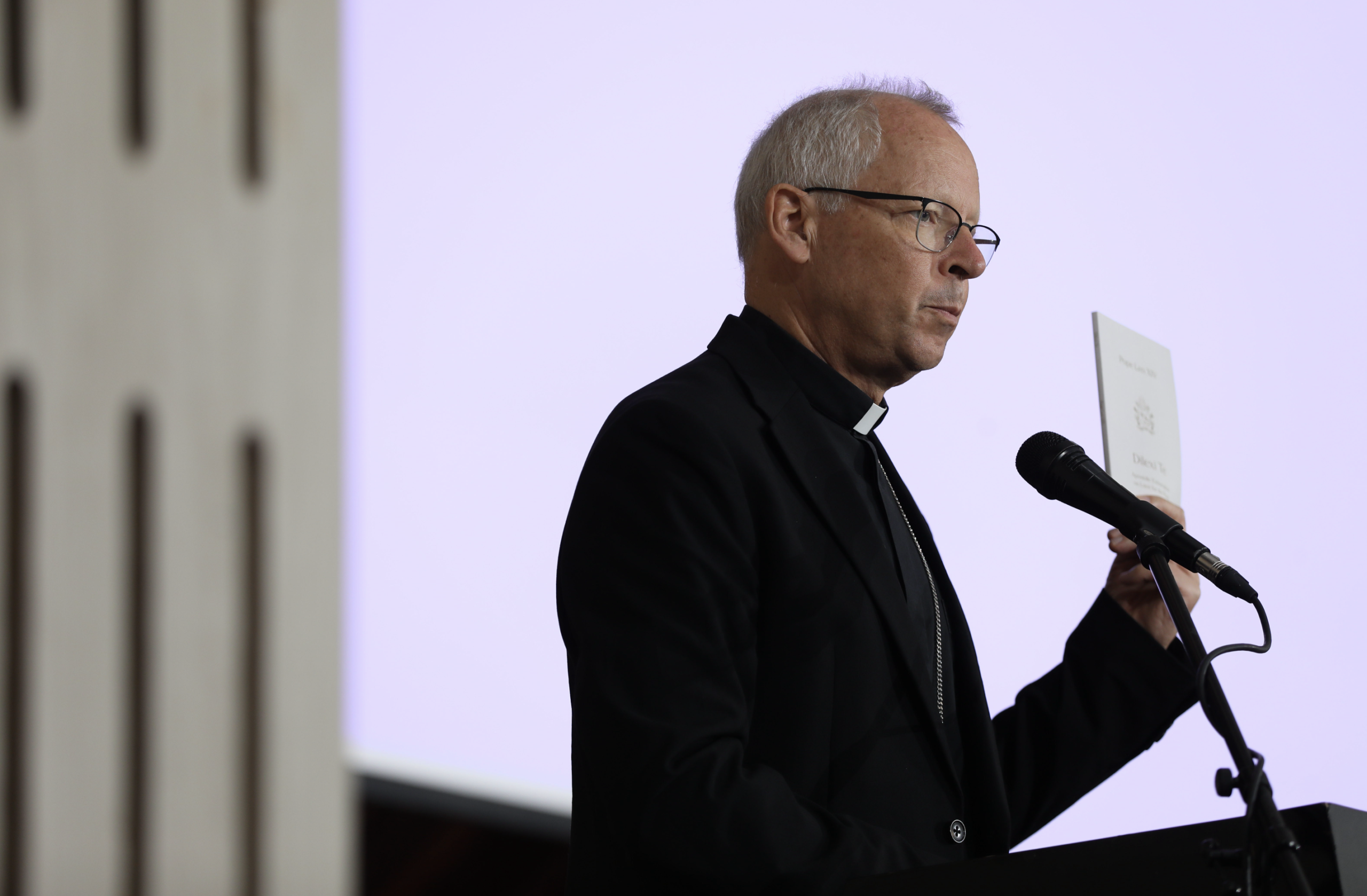
Archbishop Bert van Meeghen, former Apostolic Nuncio to Kenya, delivered the keynote address focusing on the convergence of faith, ethics, and technological advancement. He emphasized that technological development is not merely a technical challenge but a moral imperative that affects marginalized communities directly.
Van Meeghen urged participants to re-evaluate current technological infrastructures, cautioning that while modern advancements in finance and digital systems promise inclusivity, they can inadvertently neglect vulnerable populations if not thoughtfully designed. He stressed that systems of governance increasingly rely on artificial intelligence, fintech ecosystems, and digital identity infrastructures, impacting individuals’ access to essential services such as credit, healthcare, and mobility.
Examining the Ethical Implications of Technology
The archbishop framed the issue of technological exclusion as a pressing moral concern, warning that contemporary digital systems may obscure the struggles of the less fortunate. He argued that modern exclusion is less visible than in prior eras, often masked by encryption and abstraction.
By stating that the poor are often neglected by technological systems, Van Meeghen cautioned that the risk lies not only in disenfranchisement but in systematic invisibility. He emphasized the urgent need for a paradigm shift, where love and compassion become the standard for evaluating technological frameworks.
Referring to his insights from “Rerum Novarum,” he stated that Christian love should dictate how technologies are designed and implemented. The core question arises: Are we creating systems that recognize and respond to the vulnerable, or are we inadvertently perpetuating their exclusion?
He identified the challenges posed by algorithm-driven systems, which often interpret irregular income and informal economic activities as liabilities, ultimately reinforcing existing inequalities. Poor individuals, he noted, are not overtly excluded but are effectively silenced by the operations of these systems.
The Fallacy of Technological Neutrality
Refuting the common assertion that technology is neutral, Van Meeghen delivered a powerful critique of this notion, asserting that all technological systems are influenced by human choices regarding measurement, optimization, and prioritization. He stressed that technology, when mediated by subjective biases, can exacerbate existing inequalities.
The archbishop warned that control over essential services such as credit and healthcare can become a form of social authority, suggesting that this control, when concentrated, has the potential to increase disparities among populations.
Promoting a Framework of Structural Ethics
Van Meeghen advocated for the establishment of “structural ethics,” emphasizing that ethical responsibilities must be integrated into the design of technological systems. He argued that systems should prioritize the needs of vulnerable users and provide community-based alternatives, ensuring accountability and flexibility in the judicial process.
He linked these recommendations to Catholic social teaching, advocating for principles of human dignity, the common good, and solidarity as foundational to the development of technology.
A Call for Catholic Engagement in the Technological Future
Vatican representatives urged the Catholic community to take proactive steps in shaping the ethical landscape surrounding emerging technologies. They posited that the church’s role should extend beyond mere critique to include constructive suggestions that advocate for policies safeguarding the vulnerable.
Van Meeghen underscored that technological progress must go hand in hand with moral accountability, insisting that we are not just developing tools but sculpting the future moral framework under which humanity will flourish or falter. He raised a crucial question: will we recognize and address the needs of the poor, or allow them to remain invisible within our increasingly digital world?
Cullen expressed an intention to broaden the faith-based technology initiative, seeking to foster projects across Africa inspired by the themes of love and ethical responsibility articulated in “Rerum Novarum.”
