


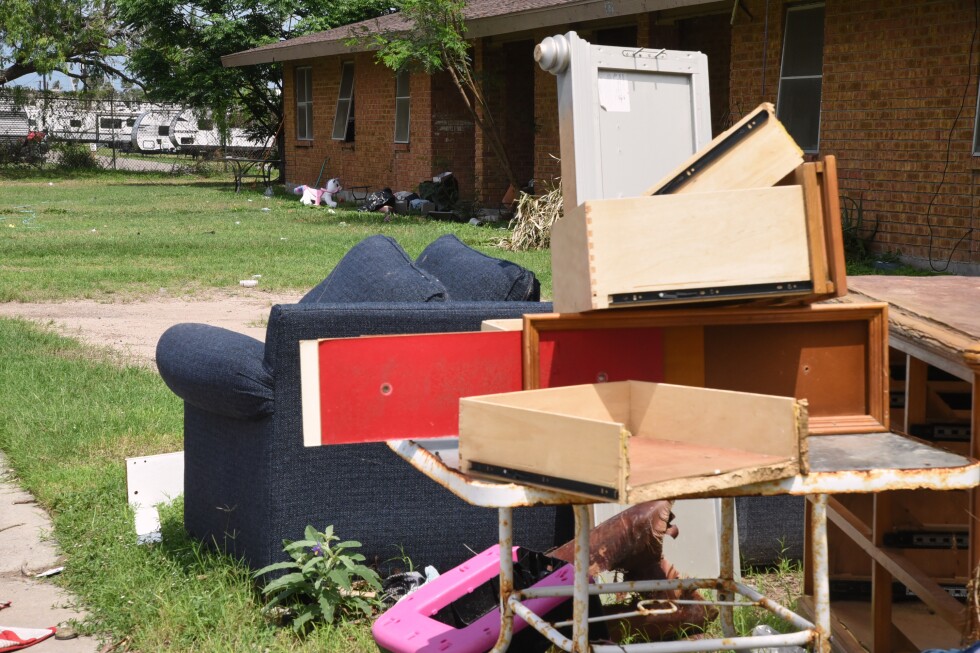
PORT ISABEL, Texas (AP) – Recently, the coastal community of Port Isabel witnessed a troubling transformation. In this vibrant town, children used to roam the sunny lawns, moving freely between public housing while their mothers awaited the arrival of school buses for older siblings. However, the scene quickly changed as furniture and appliances began to appear in the collections of movers and waste management crews. Within weeks, the neighborhood turned eerily quiet and the local playground lay abandoned.
This abrupt change was triggered by a miscommunication from the Port Isabel Housing Authority. This small South Texas town, home to about 5,000 residents—many of whom are immigrants employed in the hospitality industry on nearby South Padre Island—was rocked by the announcement that a Trump administration proposal aimed to revoke housing subsidies for families with at least one undocumented member. The consequences of this announcement foreshadow the potential upheaval similar communities might face if the proposed regulation is finalized.
Marie Claire Tran Leong, principal attorney at the National Housing Law Project, pointed out that the fallout of such measures would extend beyond undocumented immigrants. It would also adversely affect those with legal immigration status and U.S. citizens, including many children born in America.
Communication Breakdown at the Housing Authority
On February 3, the Port Isabel Housing Authority issued a letter to residents stipulating that household members must prove their legal status within 30 days to avoid eviction. Just three weeks later, the authority attempted to clarify that such evidence was unnecessary. However, by then, the damage had already been done.
Approximately half of the residents in public housing vacated within a month after the initial letter, resulting in a drastic decline in occupancy rates—from 91% in January to a mere 43% by May, far below the national average of 94%. Notably, the proposed rule from the U.S. Department of Housing and Urban Development (HUD) has not yet taken effect, and the housing authority has not addressed the confusion stemming from its initial communication, despite multiple inquiries from The Associated Press.
Fear and Uncertainty Among Residents
The looming threat of eviction and rampant rumors involving U.S. Immigration and Customs Enforcement intensified anxiety among residents. A single mother from Mexico, raising two American teenagers, expressed her fear, stating that she felt compelled to move to safeguard her family against potential repercussions. Although a legal services organization informed her that they could remain in public housing, the dangers felt too pronounced, prompting her to relocate after nearly a decade in her home.
This transition has proven to be fraught with challenges. She and her children found a new apartment in the same school district, but the rent increased by about $500 a month, adding strain to their already tight budget. The situation is compounded by her daughter’s after-school job, which has altered their daily routine and financial planning. Sadly, the family had already been dealing with hardships, including job loss and medical expenses due to the mother’s cancer treatment last year.
Other families in the community faced even more precarious situations. One mother of three moved her family into an illegally parked one-bedroom mobile home, where her eldest son now sleeps in the living room. Another family had to sell their bed and other belongings in order to fit into a small space, only to discover that their landlord would not permit them to use the address for mailing, complicating their children’s schooling and healthcare access.
The Trump Administration’s Proposed Regulations
In February, the Trump administration estimated that as many as 24,000 out of 20,000 households could lose their eligibility for housing assistance due to a proposal that would disqualify entire families if just one member is ineligible based on immigration status. HUD Secretary Scott Turner proclaimed a commitment to preventing displacements of hardworking Americans while targeting loopholes that allow others to exploit public housing.
Advocates from the Center on Budget and Policy Priorities, which focuses on low-income families, suggest that the rule could displace around 79,600 individuals, disproportionately affecting children and Latino families. Public outcry has led to over 16,000 comments on the proposed regulations, many voiced from city leaders across the country. For instance, the New York City Council highlighted that roughly 12% of the city’s households include at least one undocumented individual, affecting about 240,000 children. They warned that the proposed policy would likely result in increased displacement, homelessness, and adverse outcomes related to education and health.
As HUD prepares to finalize the rule, it faces significant backlash and is anticipated to encounter extensive legal challenges. The ongoing situation in Port Isabel serves as a stark reminder of the potential ramifications should these policies be implemented on a larger scale across the nation.
