


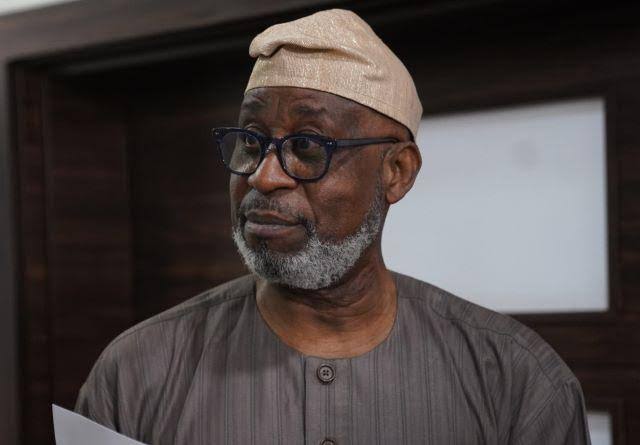
Nigeria’s Economic Transition Aimed at Resilience and Sustainability
The Minister of Solid Minerals Development, Dele Arake, has acknowledged the current economic challenges facing Nigeria, describing these difficulties as part of a crucial transition toward establishing a more resilient and sustainable economy.
Commitment to Bold Reforms
Speaking at the inaugural Solid Mineral Excellence Awards in Abuja, Arake indicated that Nigeria is on the path to a significant economic transformation aimed at long-term prosperity, fostering industrial growth, and national progress through decisive reforms and effective leadership.
Addressing Corruption and Economic Instability
Arake asserted that President Bola Tinubu’s administration is focused on implementing essential but challenging reforms to combat issues such as corruption, weak institutional frameworks, and an over-reliance on oil revenues. “Effective leadership should be fueled by vision, knowledge, and courage,” he emphasized.
Prioritizing Long-Term National Interests
The minister highlighted the importance of developing policies centered on the country’s long-term interests instead of succumbing to short-term political gains. He noted Tinubu’s determination to rejuvenate the economy through reforms that prior administrations had shied away from due to political pushback.
Strategic Role of the Mining Sector
According to Arake, the mining sector has been earmarked as a key component of the economic diversification strategy outlined in Tinubu’s “New Hope” programme. The ministry has initiated comprehensive reforms focused on addressing illegal mining, enhancing regulatory frameworks, tackling insecurity, and improving transparency within the industry.
Increasing Transparency through Digitization
He revealed that efforts to digitize mining operations and licensing processes are already yielding benefits, increasing transparency and simplifying license access, which has in turn attracted greater investor participation. The government has also bolstered mine security, deploying over 2,000 personnel across Nigeria to enhance enforcement at mining sites, resulting in numerous arrests and improved compliance among operators.
Promoting Industrialization and Local Value Addition
Arake stressed the significance of local value addition and mineral processing as means to stimulate industrialization, generate employment, and facilitate technology transfer. He noted that the ministry’s initiatives are producing tangible results, including arrests and prosecutions against illegal activities, and fostering better compliance among operators.
Recognizing Contributions to the Mining Sector
During the awards ceremony, Yusuf Yabo, Permanent Secretary of the Ministry of Solid Minerals Development, remarked that the event underscores the federal government’s commitment to establishing the mining sector as a globally competitive engine of economic growth. Oladunmi Owo, Chairman of the Solid Minerals Exporters Association (SOMEA), emphasized the initiative’s role in celebrating the sector’s contributions to reform and sustainable development.
Additionally, D-Gold CEO Omar Sahinol stressed the importance of responsible mining practices and innovative governance. The News Agency of Nigeria reported that several awards were presented to notable individuals and organizations for their vital contributions to Nigeria’s solid minerals industry. The event, themed “Unlocking the Future,” recognized accomplishments across high-impact categories, including Mining Company of the Year and Excellence in Sustainable and Safe Operations.
